Europe's launch industry has spent the past decade trying to answer an uncomfortable question: whether the continent can keep an independent route to orbit without depending on foreign rockets or foreign capital. Avio S.p.A., based in Colleferro south east of Rome, sits at the centre of that question. The company builds the Vega and Vega C launchers and solid propellant propulsion systems, and it is one of the few European primes with an independent launch vehicle line. Its work feeds the Ariane 6 programme and a wider supply chain that European governments treat as strategic rather than merely commercial.
ICEYE Oy, based in Espoo, Finland, arrived from a different direction. The company operates a synthetic aperture radar satellite constellation and sells geospatial intelligence derived from it, alongside satellite manufacturing, constellation operations and intelligence services. In June 2026 it closed a 450 million euro funding round, capital that gave it room to think beyond building and flying its own spacecraft. What it did not own was a rocket.
On 17 November 2026 those two trajectories collided. The board of ICEYE approved the launch, through its indirect wholly owned Italian subsidiary Iris 2 S.p.A., of an all cash voluntary public tender offer for all ordinary shares of Avio at 41.00 euros per share. The consideration represents a 21.3% premium to Avio's closing price on 16 November 2026, a 29.6% premium to the one month volume weighted average price and a 34.8% premium to the three month VWAP, both measured through 16 November. On ICEYE's arithmetic the offer values Avio at about 2.05 billion euros, or roughly 2.2 billion dollars by Reuters calculations.
The announcement landed in a sector where ownership is never purely a commercial matter. Avio's biggest shareholder is Leonardo, the Italian state controlled aerospace and defence group, and Rome holds veto powers over strategic assets. Any transfer of control therefore runs through politics as much as through markets, and the first responses on 17 November were framed accordingly.
Key Facts
The offer was announced under Article 102 of Italy's Legislative Decree 58/1998 and Article 37 of CONSOB Regulation 11971/1999, and the offer document will be published only after CONSOB approval. ICEYE intends to fund the purchase with balance sheet cash and acquisition debt. Goldman Sachs International is acting as financial adviser, with White & Case LLP, Avance Attorneys Ltd and Studio del Prof. Avv. Andrea Zoppini as legal counsel.
Reuters reported on 17 November 2026 that the surprise all cash bid aims to create an integrated European space and defence group and to delist Avio from the Milan stock exchange. Reuters put the equity value at about 2 billion euros, or 2.2 billion dollars by its own calculation, and noted that Avio shares climbed more than 15% to around 39.5 euros on the news, still below the offer price. Avio itself confirmed in a separate statement that a vehicle owned by ICEYE plans to launch a voluntary tender offer for all of its shares with the aim of delisting, payable entirely in cash and subject to certain conditions.
Il Sole 24 Ore reported on 17 November 2026 that ICEYE attached 12 conditions to completion. The central one is a 66.67% acceptance threshold, to be reached through the tender offer or market purchases. The paper judged that target does not appear impossible, since the free float is 60.6% and the shareholders it classifies as long term investors, Leonardo and Advent, together hold 24.5%, to which roughly 2% of treasury shares must be added. The positions of Delfin at 3.5% and Goldman Sachs at 5.3% remain to be seen.
The second and most sensitive condition is approval from the Italian government, which could exercise its golden power over a defence linked asset. Others include clearance from France and the United Kingdom under foreign direct investment rules, a green light from the European Commission and approval under the European Union's Foreign Subsidies Regulation. From the United States, approval is required from the Committee on Foreign Investment in the United States, and the transaction must be notified to the Defence Counterintelligence and Security Agency of the Department of Defense and the Directorate of Defence Trade Controls. ICEYE also included a standard material adverse change condition, citing the war in Ukraine, crises in the Middle East and the Red Sea, and U.S. customs tariffs as risks that could have materially adverse consequences on the offer.
ICEYE has promised to invest an additional 1 billion euros in Italy over five years across manufacturing capacity, research and development, testing infrastructure and intellectual property, vertical integration, Italian suppliers and ESG compliant programmes, with up to 400 new highly skilled jobs expected. It said Italy would remain the centre of Avio's launch and propulsion business, that it would preserve the Avio brand and Italian industrial identity, retain the existing workforce, honour commitments to European and U.S. customers and continue planned U.S. investments.
Analysis
The strategic logic on both sides is unusually explicit. ICEYE said securing launch capacity is essential to grow its constellation, while long term visibility and security on future launch demand is essential for Avio. That is a description of a market failure being solved by ownership: European launch has struggled to convert institutional ambition into a predictable flight cadence, and a satellite operator that buys its own rocket supplier can in principle schedule its own capacity rather than queue for it.
The bigger picture here is that the deal is less a financial transaction than an attempt to build a vertically integrated European champion funded by private capital rather than by a state budget. Europe has been consolidating its launch sector around institutional players and the Ariane 6 programme. ICEYE is proposing a different model, in which a commercially funded satellite company buys the industrial base and then underwrites its output with its own demand.
What this really means is that the 21.3% premium is not the interesting number. The 12 conditions are. A 66.67% threshold requires ICEYE to win over holders well beyond the 24.5% held by Leonardo and Advent, and the golden power review gives Rome a lever that no amount of shareholder acceptance can override. Reuters described the approach as rare and hostile leaning in a European launch sector that has been consolidating around state backed players, and the market's reaction supports that reading: Avio traded below 41 euros throughout the day, implying that investors priced in execution and regulatory risk.
The industrial promises are best read as political insurance. Keeping the brand, the Italian identity, the workforce and the Colleferro footprint, and adding 1 billion euros of investment plus up to 400 jobs, answers the objections that would otherwise dominate a golden power review. Whether those commitments survive contact with a merged company's capital allocation is a separate question that the offer documents will not settle.
Why It Matters
For European governments the transaction tests whether sovereignty can be bought with private money. The stated rationale is that governments need control of their critical space infrastructure, and ICEYE chief executive and co-founder Rafal Modrzewski argued that Europe needs it most. If the bid succeeds, a Finnish company would own the Italian industrial base that produces Vega launch vehicles and solid propulsion, inside a European legal structure but outside direct state ownership.
For the launch market the immediate question is cadence. ICEYE frames the combination as a way to give Avio visibility on future demand, supporting investment in production and more frequent Vega flights. A satellite constellation operator with a guaranteed manifest is the closest thing the sector has to an anchor customer, and that could matter more to Avio's long term health than the premium offered to its shareholders.
For investors, Avio is now a regulated event rather than a growth story. ANSA reported on 17 November 2026 that the share price climbed by 12% in early trading as ICEYE pledged to keep the Italian identity, the brand and the workforce, a reassurance aimed squarely at Rome. The gap between the market price and the 41 euro offer is the market's estimate of how many of the 12 conditions will be met, and in what order.
Next Up
Avio's board, led by chief executive Giulio Ranzo, has acknowledged the announcement and begun assessing the bid. ICEYE cannot publish the offer document until CONSOB approves it, so the first hard milestone is regulatory rather than industrial. Parallel filings in France, the United Kingdom, the United States and with the European Commission will then determine the timetable, and any single rejection ends the transaction as currently structured.
European Spaceflight reported on 17 November 2026 that the Iris 2 vehicle is unrelated to the European Union's IRIS2 constellation and to the French IRIS constellations, a clarification that matters because the names invite confusion in exactly the circles that must approve the deal. The decisive test remains the Italian government's golden power review, and the next signal to watch is whether Leonardo, the largest shareholder, breaks its silence on price, on conditions or on both.
Related Articles
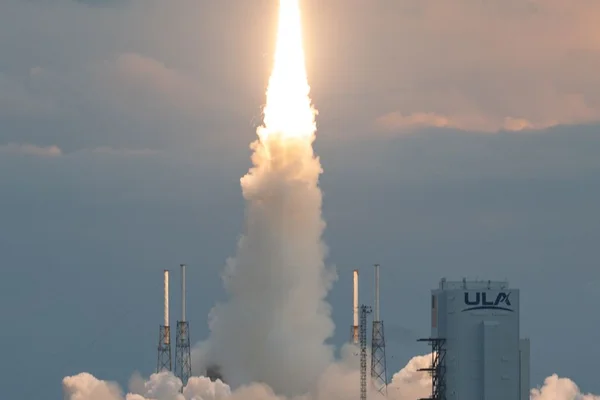
ULA's Vulcan Fails on Return to Flight, Destroying 40 Amazon Leo Satellites
The first total mission failure in United Launch Alliance's 20-year history grounds its flagship rocket indefinitely and complicates Amazon's plan to field a 3,292-satellite broadband network.
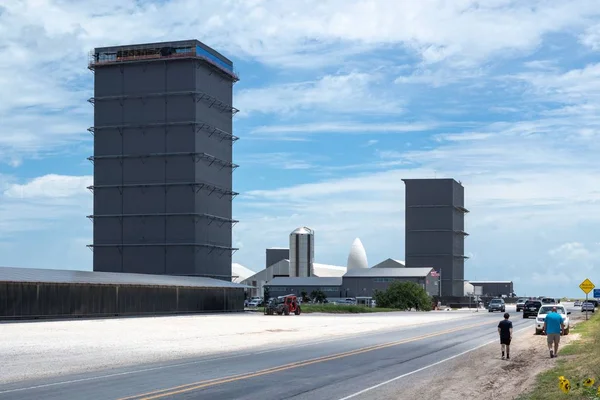
SpaceX Catches Starship Upper Stage With Tower Arms for First Time, Completing Orbital Round Trip
Ship 42 returned from orbit and was snagged by Mechazilla's chopstick arms at Starbase, a first for an orbital-class upper stage, while the Super Heavy booster was lost over the Gulf.
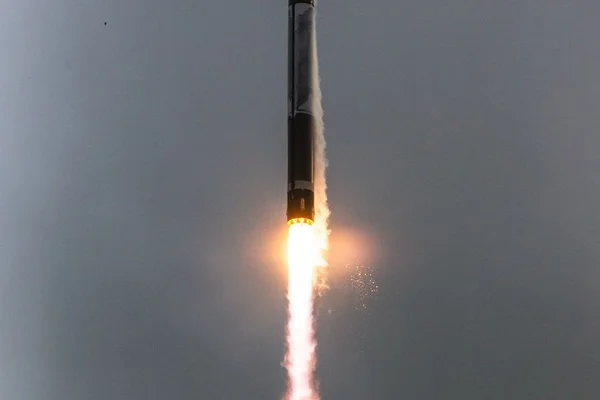
Rocket Lab's Electron Reaches 100 Launches With Japanese Radar Satellite
Electron's centenary flight from Mahia carried iQPS's YAMATSUMI-II radar spacecraft to a 575 km orbit, extending a run of 11 straight successes for the Japanese operator since 2023.
Comments (0)
Log in or sign up to leave a comment.
No comments yet. Be the first to share your thoughts.