United Launch Alliance was formed in 2006, when Boeing's Delta rocket program and Lockheed Martin's Atlas rocket program were merged into a single company. For two decades the joint venture marketed itself on one promise above all others: assured access to space. Its Atlas V flew with a perfect mission success record, and that record became the foundation of its relationship with the US Space Force and with commercial customers who could not afford to lose a payload.
Vulcan Centaur was supposed to carry that promise into the next decade. The rocket, which stands 214 feet tall and replaces both Delta and Atlas V, made its debut in January 2024. Roughly half of the US military's national security space missions in the next few years are on contract to fly on Vulcan.
On November 15, 2026, the promise broke. A Vulcan lifted off from Space Launch Complex 41 at Cape Canaveral Space Force Station in Florida at 12:40 pm EDT, carrying 40 satellites for Amazon Leo, the retail giant's broadband internet constellation. About 10 minutes into the flight, ULA's launch director confirmed an anomaly. The payload never reached orbit. It was the first total mission failure in the company's 20-year history.
The mission was also Vulcan's fifth flight and its first in nine months, following a launch hiatus caused by separate technical investigations into the rocket's solid rocket side boosters and its core BE-4 engines. It was the first of 38 Vulcan launches that Amazon has booked to build out a network intended to compete with SpaceX's Starlink.
Key Facts
Reuters reported on November 15 that the Vulcan failed roughly 10 minutes after liftoff and destroyed its payload of 40 Amazon Leo satellites. ULA said in a statement that the vehicle launched from Space Launch Complex 41 suffered an anomaly 10 minutes into the flight and failed to deliver the Amazon mission to orbit.
SpacePolicyOnline reported on November 15 that the failure came after three separate countdown problems. A Friday attempt was scrubbed by a pump failure at an Air Liquide gaseous nitrogen plant that serves multiple launch pads. A Saturday attempt was postponed by a network communication issue between ground equipment and the launch vehicle. On Sunday, oscillations in a liquid hydrogen pressure relief valve pushed liftoff to the end of a 29-minute window before the rocket finally cleared the pad at 12:40:30 pm EDT.
The early flight profile looked nominal. All six Northrop Grumman GEM 63XL strap-on solid rocket boosters, producing thrust alongside two methane-burning BE-4 engines built by Blue Origin, appeared to perform as planned. The vehicle thundered off the pad on 3.8 million pounds of thrust and jettisoned its spent solids on time. The twin BE-4s, each designed to produce more than a half-million pounds of thrust, were supposed to shut down just shy of the five-minute mark. According to Ars Technica, they kept firing for at least 30 additional seconds.
Ars Technica reported on November 15 that multiple sources placed the anomaly in the booster stage rather than in the Centaur V upper stage or the solid boosters. It could not immediately be determined whether the problem originated with the BE-4 engines, with the hardware that feeds propellant into them, or with another part of the booster. A mission animation driven by real-time telemetry showed Vulcan beginning to spin moments after booster engine shutdown.
CBS News reported on November 15 that the rocket's hydrogen-fueled Centaur upper stage was supposed to conduct a 12-minute and 15-second burn after stage separation, and that ULA's update placed the failure during that Centaur firing. The discrepancy between accounts remains unresolved. What is not in dispute is the outcome: the 40 satellites were lost, and ULA confirmed the anomaly about 50 minutes after liftoff. Amazon has 37 more Vulcan launches reserved with ULA, each slated to deliver 40 or more satellites. The Leo constellation currently consists of 396 satellites, a fraction of the planned 3,292 first-generation spacecraft. The failed flight would have pushed the total number launched to date to 436. Amazon has also booked 24 Leo launches on Blue Origin's New Glenn, 24 on Europe's Ariane 6 and 13 on SpaceX's Falcon 9, and ULA has already flown eight Leo missions on Atlas 5.
Analysis
The investigation now beginning is likely to be slow and public. ULA said that every flight generates data and that the company did not yet have specific data to understand what occurred. History suggests the timeline: Vulcan's return to flight took nine months after the booster nozzle problems on its second and fourth flights. A failure that may involve the booster stage, the BE-4 engines or the Centaur upper stage could take at least as long, and it will be conducted with Blue Origin, which supplies the BE-4 and is already working with ULA on the inquiry.
The engine supply chain adds a complicating layer. Blue Origin's New Glenn rocket suffered a launchpad explosion in May, and its investigation determined that an oxygen valve in one of the seven BE-4 first-stage engines was the cause. ULA spokesperson Jessica Rye told Reuters in August that Blue Origin had modified the engines delivered to ULA as a result. The BE-4s used on Sunday had been retrofitted with that fix, according to CBS News. Whether the fix was adequate, or whether it is relevant at all, is now a central question.
The bigger picture here is that the United States has fewer working medium and heavy lift rockets than its launch manifest assumes. SpaceX is no longer accepting bookings for Falcon 9, the world's most active rocket, ahead of its retirement. New Glenn is still recovering from its own failure. Vulcan was meant to absorb military and commercial demand at exactly the moment Falcon 9 winds down, and it is now grounded indefinitely. A single anomaly in Florida has tightened a bottleneck that was already visible.
The judgement on ULA's commercial position is blunt. Vulcan's value to customers was never price; it was schedule certainty and a 100 percent success record inherited from Atlas V. That record was the product ULA sold, and it is now gone. The US Space Force had already shown hesitation about entrusting its most valuable satellites to Vulcan after the booster nozzle issues, shifting several launches to SpaceX. Those missions were supposed to shift back as Vulcan matured. Sunday's failure makes that reassignment harder to justify, and it gives Amazon a concrete reason to accelerate diversification toward New Glenn and Ariane 6.
Why It Matters
For Amazon, the loss is measured in time rather than hardware. The company has said it has enough satellites in orbit to begin initial commercial service, but a constellation of 396 spacecraft against a planned 3,292 leaves little margin. Each Vulcan can carry 40 or more satellites, so every missed flight costs the constellation at least that many spacecraft. Amazon's race is not against physics but against a competitor that already has a functioning network and a launch cadence Amazon cannot match.
For the US military, the stakes are structural. Vulcan is on contract for roughly half of national security space missions in the coming years. A rocket that cannot fly is a rocket that cannot be counted in a conflict scenario, and the Space Force has limited alternatives while Falcon 9 retires. The assured access to space that ULA exists to provide is now a claim that must be re-earned flight by flight.
For the wider launch market, the failure removes the most credible near-term challenger to SpaceX at the very moment competition was supposed to be widening. Amazon has spread its manifest across four vehicles: Vulcan, New Glenn, Ariane 6 and Falcon 9. Two of those, Vulcan and New Glenn, are now grounded or recovering from failure, and Falcon 9 is closing its order book ahead of retirement. Concentration risk in launch is not an abstraction; it is a schedule problem that propagates into every satellite operator's business plan.
Next Up
ULA has not published a return-to-flight timeline. The company's statement stressed that the anomaly had just occurred and that it had no specific data yet. The practical sequence is familiar: preserve the flight data, establish a failure review board with Blue Origin and Northrop Grumman, identify the root cause, implement and qualify a fix, then fly again. NASA Administrator Jared Isaacman said on X that the agency is available to assist in all matters related to the investigation and remediation effort, adding that Artemis, Moon Base and the nation need ULA.
The next launch on ULA's manifest is not the only thing at stake. Amazon's 37 remaining Vulcan missions, the Space Force's national security assignments and ULA's own transition away from Atlas V and Delta all depend on the company proving that November 15 was an anomaly rather than a pattern. Vulcan's fifth flight was supposed to be the moment the rocket became routine. It will now be remembered as the flight that ended a 20-year record and restarted the clock.
Related Articles
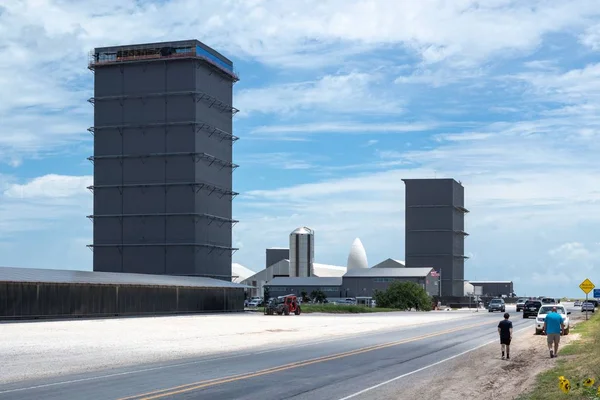
SpaceX Catches Starship Upper Stage With Tower Arms for First Time, Completing Orbital Round Trip
Ship 42 returned from orbit and was snagged by Mechazilla's chopstick arms at Starbase, a first for an orbital-class upper stage, while the Super Heavy booster was lost over the Gulf.
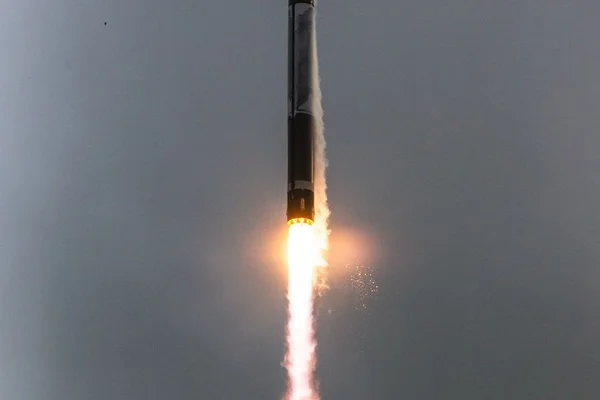
Rocket Lab's Electron Reaches 100 Launches With Japanese Radar Satellite
Electron's centenary flight from Mahia carried iQPS's YAMATSUMI-II radar spacecraft to a 575 km orbit, extending a run of 11 straight successes for the Japanese operator since 2023.
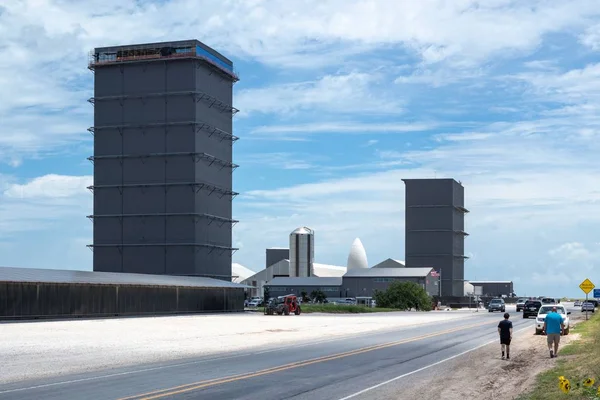
SpaceX Taps Germany's Singulus for 100 GW Solar Line to Power Starmind
Singulus will build a turnkey heterojunction cell line for SpaceX's Starmind orbital AI network, with delivery set for the first half of 2027 and plans for many more lines.
Comments (0)
Log in or sign up to leave a comment.
No comments yet. Be the first to share your thoughts.