SELLAS Life Sciences Group has spent years arguing that a therapeutic vaccine could do something that conventional drugs have struggled to do in acute myeloid leukemia: keep patients in remission long enough to live meaningfully longer. On November 17, 2026, the New York company said it finally has the Phase 3 numbers to support that argument, and investors responded by sending the stock up roughly 170%.
Acute myeloid leukemia is a cancer of the blood and bone marrow, and the population enrolled in the company's REGAL study represents one of its hardest corners. Every patient had reached a second or later complete remission, or a complete remission with insufficient platelet recovery, after second or later line salvage therapy. Every patient was also ineligible for, or unable to undergo, an allogeneic stem cell transplant, the intensive procedure that offers some patients a chance at a durable cure. In the words of Fierce Biotech, these are patients in second remission who cannot receive a stem cell transplant and have few options.
Galinpepimut-S, known as GPS, is designed for exactly that setting. It is an investigational immunotherapeutic cancer vaccine that targets the WT1 protein, which is present in several tumor types. The product consists of four WT1-derived peptides intended to stimulate CD4+ and CD8+ T-cell responses. It was discovered in the laboratory of David A. Scheinberg and is licensed from Memorial Sloan Kettering Cancer Center. SELLAS has positioned it as maintenance monotherapy, meaning it is given to patients whose leukemia has already been driven into remission, in the hope that the immune system will mop up residual disease and delay relapse.
The REGAL trial randomized 126 patients 1:1 to GPS or to investigator's choice of best available treatment, which the company describes as observation, a hypomethylating agent, and/or venetoclax, and/or low-dose cytarabine. The primary endpoint was overall survival. The analysis was conducted after the pre-specified 80 deaths, and the steering committee is chaired by Hagop M. Kantarjian, MD, of MD Anderson Cancer Center, who serves as global principal investigator, alongside Javier Pinilla-Ibarz, MD, PhD, of Moffitt Cancer Center and M. Yair Levy, MD, of Texas Oncology-Baylor. The trial is registered as NCT04229979.
Key Facts
GlobeNewswire reported on November 17 that REGAL met its primary overall survival endpoint, with GPS producing a 41% reduction in the risk of death, a hazard ratio of 0.59 and a two-sided p value of 0.035. Median overall survival was 24.0 months for the vaccine arm versus 14.7 months for best available treatment, a difference of about 9.3 months. The Company Chronicle reported on November 17 that the same dataset was summarized in an SEC-filed release.
Safety in the study was generally well tolerated. Treatment-related adverse events were predominantly grade 1 or grade 2, the most common being local injection-site reactions, and the company reported no new safety signals. That profile matters for a maintenance therapy given to patients who have already been through multiple lines of salvage treatment and who are, by definition, not strong enough for a transplant.
Fierce Biotech reported on November 17 that the peptide vaccine delivered a median overall survival of 24 months versus less than 15 months for best available therapy, calling it a more than nine-month improvement and a late-stage win for a long-running vaccine program. The outlet noted that detailed secondary-endpoint data are slated for a future medical conference and peer-reviewed publication.
The market reaction was violent. The Company Chronicle reported on November 17 that SLS traded near $20.22 at 12:41 p.m. ET, up 170.7% from Monday's $7.47 close, according to Nasdaq quote data, giving the clinical-stage company a market value of about $4.13 billion. The session range ran from $16.72 to $24.89, and the stock's 52-week low was $1.39. Bloomberg and Benzinga described the move as the stock tripling at its peak.
SELLAS said it plans to meet the FDA about an accelerated filing strategy and to prepare a biologics license application, or BLA, for submission in the first half of 2027. Chief executive Angelos Stergiou called the result a defining milestone and a Phase 3 validation of the WT1 platform. The company has not disclosed any financing or partnership alongside the data.
Analysis
The headline number is strong enough that the usual caution about single trials feels almost impolite, but the caution is still warranted. What this really means is that SELLAS has produced a statistically significant survival benefit in a disease setting where everyone had learned to expect failure, and it has done so with a tolerability profile that looks manageable. A hazard ratio of 0.59 implies that at any given point during follow-up, a patient on GPS had roughly 41% lower hazard of dying than a patient on best available treatment. In a second-remission AML population that cannot be transplanted, a nine-month median gain is not a marginal improvement; it is a change in the shape of the remaining life.
Yet the result is topline only. The Company Chronicle reported on November 17 that nobody outside the company has seen the full dataset, and it flagged the p value of 0.035 as clearing the conventional 0.05 threshold but not by much. With 126 patients and an analysis triggered at 80 deaths, a handful of events can move the estimate. Secondary endpoints, subgroup consistency and the details of how many patients in the control arm received each of the permitted therapies will all matter when they reach a conference and a journal. The steering committee's involvement and the pre-specified analysis plan are reassuring, but they are not a substitute for the full picture.
The bigger picture here is regulatory rather than statistical. A meeting with the FDA is not an agreement with the FDA. SELLAS has said it will discuss an accelerated filing strategy and is preparing a BLA for the first half of 2027, but the agency has not yet signaled that a single randomized trial in 126 patients will be enough for approval, and the company has not disclosed what endpoints or follow-up the agency will want. For a clinical-stage company that closed Monday at $7.47 with a 52-week low of $1.39, a $4.13 billion valuation now embeds a great deal of optimism about that conversation going well.
The human side of the story is the reversal among the company's critics. STAT News reported on November 17 that correspondent Adam Feuerstein wrote, "It looks like I was wrong about Sellas Life Sciences and its experimental blood cancer immunotherapy," after having predicted in September 2026 that galinpepimut would fail to prolong survival in the Phase 3 study. Feuerstein's column called the outcome unexpected and good news for patients with acute myeloid leukemia. That kind of public reversal is rare, and it captures why the result landed so hard.
Why It Matters
For patients, the trial addresses a gap that has no good answer. Adults with AML who reach a second remission but cannot undergo a transplant have limited options, and the control arm's 14.7-month median survival shows what current practice delivers. A maintenance vaccine that adds roughly nine months with mostly grade 1 and grade 2 injection-site reactions would be a genuine addition to that menu, assuming the full dataset holds up and a regulator accepts it.
For the field, the result is the first Phase 3 validation of the WT1 platform, according to Stergiou. WT1 is present in several tumor types, so a positive registrational study in AML would give the broader cancer vaccine category its most credible late-stage data point in years. The program has been shepherded by Memorial Sloan Kettering Cancer Center, where the product was discovered, and by MD Anderson's Kantarjian as global principal investigator, a combination that gives the data institutional weight beyond the sponsor's own press release.
For SELLAS as a business, the move from $7.47 to the low $20s changes the arithmetic of everything that comes next. The Company Chronicle noted that a first Phase 3 win can change how a clinical-stage company raises money, while stressing that no offering or partnership was disclosed. A $4.13 billion market value on a topline readout is a bet that the BLA path is real.
Next Up
The immediate milestone is the FDA meeting on an accelerated filing strategy, followed by preparation of a BLA for the first half of 2027. Investors should watch for any disclosure about the design of that meeting, whether the agency asks for additional follow-up, and whether the company pairs the filing with a financing or a partner. Detailed secondary-endpoint data at a medical conference and publication in a peer-reviewed journal are the other near-term checkpoints, and they are the first real opportunity for outsiders to test the topline against the underlying dataset.
Until then, the story rests on four numbers that SELLAS reported on November 17: 24.0 months versus 14.7 months, a hazard ratio of 0.59, a p value of 0.035, and 126 randomized patients. Those numbers are now the baseline against which every subsequent disclosure, every regulatory decision and every competing WT1 program will be measured.
Related Articles
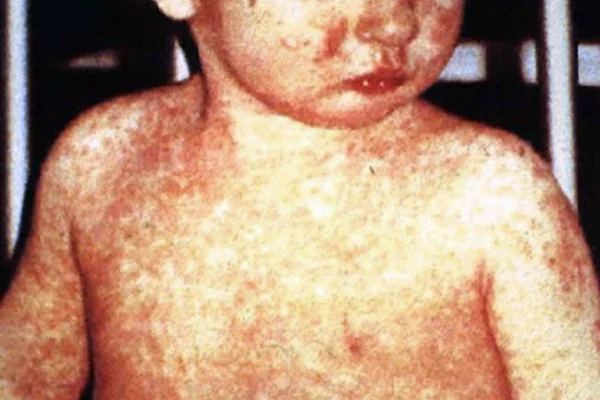
US Loses Measles Elimination Status After 26 Years as PAHO Finds Continuous Spread
Federal and state death tallies diverge and kindergarten vaccination sits at 92.4 percent, but the regional verdict turned on one question: did the virus circulate for twelve straight months?
Novo Nordisk Says Lower CagriSema Doses Deliver About 21 Percent Weight Loss in Phase 3
Two reduced CagriSema regimens matched roughly one fifth of body weight lost over 68 weeks in a 309 patient trial, while Novo Nordisk awaits a US decision on its higher dose filing.
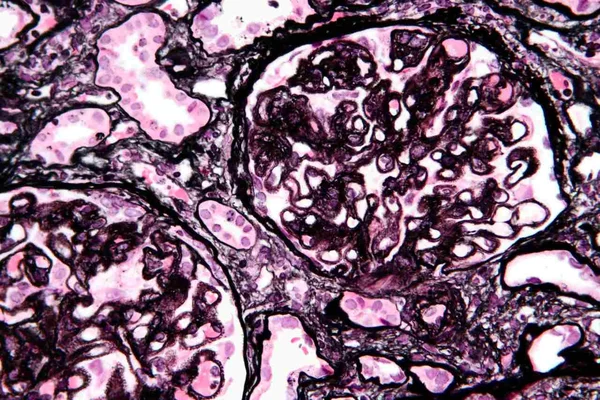
FDA Approves Gazyva, First Drug Specifically for Primary Membranous Nephropathy
Genentech's obinutuzumab becomes the first therapy cleared in the United States for a rare autoimmune kidney disease, backed by a 142 patient trial in which it far outperformed tacrolimus.
Comments (0)
Log in or sign up to leave a comment.
No comments yet. Be the first to share your thoughts.