Just after six in the evening on November 14, 2026, a slim rocket painted in black and gold rose from a pad on the Mahia Peninsula, the remote stretch of New Zealand's North Island where Rocket Lab has flown since 2017. The flight lasted only minutes, but it carried a number the small launch industry has been watching for years: 100. Rocket Lab's Electron became the first commercially developed rocket to reach a hundred orbital launches, a milestone the company had targeted and its customers had anticipated.
Electron is an unusual machine by the standards of the launch business. Standing 59 feet (18 meters) tall, it is built largely from carbon composite structures and powered by Rutherford, an engine the company describes as the first 3D-printed orbital rocket engine, using electric pumps rather than the gas turbines common in larger vehicles. Its path to orbit was not smooth. The first Electron launch, in May 2017, failed. The second, in January 2018, reached orbit, and the vehicle has since become a workhorse of the dedicated small satellite market.
The customer on this flight was the Institute for Q-shu Pioneers of Space, known as iQPS, a Fukuoka-based company assembling a constellation of roughly three dozen synthetic aperture radar satellites. Radar imaging is valuable because it sees the ground through cloud cover and in darkness, which matters for monitoring infrastructure, disaster response and maritime activity. Rocket Lab has become iQPS's primary launch provider, and the November 14 mission was the eleventh time the two companies have flown together.
Rocket Lab called the mission "The Mountain God Rises." Liftoff came at 6:30 p.m. local New Zealand time, which was 12:30 a.m. Eastern Standard Time and 0530 GMT on the same date. The payload, a satellite named YAMATSUMI-II, rode to a 575 kilometer low Earth orbit, roughly 357 miles above the planet, where it separated from the rocket's kick stage and began its operational life.
Key Facts
Space.com reported on November 14 that the Electron lifted off from Rocket Lab's New Zealand site on a mission marking the hundredth launch in company history, and that the rocket flew in a special black and gold livery for the occasion. The site also noted the record attached to the flight: according to Rocket Lab founder and CEO Peter Beck, no commercially developed rocket has reached 100 launches faster, not even SpaceX's Falcon 9. The mission was Rocket Lab's hundredth orbital Electron flight, a detail the company repeated in its own release the same day.
Rocket Lab announced on November 14 that the mission had deployed YAMATSUMI-II to a 575 kilometer low Earth orbit for iQPS. The company said the flight was its eleventh Electron launch for the Japanese operator and that all of those missions have succeeded since 2023, a run of 100 percent mission success. iQPS has booked seven more dedicated Electron launches through 2030.
iQPS said on November 14 that its QPS-SAR-19 satellite, named YAMATSUMI-II, launched at 2:30 p.m. Japan Standard Time and was deployed into its planned orbit about 50 minutes later. First communication was established roughly eight minutes after deployment, and the company confirmed that all satellite equipment was working properly. Later that evening iQPS confirmed the spacecraft had deployed its parabolic antenna and said it was preparing to acquire its first Earth observation data after scheduled calibration.
The reliability figure behind the milestone is 96 percent across the first 99 launches, a number Beck cited on the company's November 9 earnings call. MLQ.ai reported on November 14 that the hundredth flight extended that record and that the payload reached a 575 kilometer orbit at a 42 degree inclination. The same report noted that the 100 count covers orbital Electron launches only, and that the suborbital HASTE variant has flown nine additional missions.
Electron's design choices are central to the economics the company is selling. The vehicle is 18 meters tall, uses carbon composite tanks and structures, and relies on the electric pump Rutherford engine. Rocket Lab says its satellites and components have powered more than 1,700 missions in Earth orbit and beyond, a figure that speaks to how far the company has moved beyond being purely a launch provider.
Analysis
The obvious reading of the milestone is a scoreboard story, and Rocket Lab is happy to encourage that framing. The more interesting reading is about what a hundred flights do for a launch company's negotiating position. What this really means is that Electron has converted an engineering claim into an actuarial one: insurers, satellite operators and government buyers can now price risk against a track record rather than a prospectus.
The pace claim deserves its caveat. Comparing Electron with Falcon 9 is a comparison of eras as much as of vehicles. Electron began flying in 2017 into a market that dedicated small launch largely had to create, while Falcon 9 arrived with a cargo contract and a far larger addressable payload. Reaching 100 flights faster than a medium lift rocket is a genuine achievement for a vehicle of this class, but it also reflects that Electron's missions are smaller risks taken more often.
The bigger picture here is that the small launch market has consolidated around a very short list of providers that actually fly regularly, and Electron's 96 percent reliability across 99 launches is the credential that keeps it on that list. A hundred flights is not a marketing number. It is the threshold at which a rocket stops being an experiment and becomes infrastructure, and that distinction matters most for constellation builders, who need cadence more than they need any single spectacular mission.
iQPS illustrates the point. A radar constellation of roughly three dozen satellites requires repeated, predictable deployments over years, not one-off rides. Eleven Electron missions with no failures since 2023 and seven more booked through 2030 give the company a schedule it can plan capital spending against. For Rocket Lab, a customer that keeps returning is worth more than a headline, because it turns launch revenue into something closer to an annuity.
Why It Matters
For the launch industry, the milestone is evidence that dedicated small launch can sustain itself commercially. Electron's flight rate has been built on a mix of commercial, civil and defense customers, and the hundredth mission is a data point that competitors hoping to enter the market will have to answer for. A rocket that flies this often also generates the manufacturing and operations data that lowers cost over time.
For Earth observation, the mission adds another radar sensor to a growing fleet. Synthetic aperture radar satellites can image through clouds and at night, which makes them useful for flood mapping, tracking of land subsidence, infrastructure monitoring and maritime surveillance. iQPS is building toward a constellation of about three dozen spacecraft, and each successful launch moves that coverage from intermittent toward routine.
For Rocket Lab itself, the record serves a second purpose: it is the argument the company intends to make about its next vehicle. Electron's flight history is being used as the basis for Neutron, the company's reusable medium lift rocket. A hundred missions is a credibility asset that travels with the brand into a much more contested part of the market.
Next Up
Rocket Lab says the next hundred Electrons are already booked. Beck said on November 14 that "the next 100 Electrons are already booked so we're only accelerating from here," a line aimed as much at investors as at customers. The seven dedicated iQPS launches through 2030 give the manifest a visible base, and the company's satellite and component business continues to supply hardware for missions beyond its own rockets. The immediate question is cadence: whether Rocket Lab can keep pushing flight rate while bringing Neutron toward its first flight.
The YAMATSUMI-II spacecraft now begins calibration before its first imagery. If that process goes as planned, iQPS adds another working radar sensor to a constellation that is still far from complete, and Rocket Lab adds another entry to a record its competitors will now be measured against.
Related Articles

SpaceX Taps Germany's Singulus for 100 GW Solar Line to Power Starmind
Singulus will build a turnkey heterojunction cell line for SpaceX's Starmind orbital AI network, with delivery set for the first half of 2027 and plans for many more lines.
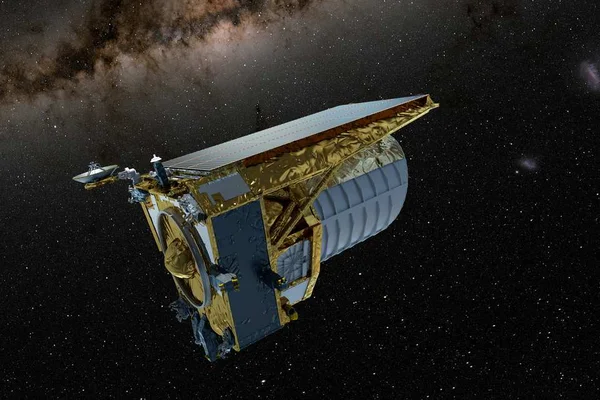
Euclid releases 1.7 petabytes of survey data cataloguing 900 million galaxies
Europe's dark energy telescope published 13 months of observations, including 15,000 gravitational lens candidates, as astronomers build a three dimensional atlas of the cosmos.

Rakuten and AST SpaceMobile form 51/49 joint venture for Japan's 148 billion yen satellite network
Japan's communications ministry has routed a three-year, 148 billion yen subsidy to a new Tokyo-based operator that will lease satellites from a Texas manufacturer and sell coverage to domestic carriers.
Comments (0)
Log in or sign up to leave a comment.
No comments yet. Be the first to share your thoughts.