For most of the history of spaceflight, the idea of recovering the upper stage of an orbital rocket has been treated as close to impossible. The first stage of a launch vehicle does the heavy lifting and separates at a comparatively low altitude and speed, which makes a controlled return difficult but achievable, as SpaceX demonstrated with its Falcon 9 booster fleet. The second stage, by contrast, has already done the work of reaching orbital velocity. Bringing it home means surviving a reentry from orbital speed, bleeding off enormous amounts of energy, and then arriving at a precise point on the ground intact enough to fly again. For decades the standard practice was to let that hardware burn up or sink.
SpaceX has spent years trying to change that calculus. Its Starship system, the largest and most powerful rocket ever built, was designed from the outset around the goal of full and rapid reuse of both stages. The company has been iterating in public, flying test after test from its Starbase facility in South Texas and accepting failures as part of the development process. Before this weekend, the program had already caught the massive Super Heavy booster with the arms of its launch tower on three occasions, but the ship itself, the upper stage that actually reaches orbit, had always ended up in the ocean, either by design or because something went wrong.
On November 14, 2026, that changed. After a flight that lasted more than 22 hours and carried the vehicle around the planet 14 times, the Starship upper stage came back from orbit and was caught in midair by the mechanical chopstick arms of the launch tower at Starbase. It was the first time in the history of rocketry that an orbital-class upper stage had been recovered at a launch site rather than discarded. The moment was celebrated by the company's webcast team as the closing of a long-open gap in the reusability story.
The achievement came wrapped in a partial failure. The Super Heavy booster that was supposed to return to the same tower minutes after liftoff instead diverted and was destroyed over the Gulf of Mexico. The contrast between the two outcomes, one a landmark success and the other a reminder of how unforgiving rocket recovery remains, framed the entire mission and set the agenda for what SpaceX must solve next.
Key Facts
SpaceX launched its 15th Starship test flight at 5:47 p.m. ET on Friday, November 13, 2026, from its Starbase site near Brownsville, Texas. The combined stack, which stands 124 meters (407 feet) tall and is described by the company as 40 stories high, roared off the pad on a mission the company hoped would become the first round-trip rocket voyage to orbit and back to the exact spot where it left Earth. The launch took place during a nationwide FAA ground stop affecting aircraft, though rockets rely on different tracking and navigation equipment and were not covered by the restriction.
The plan called for catching both stages. Minutes after separation, SpaceX attempted to guide the Super Heavy booster back to the tower, but the maneuver did not succeed. The booster diverted to an offshore splashdown in the Gulf of Mexico, and the company later said it had exploded a short distance above the sea surface. SpaceX identified the vehicle as Booster 22 and cited a low-fuel-mass alarm as the reason for the divert, though it has not published a fuller technical explanation. The ship, meanwhile, continued on its planned trajectory.
Ship 42, the 171-foot-tall upper stage, reached orbit about 27 minutes after launch, at an altitude of roughly 275 kilometers, only the second time a Starship vehicle has achieved orbital flight, following Flight 14 on September 28. It deployed all 26 Starlink V3 satellites about 36 minutes into the flight, bringing the total number of V3 satellites in orbit to 52. Cameras mounted on three Starlink satellites inspected the ship's heat shield while it was in orbit, and SpaceX used those images to clear the vehicle for its return attempt.
The catch itself occurred at 4:20 p.m. EST on Saturday, November 14, which was 2120 GMT and 3:20 p.m. local time in Texas, roughly 22.5 hours after liftoff. The vehicle settled into the chopstick arms of the tower SpaceX calls Mechazilla after completing 14 laps of the planet. SpaceX announced the result on X with the message that Mechazilla had caught Starship, and Dan Huot, speaking on the company webcast, called the moment the missing link and the holy grail of spaceflight, saying that the company had caught a Starship and that now everything changes.
The milestone did not come cheap or quickly. NASA has helped fund Starship's development with roughly $3.2 billion since selecting the rocket, and SpaceX itself has invested at least $15 billion in the project. The program has now flown 15 test flights since 2023. Before this mission, the 236-foot (72-meter) Super Heavy booster had been returned to its pad three times, the most recent in March 2025, and two of those earlier boosters went on to launch again. Every upper stage from the previous 14 flights had ended up in the ocean.
Analysis
The technical significance of the catch is easy to understate because the booster catches that preceded it made tower recovery look routine. It is not the same problem. A Super Heavy booster separates while still traveling on a relatively predictable arc and returns within minutes, close to the launch site. The ship spends hours in orbit, crosses the planet 14 times, and reenters at orbital velocity with a heat shield that must survive temperatures exceeding 2,000 degrees Fahrenheit. It then has to arrive within the small catching envelope defined by two steel arms. Reuters reported on November 14 that bringing the upper stage back intact would mark a breakthrough in reducing spaceflight costs, and that framing is correct but incomplete: the harder point is that the ship is the expensive, complex half of the system, carrying the engines, the avionics, the payload bay and the heat shield. Recovering the booster saves the tanks and engines of stage one. Recovering the ship is what makes the economics of an airline-style operation conceivable at all.
What this really means is that Starship has crossed from a demonstration program into an engineering program with a known, bounded set of remaining problems. The catch proves the guidance, the structure and the thermal protection can survive the full loop. What it does not prove is turnaround. A caught vehicle sitting on a tower is not a reused vehicle. SpaceX still has to show that the heat shield can be inspected and certified quickly, that engines can be swapped without a months-long refurbishment, and that the tower can support a cadence measured in days rather than months. The company intends to be reliably reusing Starship vehicles by the time it flies Artemis IV, the NASA mission slated for 2028 that could return astronauts to the moon for the first time since Apollo, according to what a SpaceX spokesperson told CNN on November 14. That deadline is the real specification, and it is unforgiving.
The booster failure is the more instructive half of the story. SpaceX had caught Super Heavy three times before and skipped the attempt this time because the vehicle was short on fuel, then saw it explode over the water. Dan Huot said on the webcast that the company was not sure right now why it was not able to bring the booster back. No Super Heavy V3 booster had attempted a tower catch before this flight, and the vehicle had completed a 33-engine static fire in October. The shift to a new booster version appears to have reintroduced risk into a maneuver the company had started to treat as solved. Recovery crews worked to secure the area, and an environmental team was to recover debris washing ashore at Boca Chica Beach. Getting the ship catch right while the booster regresses is an awkward trade, because a fully reusable system needs both halves working on the same flight.
There is also a strategic motive that goes beyond cost. SpaceX says rapid catch-and-reflight is needed for its planned Starmind AI data-center constellation of up to a million spacecraft, a figure that dwarfs the roughly 11,000 satellites in the current Starlink network. A constellation of that scale cannot be built with expendable upper stages, and it cannot be built with a factory that produces a handful of ships per year. The catch is therefore not just a stunt or a record. It is a prerequisite for a business plan that the company has already begun describing publicly, and it explains why executives have been willing to absorb booster losses and public setbacks in exchange for data.
Why It Matters
The immediate consequence is that the last major unproven step in full rocket reuse has now been demonstrated at least once. DW reported on November 14 that the upper stages of the 14 previous Starship missions all ended up in the ocean, either by design or because of failures. That streak is broken. Engineers can now examine a returned ship's heat shield, engines and nose cone in a hangar rather than reconstructing performance from telemetry and wreckage. Every future design decision about thermal protection, tile attachment, flap erosion and engine health gains a physical ground truth that the program did not previously have.
The broader consequence concerns NASA and the Artemis timeline. Starship is the lander NASA has selected for the crewed lunar surface missions, and the agency has put roughly $3.2 billion into its development. A rocket that cannot be reused reliably is a rocket that cannot support a sustained lunar program at any reasonable price. The company's stated intention to be reusing ships routinely by Artemis IV in 2028 now has a demonstration behind it, even if the schedule remains under pressure from technical challenges. Musk has said he expects weekly Starship launches by the first half of 2027, a cadence that would itself require the turnaround capability the catch is meant to enable.
For the wider industry, the milestone resets expectations about what is considered feasible. SpaceX President Gwynne Shotwell called the result alien-level technology, a description that captures how far the company's practice has drifted from conventional practice. Competitors and space agencies that had planned around expendable upper stages now face a different cost baseline if SpaceX can convert this single catch into routine operations. The gap between a first demonstration and a dependable service is where most programs fail, and that gap is now the only thing standing between the current result and the economics the company has promised.
Next Up
SpaceX has not announced a date for the next Starship flight, and the immediate work is inspection. The returned Ship 42 will be examined to determine how much of its heat shield survived and what refurbishment it needs, while the company investigates why Booster 22 diverted and was destroyed. A return to catching both stages on a single mission is the obvious next target, and it will require the newer V3 booster to succeed at a maneuver that earlier versions had already managed three times.
The larger test comes after that, when a caught ship flies again. Until a recovered upper stage lifts off a second time, the round trip remains a demonstration rather than an operating capability. Reuters reported on November 14 that the mission was intended as a key test of Elon Musk's effort to build a fully reusable rocket system, and by that standard the verdict is promising but unfinished. The ship came home. The question now is whether it can leave again.
Related Articles
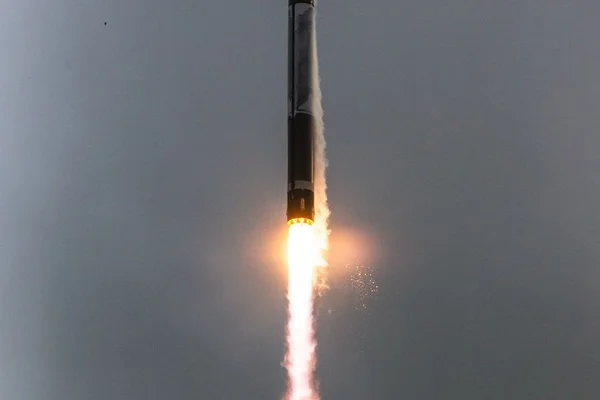
Rocket Lab's Electron Reaches 100 Launches With Japanese Radar Satellite
Electron's centenary flight from Mahia carried iQPS's YAMATSUMI-II radar spacecraft to a 575 km orbit, extending a run of 11 straight successes for the Japanese operator since 2023.
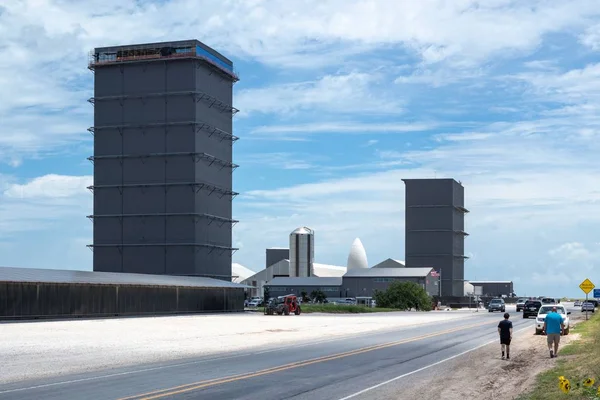
SpaceX Taps Germany's Singulus for 100 GW Solar Line to Power Starmind
Singulus will build a turnkey heterojunction cell line for SpaceX's Starmind orbital AI network, with delivery set for the first half of 2027 and plans for many more lines.
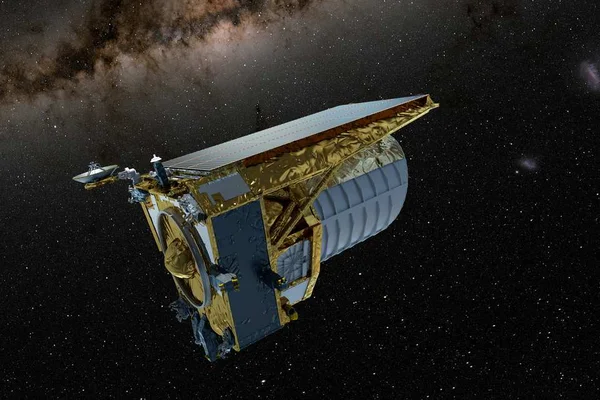
Euclid releases 1.7 petabytes of survey data cataloguing 900 million galaxies
Europe's dark energy telescope published 13 months of observations, including 15,000 gravitational lens candidates, as astronomers build a three dimensional atlas of the cosmos.
Comments (0)
Log in or sign up to leave a comment.
No comments yet. Be the first to share your thoughts.