SK Hynix on August 22 announced a treasury share retirement equal to 3.3% of outstanding stock, worth roughly $10 billion at current prices, while TSMC chairman and CEO C.C. Wei told investors at the company's Q2 investor conference on August 21 that chip supply will not catch up with AI-fueled demand for "years to come." The two announcements, separated by 24 hours, redraw the 2027 bottleneck map: the memory side is now treating scarcity as durable cash flow, while the foundry side is signaling that even aggressive capacity build-outs will not dent pricing power.
The SK Hynix Buyback
SK Hynix's board approved the retirement of 25 million treasury shares, equal to 3.3% of the 750 million shares outstanding. At the August 21 close of ₩478,000 per share on the KOSPI, the program is worth roughly ₩11.9 trillion, or about $10 billion. The decision is unusual for a Korean memory maker — buybacks at this scale are typically reserved for mature cash-cow businesses, not companies in the middle of a $30 billion capex cycle on HBM4 and HBM4E packaging. CFO Kim Woo-jin told reporters the retirement was designed to "return surplus cash to shareholders while signaling that we view current memory pricing as sustainable through 2027."
TSMC's Demand Warning
C.C. Wei's August 21 remarks were sharper than his usual scripted guidance. "I have been in this industry for 40 years, and I have never seen demand outrun supply like this," Wei told analysts on the company's Q2 call. "Even with our Arizona, Kumamoto and Dresden expansion, we cannot satisfy every customer request for the next several years. The industry has moved from a cyclical business to a structurally tight one." Wei noted that 3-nanometer capacity is sold out through 2027 and that 2-nanometer capacity is already allocated to four customers — Apple, NVIDIA, Qualcomm and MediaTek — with AMD and Broadcom negotiating for whatever slots remain.
Why the Two Stories Connect
The buyback and the warning are not independent. SK Hynix's HBM4 line depends on TSMC's advanced packaging (CoWoS-L) for the logic die, and any TSMC capacity constraint directly caps SK Hynix's HBM revenue. Wei's remarks imply that even if SK Hynix finishes its M16 fab on schedule in Q1 2027, the bottleneck moves upstream to CoWoS slots. Investors read the two statements together as a signal that the AI memory super-cycle has at least another 18 months of pricing power — a thesis that lifted SK Hynix shares 4.2% on August 22 to a new all-time high.
The Packaging Constraint
TSMC's CoWoS-L capacity is the real pinch point. The company is adding 35,000 wafers per month of advanced packaging through 2026, but demand from NVIDIA's GB300 and Vera Rubin, AMD's MI400, Broadcom's hyperscaler-custom ASICs and Qualcomm's AI inference chips already exceeds that capacity. Industry estimates put the gap at 25% to 30% through Q2 2027, which is why NVIDIA's August 22 announcement of a 15% AI server price hike for 2027 deliveries landed as expected rather than shocking — the entire chain is rationing.
What to Watch Through Year-End
Three checkpoints follow. SK Hynix's Q3 results on October 24 will reveal whether the 3.3% retirement was the first of multiple buybacks or a one-time signal — analysts at KB Securities expect another 2% retirement by year-end if HBM4 pricing holds above $400 per GB. TSMC's October 16 capex update will reveal whether Wei's "structural tightness" comments translate into a higher 2027 capex guide; consensus expects $48 billion to $52 billion, up from $38 billion in 2026. And the Micron-Samsung HBM4 capacity race, which Intel confirmed it will qualify in Q1 2027, will determine whether the HBM market stays a SK Hynix duopoly or becomes a three-player field that finally gives buyers leverage.
Related Articles
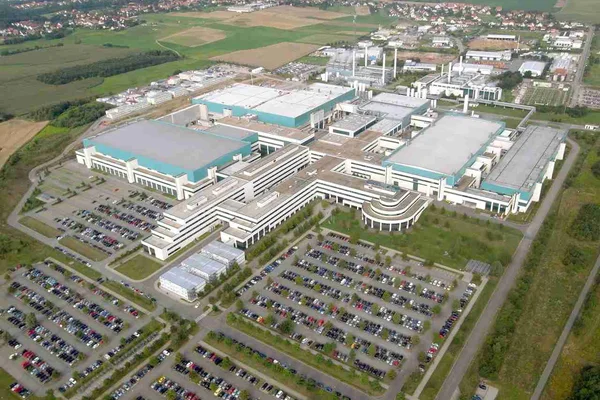
GlobalFoundries signs $2 billion five-year deal with TSMC for first US silicon interposer supply
GlobalFoundries will build silicon interposers for TSMC at its Malta, New York fab under a five-year, $2 billion agreement, with volume production expected in the first half of 2028.
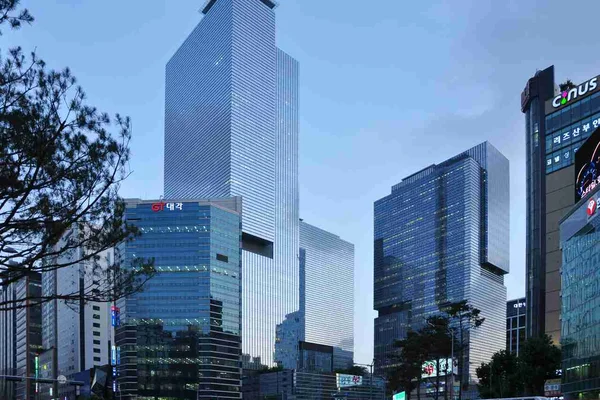
Samsung posts record $80.2 billion quarterly profit as AI memory boom lifts chipmakers
Samsung's preliminary third quarter figures point to a 782.5 percent profit jump and a 55 percent operating margin, with TSMC also booking record revenue on the same AI demand.
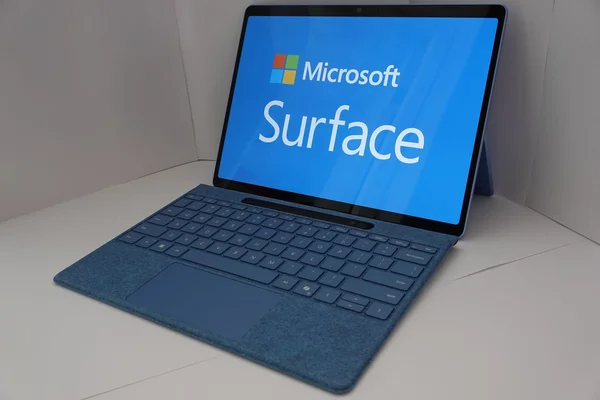
Microsoft Opens Preorders for Surface Laptop Ultra Starting at 2599
The 15 inch Surface Laptop Ultra pairs Nvidia's RTX Spark N1X superchip with up to 128 GB of unified memory and ships October 16 starting at $2,599.
Comments (0)
Log in or sign up to leave a comment.
No comments yet. Be the first to share your thoughts.