Nvidia has warned some of its largest customers that prices of servers containing its AI accelerators will rise by more than 15% on many configurations, Bloomberg reported on August 23, citing people familiar with communications that have not yet been made public. The increases will take effect on Grace Blackwell and Vera Rubin systems shipping in early 2027, and will affect contract manufacturers including Microsoft, Google, and Oracle, which have begun notifying their own customers, according to Tom's Hardware.
Why the Hike
Nvidia's Rubin GPU ships with up to 288 GB of HBM4 memory per package, and the NVL72 rack-scale system combines 72 of those GPUs for more than 20 TB of HBM4 per rack, before accounting for LPDDR attached to the Vera CPUs. With HBM production consuming roughly four times the wafer area of equivalent conventional DRAM, memory has become one of the largest line items in an AI server's bill of materials. The same supply crunch inflating Nvidia's systems is one Nvidia's demand helped create: SK Hynix, Samsung, and Micron have spent the past two years shifting advanced capacity toward HBM and high-capacity server DRAM, starving commodity markets in the process.
How Big the Hit Is
A 15% increase on rack-scale systems that sell for several million dollars each adds hundreds of thousands of dollars per rack, multiplied across deployments that run to thousands of racks at the largest hyperscalers. Consumer DRAM has borne much of the spillover: a mainstream 32 GB DDR5-6000 kit now sells for around $392 in August, against $110 to $140 a year earlier, Tom's Hardware's RAM price tracker shows. Nvidia already passed rising costs through to consumers earlier this month with GeForce RTX 50-series price hikes of up to 39%.
Strategic Logic
Nvidia runs a gross margin of roughly 75% on a non-GAAP basis, among the highest in the semiconductor industry, and the reported hikes indicate the company intends to pass memory cost inflation to customers rather than absorb it. TSMC supply still cannot meet demand for Nvidia's accelerators, which limits buyers' immediate leverage. Whether the increases push hyperscalers further toward AMD's MI455X-based Helios systems or toward their own custom silicon will depend on how quickly those alternatives can absorb displaced demand, and all of them draw HBM from the same three constrained suppliers.
What to Watch Through Year-End
Three checkpoints follow. Nvidia's earnings call on Wednesday will reveal the gross-margin trajectory for the data-center segment and may quantify the price pass-through. SK Hynix, Samsung, and Micron are all bringing new HBM4 capacity online through Q1 2027, but wafer allocations are already largely committed to Nvidia, AMD, and a handful of custom-silicon customers. The first 2027 shipments of Vera Rubin systems, expected in March, will reveal whether 15% becomes a floor or whether further hikes follow once the new capacity is online.
Related Articles
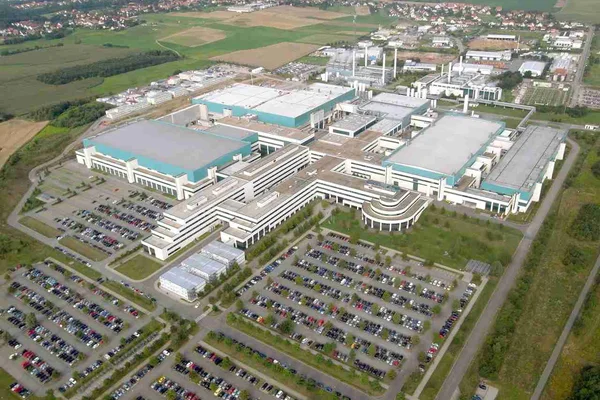
GlobalFoundries signs $2 billion five-year deal with TSMC for first US silicon interposer supply
GlobalFoundries will build silicon interposers for TSMC at its Malta, New York fab under a five-year, $2 billion agreement, with volume production expected in the first half of 2028.

Samsung posts record $80.2 billion quarterly profit as AI memory boom lifts chipmakers
Samsung's preliminary third quarter figures point to a 782.5 percent profit jump and a 55 percent operating margin, with TSMC also booking record revenue on the same AI demand.
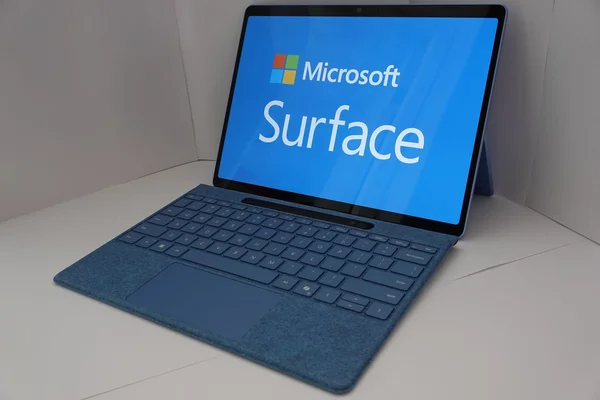
Microsoft Opens Preorders for Surface Laptop Ultra Starting at 2599
The 15 inch Surface Laptop Ultra pairs Nvidia's RTX Spark N1X superchip with up to 128 GB of unified memory and ships October 16 starting at $2,599.
Comments (0)
Log in or sign up to leave a comment.
No comments yet. Be the first to share your thoughts.