Some of Nvidia's biggest customers have been told that the prices of servers containing its artificial-intelligence chips are going up more than 15% in many cases, with memory chip costs soaring. The increases will go into effect on systems shipped in early 2027 and will hit systems including those with the flagship Vera Rubin and Grace Blackwell chips, according to people familiar with the matter who asked not to be identified commenting on communications that have not yet been made public.
Where the Pressure Comes From
The inability of the industry's most dominant company to hold the line on prices or absorb growing costs shows how much leverage makers of memory chips — Samsung Electronics, SK Hynix and Micron Technology — have amid a surge in demand for AI infrastructure. Companies that build the servers under contract for large data-center operators such as Microsoft, Alphabet's Google and Oracle have recently notified their customers of the forthcoming increases. Major technology companies including Apple and Qualcomm have recently said they have been forced to charge more for their products because of chip shortages.
Samsung Foundry Joins the Move
Samsung raised prices on new orders across its 4nm, 5nm and 8nm foundry processes in July, with increases reaching 15% for customers in China and the US, Reuters reported on August 19 citing two people familiar with the matter. Customers in China and the US saw quotes for the 4nm SF4 process climb 10% to 15% from June, while customers in Taiwan saw smaller increases of 5% to 10%. Wafers on the 5nm SF5 process rose 10% to 15%, and the 8nm node went up by close to 10%. Samsung's 4nm line at Pyeongtaek has reportedly been running at full capacity since late last year. Chinese chip designers, cut off from advanced chipmaking tools by US export controls, are accepting the largest hikes.
Micron's Counter-Bet: $10B Research Lab
On August 21, Micron announced plans to establish the Micron Research Lab with a $10 billion investment over the next decade. The Boise, Idaho facility will explore memory, computing, packaging and semiconductor manufacturing technologies that could be commercialized more than a decade from now. CEO Sanjay Mehrotra told CNBC's Mad Money on August 20 that AI has "totally changed" the equation for the memory industry. "Today there is no AI without memory. AI systems need more memory. They need higher-performance memory. They need lower-power memory," Mehrotra said. Data-center customers currently want roughly 50% more supply than Micron is able to commit, and the company has signed five-year strategic agreements with 16 customers since the June earnings call.
The Supply-Chain Geometry
The price increases are also likely to add complexity to the industry's massive AI data-center build-out ambitions. Project delays, labor shortages, tightening capital markets and community resistance to developments have already complicated many plans. Major customers like Amazon, Microsoft, Google and Meta are all pursuing their own in-house chip programs but are still dependent on purchases from Nvidia for their data-center build-outs. Their ability to push forward with greater independence will also depend on their access to supply from Samsung, SK Hynix and Micron. Nvidia is reporting fiscal second-quarter earnings next week.
What to Watch Through Year-End
Three checkpoints follow. Nvidia's fiscal Q2 print will quantify how much of the memory-cost pressure is already hitting gross margins and whether customers have begun pre-ordering 2027 inventory at the new prices. Samsung's 2nm wafer pricing — already cut to $20,000 per wafer in an attempt to undercut TSMC by roughly a third — will indicate whether the foundry market can sustain two-tier pricing through 2027 or whether TSMC's planned 5-10% increases across all sub-5nm nodes reset the floor higher. And Micron's first Boise fab — expected to begin producing wafers in mid-2027 — will be the test of whether the $250 billion US manufacturing investment translates into capacity that actually relieves the bottleneck.
Related Articles
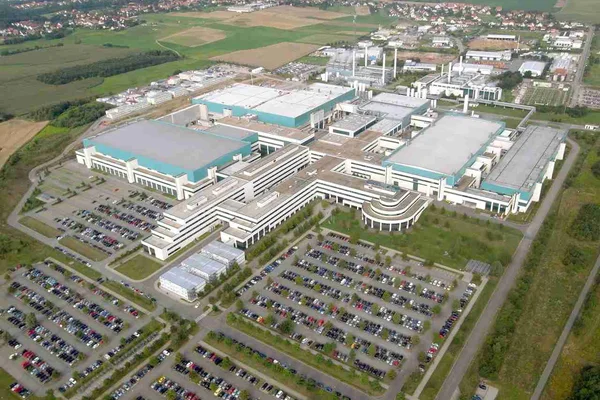
GlobalFoundries signs $2 billion five-year deal with TSMC for first US silicon interposer supply
GlobalFoundries will build silicon interposers for TSMC at its Malta, New York fab under a five-year, $2 billion agreement, with volume production expected in the first half of 2028.

Samsung posts record $80.2 billion quarterly profit as AI memory boom lifts chipmakers
Samsung's preliminary third quarter figures point to a 782.5 percent profit jump and a 55 percent operating margin, with TSMC also booking record revenue on the same AI demand.
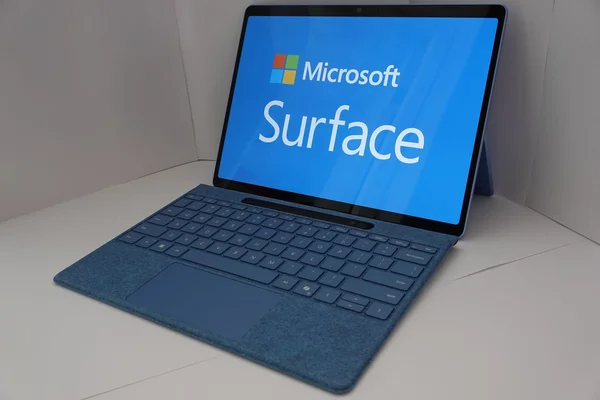
Microsoft Opens Preorders for Surface Laptop Ultra Starting at 2599
The 15 inch Surface Laptop Ultra pairs Nvidia's RTX Spark N1X superchip with up to 128 GB of unified memory and ships October 16 starting at $2,599.
Comments (0)
Log in or sign up to leave a comment.
No comments yet. Be the first to share your thoughts.