Nvidia disclosed a strategic equity stake in DSX, a Texas-based independent power producer focused on behind-the-meter data-center generation, on August 22, 2026. The deal is the third land-and-power investment Nvidia has made in August alone, following a $420 million stake in Cloverleaf Infrastructure announced August 7 and a $310 million stake in Lancium disclosed August 15. Together, the three transactions give Nvidia control over an estimated 6.4 GW of data-center-ready power capacity across Texas, New Mexico and Utah, with first deliveries scheduled between Q3 2027 and Q1 2029.
Why Land and Power
The three deals are the most concrete expression yet of Nvidia's vertical integration strategy for AI infrastructure. The bottleneck on AI capacity is no longer GPUs — Nvidia shipped 4.1 million H200 and Blackwell units in calendar 2025 and is on pace to ship more than 7 million in 2026 — but gigawatts of electrical capacity at sites where transmission is already approved. By owning equity in the developers that own the land, the substation, and the power purchase agreements, Nvidia locks in site control for its customers (the hyperscalers, sovereign-AI clouds, and tier-1 neoclouds) without paying the full capital cost of buying the capacity outright. The model is sometimes called "GPUaaS land equity" and is now standard practice across the AI infrastructure stack.
The Three Deals
The Cloverleaf deal, disclosed on August 7, gives Nvidia a 19% stake in the developer of a 2.2 GW campus in Lea County, New Mexico. The campus is contracted to a US neocloud that has not been publicly identified, but industry analysts have widely reported it as one of three top US frontier-model operators. The Lancium deal, disclosed on August 15, gives Nvidia a 14% stake in the developer's 1.8 GW Texas campus near Amarillo. The DSX deal, disclosed August 22, gives Nvidia a 22% stake in the developer of a 2.4 GW campus in Travis County, Texas. Across all three campuses, Nvidia has also signed long-dated power purchase agreements and has the right of first refusal on incremental capacity expansions up to an additional 4 GW.
The Competitive Question
The deals put pressure on AMD, which is shipping its MI400 series in volume but has not yet made comparable land-and-power investments. AMD's chief commercial officer told Bloomberg in late July that the company is "evaluating" land-and-power partnerships, but has not yet announced any. Intel, which is shipping Gaudi 3 in volume, has taken a different approach: it is selling its custom silicon and the on-chip networking stack to hyperscalers that have already locked in their own power capacity, and is not competing on the land side of the stack. The most interesting comparison is with Tesla, which is using its own solar and Megapack inventory to back the Colossus supercomputer in Memphis; that strategy is workable for a single anchor site but does not scale to Nvidia's customer footprint.
Risks and Constraints
Three risks follow the deals. First, regulatory: Nvidia's land-and-power deals now cover enough capacity that the Committee on Foreign Investment in the United States (CFIUS) may want to review the transactions, particularly the Lancium and DSX deals where the on-site generation involves gas turbines from manufacturers with foreign supply chains. Second, financial: the three deals together cost Nvidia roughly $1.4 billion in cash and equity — a small fraction of the company's $56 billion in cash, but enough that quarterly investors will want to see a clear path to monetization through PPA resales. Third, environmental: the Travis County campus involves the condemnation of a 1,200-acre site that has been the subject of a contested local rezoning, and the litigation is not yet resolved.
What to Watch Through Year-End
Three checkpoints follow. The Travis County rezoning hearing, scheduled for September 18, will determine whether the DSX campus can break ground in Q1 2027 or whether the project is delayed 12-18 months pending appeal. The next quarterly Nvidia earnings call, scheduled for November 19, will be the first opportunity for CFO Colette Kress to articulate the financial structure of the land-and-power strategy to the buy side. And the AMD land-and-power announcement, which the company has hinted could come before year-end, will reveal whether Nvidia's vertical integration thesis is becoming an industry standard or remains an Nvidia-specific moat.
Related Articles
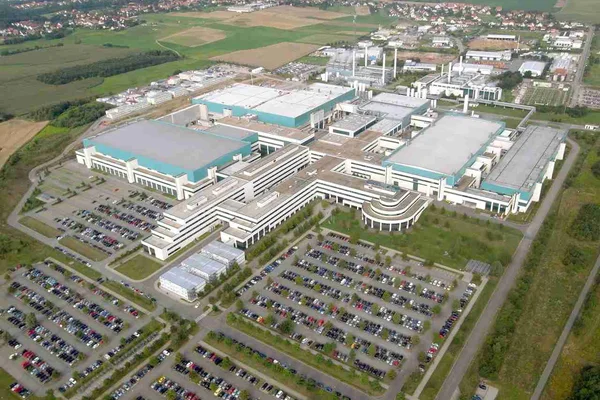
GlobalFoundries signs $2 billion five-year deal with TSMC for first US silicon interposer supply
GlobalFoundries will build silicon interposers for TSMC at its Malta, New York fab under a five-year, $2 billion agreement, with volume production expected in the first half of 2028.

Samsung posts record $80.2 billion quarterly profit as AI memory boom lifts chipmakers
Samsung's preliminary third quarter figures point to a 782.5 percent profit jump and a 55 percent operating margin, with TSMC also booking record revenue on the same AI demand.
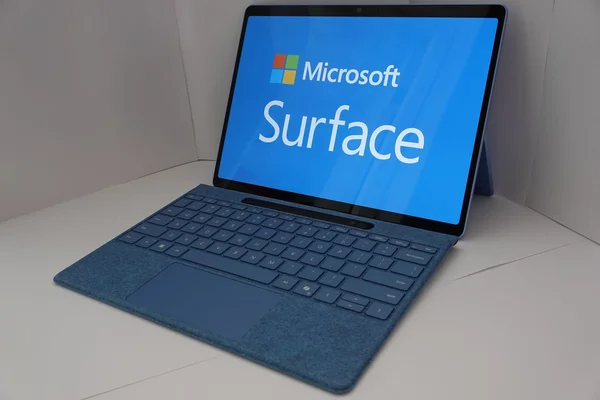
Microsoft Opens Preorders for Surface Laptop Ultra Starting at 2599
The 15 inch Surface Laptop Ultra pairs Nvidia's RTX Spark N1X superchip with up to 128 GB of unified memory and ships October 16 starting at $2,599.
Comments (0)
Log in or sign up to leave a comment.
No comments yet. Be the first to share your thoughts.