For nearly three decades, a small, crushed fossil from Scotland was celebrated as one of the earliest known reptiles and served as a landmark in debates about when amniotes, the group that includes reptiles, birds and mammals, first conquered dry land. The specimen, Westlothiana lizziae, nicknamed Lizzie, was discovered in 1984 at East Kirkton Quarry in West Lothian, Scotland, by Stan Wood, and it was formally described and named in 1990 from the surface anatomy of two crushed slabs of rock. Its nearly complete skeleton, four limbs, five-toed hands and feet, and superficially claw-like fingertips made it a poster child for the earliest terrestrially adapted stem amniote.
That long-standing interpretation has now collapsed. A study published in Nature on September 30, 2026, and led by researchers at the American Museum of Natural History and the University of Oxford, in collaboration with the European Synchrotron Radiation Facility, used X-ray tomography to see inside the 345-million-year-old fossil without damaging it. The scans revealed a surprisingly primitive skull, ossified internal gills and a fish-like mouth lined with thousands of tiny teeth. Those features rule out Westlothiana as an ancestor of reptiles and instead point to an aquatic or amphibious lifestyle.
The fossil, catalogued as NMS G.1990.72.1 and held at National Museums Scotland, has been a fixture in vertebrate evolution for about 30 years. Because the specimen was deformed and difficult to interpret, its status rested almost entirely on external features. No researcher had ever examined its internal anatomy. The new work, published with DOI 10.1038/s41586-026-11090-6 under the title 'Evolution of terrestrial anatomy revealed by a derived stem tetrapod', changes that by combining high-resolution synchrotron imaging with phylogenetic analysis.
Nature reported on September 30, 2026, that the paper provides considerable new data on the enigmatic Early Carboniferous Westlothiana lizziae, widely cited as the earliest terrestrially adapted stem amniote. The journal's abstract notes that tetrapods, the limbed vertebrates that include lissamphibians and amniotes, now comprise half of all vertebrate species. Limbs first appeared in stem tetrapods by the Late Devonian, 365 million years ago, but many taxa have fin-like limbs or secondarily lost them, raising questions about the ecological context of the tetrapod limb. Westlothiana, it turns out, sits in that transitional space.
Key Facts
The European Synchrotron Radiation Facility reported on September 30, 2026, that the research team used X-ray tomography on the ID19 beamline in Grenoble, France, to see through the rock and reconstruct anatomical structures invisible from the fossil's surface. The scans exposed a primitive skull as well as ossified internal gills and a fish-like mouth lined with thousands of tiny teeth. According to the ESRF, those features rule out Westlothiana as an ancestor of reptiles and indicate an aquatic or amphibious, not terrestrial, lifestyle.
Xavier Jenkins, a postdoctoral fellow in the American Museum of Natural History's Division of Paleontology and co-lead author, said that Lizzie has been an icon for the early evolution of amniotes for decades, but that when the team was finally able to see inside the fossil, it found an animal that looked very different from what was expected. Ben Igielman, co-lead author who began the work during his PhD at Oxford, said the primitive skull shows Lizzie was not only not a reptile, but belonged to a much more ancient lineage. Co-author Roger Benson, the Museum's Macaulay Curator of Paleontology, called the result a big surprise, noting that some reptile traits were already present in the ancestor of both amphibians and reptiles.
Phys.org, reporting on the American Museum of Natural History's press story on September 30, 2026, noted that the fossil was discovered in 1984 and that since it was described in 1990, Westlothiana has been used as a landmark fossil in discussions of the origin and timing of amniotes. The fossil is 345 million years old and comes from the Early Carboniferous. Its two crushed slabs preserve a nearly complete skeleton with four limbs and digits bearing superficially claw-like tips. The new study concludes that traits once assumed exclusive to land-adapted amniotes, including claws and the five-digit foot structure, had already evolved among earlier, more aquatic stem tetrapods.
Scienmag reported on October 1, 2026, that for more than three decades the crushed Scottish specimen held a place of extraordinary importance in vertebrate evolution, celebrated as one of the earliest known reptiles and used as a calibration point for when amniotes first conquered dry land. The feature-length account describes how high-resolution X-ray imaging at the ESRF in Grenoble built a three-dimensional picture of the animal's internal anatomy without damaging it. The scans exposed a surprisingly primitive skull, ossified internal gills and a fish-like mouth lined with thousands of tiny teeth, each incompatible with Westlothiana being a reptile or amniote ancestor. Internal gills point to an aquatic or amphibious lifestyle.
Analysis
The bigger picture here is that the boundary between aquatic and terrestrial life in the early evolution of tetrapods was far blurrier than a single fossil specimen can capture. Westlothiana was not a fraud or a mistake in the field; it was a genuinely transitional animal whose mosaic of features was read through the wrong lens. The Nature paper describes unexpected plesiomorphies of the skull roof, palate, braincase and mandible, alongside aquatic adaptations such as an ossified internal gill skeleton and extensive denticles on the palate and mandible. Phylogenetic analyses return Westlothiana as a stem tetrapod, not a stem amniote.
What this really means is that terrestrial adaptations such as an amniote-like pedal formula, loss of fin-like forelimb function and superficially claw-like terminal phalanges evolved in a mosaic fashion in a transitional, amphibious context before the origin of the tetrapod crown group. The ESRF notes that the findings also mean clawed fossil trackways alone can no longer establish that their maker was an amniote, undercutting claims that amniotes originated in the Devonian more than 359 million years ago. This is a significant recalibration of the fossil record, because trackways had been used as independent evidence for a deep origin of amniotes. If the track-maker could have been an aquatic stem tetrapod with claw-like digits, the trackways lose their power to date the amniote split.
The study also serves as a methodological lesson. Synchrotron X-ray tomography on the ID19 beamline allowed the team to peer through rock that had frustrated generations of paleontologists. The fossil's internal gills and fish-like teeth were invisible from the surface, and the specimen was too fragile and too valuable to prepare destructively. Nature reported on September 30, 2026, that the paper had 90 Altmetric by the time of retrieval, a sign of rapid attention. The work shows that some of the most consequential discoveries in paleontology now come not from new excavations but from new ways of seeing old specimens.
Institutionally, the collaboration spans the American Museum of Natural History, the University of Oxford and the European Synchrotron Radiation Facility, with additional authors including Jason Head of Cambridge, Vincent Fernandez of the ESRF, Lucy Roberts of the Natural History Museum in London, and Timothy Smithson of the University Museum of Zoology, Cambridge. That mix of museum collections, university expertise and a large-scale physics facility is increasingly typical of high-impact paleontology. The fossil itself, NMS G.1990.72.1, remains at National Museums Scotland, but its scientific identity has been rewritten.
Why It Matters
Why It Matters because Westlothiana was a calibration point. For nearly 30 years, the fossil was used to anchor the timing of amniote origins and the first conquest of dry land. Textbooks, museum displays and phylogenetic analyses treated it as one of the earliest known reptiles. Removing it from that position changes the baseline for when amniotes actually appeared and how their hallmark traits, such as the five-digit foot and claw-like tips, should be interpreted. The Nature paper states that these features evolved in a mosaic fashion in a transitional, amphibious context before the tetrapod crown group originated.
The finding also weakens a separate line of evidence. Clawed fossil trackways, which had been read as proof that amniotes existed in the Devonian more than 359 million years ago, can no longer carry that weight alone. If an aquatic or amphibious stem tetrapod could make similar tracks, then the trackways do not uniquely identify amniotes. This undercuts claims for a Devonian origin of amniotes and pushes the debate back toward body fossils, where the evidence is scarcer but more direct.
Beyond the specific group, the study underscores how much of vertebrate evolution is mosaic. Limbs first appeared in stem tetrapods by the Late Devonian, 365 million years ago, but many taxa had fin-like limbs or lost them. Westlothiana adds to a growing picture in which tetrapods experimented with terrestrial anatomy while still living in and out of water. That has implications for how paleontologists interpret fragmentary fossils and for how evolutionary transitions are taught.
Next Up
Next up, researchers will need to revisit other early tetrapods that were classified on surface anatomy alone. The same synchrotron tomography approach could be applied to specimens that have been too fragile or too embedded to prepare. The team's conclusion that Westlothiana is a derived stem tetrapod rather than the earliest terrestrially adapted stem amniote also invites a re-examination of the phylogenetic characters used to define early amniotes. Nature published the study on September 30, 2026, and the ESRF has made the imaging methodology clear, so the path is open for similar work.
For now, Lizzie remains a Scottish fossil with a new identity. It is no longer the world's oldest reptile, but it is still an important transitional animal, one that records the moment when fish-like gills and reptile-like feet coexisted in the same body. The study's DOI is 10.1038/s41586-026-11090-6, and the specimen remains at National Museums Scotland. The next chapter will likely be written by looking inside more fossils, not just at their surfaces.
Related Articles
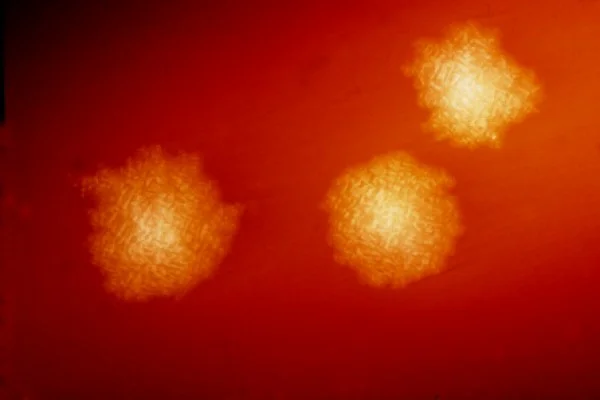
Monash scientists find first antibiotic resistance gene inside bacterial spores
A Monash University team has shown that Clostridioides difficile can carry an antibiotic resistance gene inside its dormant spores, helping them survive bleach, antibiotics and hot laundry.

ESA Juice Probe Skims Earth at 8,640 km to Gain Speed for Jupiter
The European Space Agency's Juice spacecraft used Earth's gravity on September 28, 2026, to bend its path toward Jupiter, saving fuel for its 2031 arrival and 2034 Ganymede orbit.

SpaceX Starship reaches orbit for first time on Flight 14, deploys 26 Starlink V3 satellites
The uncrewed megarocket survived an early engine shutdown, delivered its first operational payload and splashed down in the Pacific, opening the door to routine flights and NASA lunar work.
Comments (0)
Log in or sign up to leave a comment.
No comments yet. Be the first to share your thoughts.