For most of the history of orbital spaceflight, the second stage of a rocket has been treated as disposable hardware. It burns, it delivers its payload, and then it either burns up in the atmosphere or falls into an ocean. SpaceX has staked its plans for fully reusable rockets on the idea that it does not have to be, and on November 14, 2026, the company produced the most direct evidence yet that the idea can work. A Starship upper stage that had spent more than 22 hours in space came back through the atmosphere, flipped itself upright, and was caught in midair by the mechanical arms of its own launch tower at Starbase, Texas.
The catch is the piece of the Starship architecture that had been missing. SpaceX had already recovered the Super Heavy first stage three times, using the same chopstick arms on the same tower. But the upper stage is a far harder object to bring home. It flies much higher, reenters much faster, and arrives with far less margin for error than a booster that never leaves the lower atmosphere. Until this flight, every Starship that reached space ended its mission with a planned splashdown in the ocean.
The flight itself was the 15th full scale Starship test since 2023, and only the second time a Ship reached orbit. It lifted off from Starbase on Friday, November 13, 2026 at 5:47 p.m. EST, carrying 26 Starlink V3 satellites. Roughly 22.5 hours later, Ship 42 came back to the pad it had left, and the tower closed its arms around it.
The mission did not go entirely to plan. Super Heavy Booster 22 was supposed to be caught minutes after launch, which would have given SpaceX a double catch. Instead the booster aborted the tower attempt and was destroyed over the Gulf of Mexico. That failure says as much about the state of the program as the catch does.
Key Facts
CBS News reported on November 14 that the Ship endured reentry heating, flipped vertical at the last moment and settled into the grasp of two mechanical arms on its launch gantry. SpaceX restarted three of the vehicle's six methane fueled Raptor engines to slow to a near hover before the arms closed, catching the rocket a moment before engine shutdown. The stack stands 407 feet tall and produces some 16 million pounds of thrust from 33 first stage Raptor engines.
Space.com reported on November 14 that Flight 15 lifted off at 5:47 p.m. EST on November 13, that Ship 42 deployed all 26 Starlink V3 satellites, and that it performed a 10 second single engine deorbit burn at about 3:23 p.m. EST on November 14. The tower caught the Ship at about 4:20 p.m. EST, roughly 22.5 hours after liftoff. The Associated Press reported on November 14 that the spacecraft circled the world at 165 miles, or 265 kilometers, completed 14 laps around Earth, and far outshone the previous mission's one to two laps.
The booster's failure was traced to fuel. SpaceX's Kate Tice said on November 14 that early indications were that the booster ended its boostback burn early because of a low fuel mass alarm, with the root cause still under investigation. SpaceX reported on November 14 that the booster relit 32 of the planned 33 Raptor engines for that burn, that its guidance, navigation and control system then triggered an automated abort during coast, and that the booster executed a landing burn over the Gulf before its flight termination system was triggered.
SpaceX also published a detailed mission timeline. Orbital insertion came at 00:26:10 into the flight, payload deployment was complete at 01:17:40, the deorbit burn started at 21:35:57, entry began at 22:10:46, and the landing burn shutdown and catch occurred at 22:32:34. The Associated Press reported on November 14 that wreckage remained in the Gulf of Mexico, cordoned off by buoys, while the stainless steel spacecraft lowered itself upright at the launch pad.
Elon Musk said on X that the booster problem was a slight underperformance of engines and that the loss does not change the company's timeline to reach high volume, fully reusable Starship flights. NASA Administrator Jared Isaacman said via X that the return was almost magic and that the effort was making more believers by the day. SpaceX commentator Dan Huot, quoted by CBS News on November 14, called the catch the missing link and the holy grail of spaceflight, adding that now everything changes.
Analysis
The gap between catching a booster and catching a Ship is not a matter of degree. A Super Heavy booster returns on a ballistic arc that SpaceX has now practiced three times. A Ship goes to orbit, spends more than 20 hours in space, and reenters from a far higher altitude and at a far higher speed, with a heat shield that has to survive a much more punishing environment. Space.com noted on November 14 that SpaceX had caught Super Heavy three times before but had never attempted a Ship catch, which is harder because the upper stage flies higher and reenters faster. The fact that the heat shield and the vehicle were reported healthy after the flight is as significant as the catch itself.
What this really means is that the hardest remaining engineering problem in the Starship program is no longer the recovery maneuver. The catch worked on the first attempt, with three engines relit for the landing flip and the arms closing a moment before shutdown. The problems that remain are the boring ones: propellant management, launch cadence and the slow work of making a prototype behave like an operational vehicle.
The bigger picture here is that SpaceX now has, in principle, a fully reusable two stage system, but only in principle. The two halves of that system have never worked on the same day. The booster catch has succeeded three times and failed on this flight; the Ship catch has succeeded once. A vehicle that is recovered on one flight and lost on the next is not yet an operational rocket. Musk's framing, that the booster loss does not change the timeline, is a statement about confidence rather than about demonstrated reliability.
The unresolved items are specific rather than vague. CBS News reported on November 14 that SpaceX must still demonstrate high launch rates, orbital propellant transfer and long term propellant storage. Those three capabilities are not side quests. They are the core of what makes Starship useful beyond low Earth orbit, and none of them was tested on Flight 15. A catch that works once is a milestone, and a catch that works on a schedule is a transportation system.
Why It Matters
NASA is paying billions for a Starship variant to land Artemis astronauts on the lunar surface in 2028. That mission depends on refueling a lander in Earth orbit, which requires multiple tanker flights and the ability to transfer propellant between vehicles in orbit. A reusable Ship is the machine that makes that architecture affordable, because a lander that is thrown away after every mission cannot support a sustained lunar program. The Associated Press reported on November 14 that NASA targets as soon as 2028 for Artemis IV, the first crewed moon landing since Apollo, and that SpaceX expects to begin launching Starships from Florida's Kennedy Space Center within months.
The commercial case is just as direct. Ship 42 deployed 26 Starlink V3 satellites on this flight, and contact was made with every one of them. Space.com noted on November 14 that SpaceX's current Starlink network has about 11,000 satellites and that Starship is central to plans for a larger Starmind AI data center constellation. A rocket that can return its upper stage changes the economics of putting that many spacecraft in orbit.
There is also a credibility dimension. SpaceX has been criticized for years for setting timelines that slip, and a first catch of an orbital upper stage answers those criticisms in a way that a presentation cannot. It does not answer all of them, and the booster failure on the same flight is a reminder of why, but it moves the argument from whether the concept works to how quickly it can be repeated.
Next Up
The immediate next step is a return to flight with both stages recovered on the same mission. SpaceX has said it expects to begin launching Starships from Kennedy Space Center within months, which would give the program a second pad and reduce its dependence on a single tower at Starbase. The booster anomaly will be investigated first, because a low fuel mass alarm points to a propellant issue that could affect every booster in the fleet.
Beyond that, the schedule belongs to the tanker flights. Until SpaceX demonstrates orbital propellant transfer and long term propellant storage, the lunar lander contract and the Starlink expansion both remain dependent on a capability that has not yet flown. Flight 15 proved that a Ship can come home from orbit. The flights that follow have to prove that it can come home often enough to matter.
Related Articles
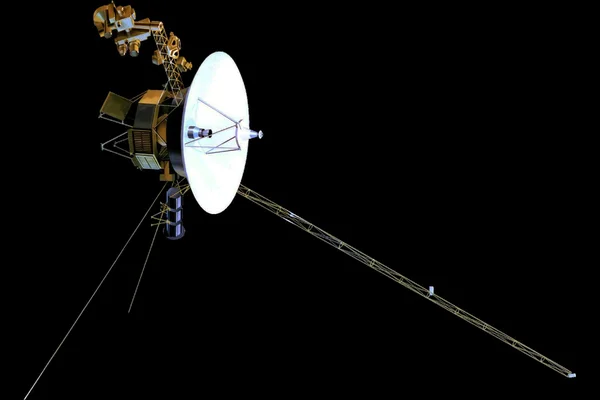
Voyager 1 to Become First Human-Made Object to Reach One Light-Day From Earth on November 18
NASA's Voyager 1 will cross the one light-day mark on November 18, 2026, at 16,094,799,096 miles from Earth, a distance its radio signals need a full 24 hours to cover.

Invisible Companion in a Milky Way Binary May Be a Rare Supermassive Neutron Star
A red giant 4,800 light-years away is orbited every 1,217 days by a dark object of about 2.20 solar masses, a measurement that could place a neutron star inside the long empty mass gap.
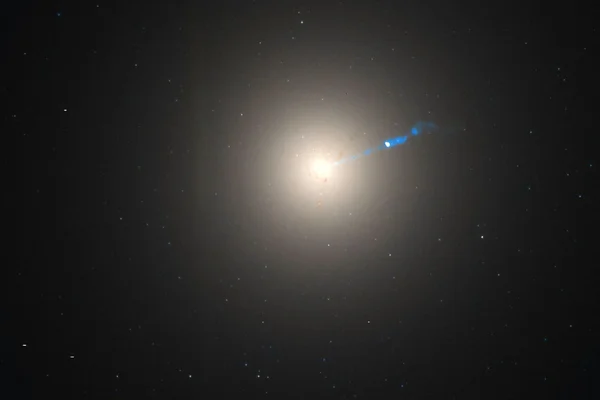
Independent CSIRO analysis confirms the 2019 black hole ring image of M87
A four person CSIRO team rebuilt the 2019 Event Horizon Telescope picture using calibration free observables and a model trained on cats and dogs, recovering the same 42.2 microarcsecond ring.
Comments (0)
Log in or sign up to leave a comment.
No comments yet. Be the first to share your thoughts.