Teradyne Robotics has moved a physical AI demonstration into European production work. The company, which owns Universal Robots and Mobile Industrial Robots, has formed an official partnership with Stuttgart-based physical artificial intelligence developer Sereact. The arrangement places Sereact's Cortex platform on Universal Robots arms for unstructured warehouse work such as returns handling and piece picking. The companies say the joint system is already running in live customer sites, not waiting in a pilot queue.
The most visible deployment sits inside fashion logistics. CEVA Logistics is using Sereact dual-arm robots to process Zalando returns at fulfilment centres in Greven, Germany, and Świebodzin, Poland. Zalando is a European online fashion retailer that connects 62 million active customers with more than 7,000 brands across 29 markets. Returns are central to its economics: about 50% of Zalando's online sales are returned, according to the retailer, and returns are processed at around 20 locations in Europe, including by CEVA.
The technical proposition is straightforward even if the warehouse problem is not. Cortex is described as a vision-language-action model. It runs Universal Robots arms and is designed to identify, grasp and sort mixed goods without article-specific training or pre-determined SKU profiles. In the Zalando work, returned fashion items arrive refolded or crumpled, bagged or loose, with or without tags, and the assortment changes every season. That variability is exactly what conventional automation struggles to absorb.
The partnership was marked at NVIDIA GTC Berlin 2026, where Cortex ran on two Universal Robots UR12e-1300 arms in a returns-handling demonstration. The commercial backdrop is larger than one demo cell. Universal Robots cites more than 100,000 industrial deployments, and Teradyne Robotics says the joint solution has moved beyond the demo or pilot stage. Sereact has also built a closed training loop with NVIDIA, Nebius, CEVA and Zalando that it says can update Cortex policies in days rather than weeks.
Key Facts
The Robot Report reported on October 25, 2026 that Teradyne Robotics partnered with Sereact to accelerate industrial AI in retail, logistics and manufacturing. The same report said Sereact's Cortex platform runs Universal Robots arms for unstructured tasks such as returns handling and piece picking, and that hundreds of UR robots in dual-arm systems have already shipped to live customer sites across Europe.
Universal Robots said in a press release on October 21, 2026 that the official partnership pairs Sereact's Cortex platform with Universal Robots arms. Jacob Pascual Pape, chief commercial officer of Teradyne Robotics, said Universal Robots has more than 100,000 industrial deployments. Pape also said the joint system handles mixed goods, unknown items and varied packaging and has moved beyond the demo or pilot stage.
Sereact announced on October 21, 2026 that it had closed a training loop for Cortex with NVIDIA, Nebius, CEVA Logistics and Zalando, with Zalando returns handling at CEVA as the first deployment. Under the loop, episodes from returns stations, including video and kinematics, land in Nebius object storage. NVIDIA Isaac Lab turns them into thousands of simulated variants, Cosmos re-renders them across garment states, packaging, materials and lighting, and the versioned dataset post-trains Cortex on NVIDIA Blackwell GPUs in European Union data centres. A policy that passes a held-out threshold goes to the stations for a real-world test, and a failure triggers targeted variants and another training round.
Supply Chain Digital reported on October 14, 2026 that CEVA Logistics has deployed Sereact dual-arm robots to process Zalando fashion returns at warehouses in Greven, Germany, and Świebodzin, Poland. The robots identify, grasp and sort items dynamically without article-specific training or pre-determined SKU profiles. The deployment uses a Robotics-as-a-Service model, leaving warehouse teams to focus on station supervision, exception handling and quality control. Chris Walton, senior vice president of contract logistics at CEVA, said returns handling is one of the toughest challenges because of unpredictable volumes, manual quality checks, seasonality, value decay and a disproportionately high cost per unit.
The numbers around the deployment are substantial. Zalando connects 62 million active customers with more than 7,000 brands across 29 markets, and about 50% of its online sales are returned. CEVA operates in 170 countries with around 110,000 employees and roughly 1,700 facilities, and reported 2025 revenue of US$18.3 billion. Sereact was founded in 2021 and is headquartered in Stuttgart. With Zalando's participation, Sereact has raised more than US$145 million to date. Zalando participated as a strategic investor in Sereact's Series B in July 2026.
Analysis
The partnership matters less as a robot launch than as a software distribution deal. Universal Robots has a large installed base and a channel into factories and warehouses. Sereact has a model and a training pipeline aimed at messy, changing tasks. Putting Cortex on UR arms gives Teradyne Robotics a way to sell intelligence on top of hardware it already installs, while Sereact gets access to a global base without building its own robot line. The companies are careful to say the systems are live, not conceptual.
What this really means is that physical AI in warehousing is being packaged as an operating layer rather than a bespoke integration project. Sereact chief executive Ralf Gulde said one Cortex production model serves every robot with no retraining for each new item or task, and that what one robot learns benefits all. The closed loop with NVIDIA Isaac Sim, Cosmos world models, Isaac Lab reinforcement learning, Jetson Thor at the cell and DGX Spark for site-level development is meant to make that claim operational. Sereact says a policy update that used to take weeks can now return within days. If that cadence holds, the unit of competition shifts from individual robot cells to the speed of model refresh across a fleet.
The bigger picture here is that returns handling has become a credible beachhead for general-purpose manipulation. Returns are hard because each item arrives in a different state: refolded or crumpled, bagged or loose, with or without tags. The assortment changes every season. That is a poor fit for fixed automation and a good fit for a vision-language-action model that can group and handle previously unseen objects. CEVA's use of a Robotics-as-a-Service model also lowers the adoption barrier: warehouse teams supervise stations, handle exceptions and control quality while the robotics provider carries more of the technology risk.
The judgement needs a caveat. A production model that serves every robot and learns across a fleet is only as good as its exception handling and its data pipeline. The Sereact closed loop depends on episodes from live stations, simulation variants, re-rendering and GPU training in European Union data centres. That is a sophisticated stack, and it introduces new dependencies: compute cost, data governance, model versioning and site-level update discipline. The fact that an AI agent builds and runs the loop and previews GPU cost before each run suggests the company knows cost control is part of the product. The early evidence is strong, but the scale claim will be tested by how many sites run Cortex without bespoke engineering.
Why It Matters
For retailers, the economics are pointed. Zalando says about 50% of its online sales are returned, and returns are processed at around 20 locations in Europe. Each returned fashion item must be identified, sorted and reconditioned for resale. Sereact's Gulde said quickly reconditioning returned goods for resale also helps retailers comply with European Union rules prohibiting destruction or landfill disposal of returned merchandise. That turns automation from a labour-saving story into a compliance and inventory-recovery story.
For the robotics market, the deal tests whether Universal Robots can move beyond repeatable industrial tasks into unstructured work at scale. Universal Robots cites more than 100,000 industrial deployments, but the installed base is not the same as an installed base running physical AI. Hundreds of dual-arm systems shipped to live European sites is a meaningful bridge between those two numbers. It gives Teradyne Robotics a referenceable footprint in retail and logistics, and it gives Sereact a route into customers that already trust UR hardware.
For the broader physical AI sector, the Zalando and CEVA deployment is a rare public example of a closed sim-to-real loop attached to a live commercial process. The stack names are specific: NVIDIA Isaac Sim with Cosmos world models, Isaac Lab for reinforcement learning, Jetson Thor at the cell, DGX Spark for site-level updates and Nebius for storage and GPU capacity. The pipeline is available today as a Nebius Physical AI Workbench reference architecture. That matters because it gives other logistics operators a template to evaluate, even if they do not copy the exact configuration.
Next Up
The immediate next step is the wider European scale-up. The Robot Report reported on October 25, 2026 that deployments with CEVA Logistics for Zalando in Greven, Germany, and Świebodzin, Poland are the first phase of a wider European scale-up. Sereact says Cortex spans single-arm picking cells, dual-arm returns stations and humanoid robots, with operating experience shared across the fleet so previously unseen objects can be grouped and handled. The company opened a US headquarters in Massachusetts this summer, which points to a second front beyond Europe.
The open questions are operational. Can the closed loop keep policy updates at days rather than weeks as the number of stations grows? Can CEVA and Zalando expand from returns into replenishment and kitting without retraining for each new item? And can Teradyne Robotics convert its Universal Robots installed base into a software-led recurring business? The partnership has passed the demo stage. The next test is whether the model refresh cadence and the RaaS model hold up across many more sites, seasons and packaging formats.
Related Articles
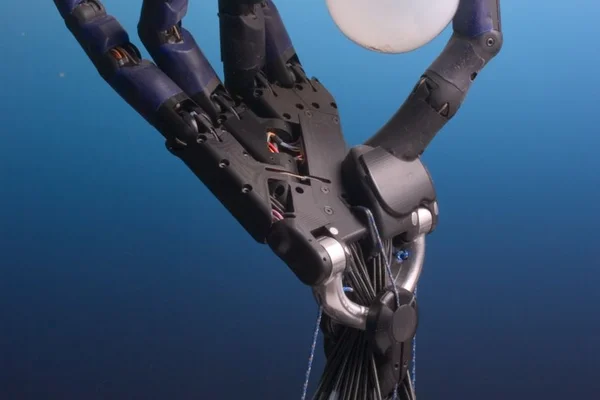
Zurich physical AI startup Enact exits stealth with $30 million pre-seed for touch sensing robots
Enact Intelligence, legally Eta Robotics AG, has raised a $30 million pre-seed to build force and touch sensing into robot actuators rather than adding it as an external accessory.
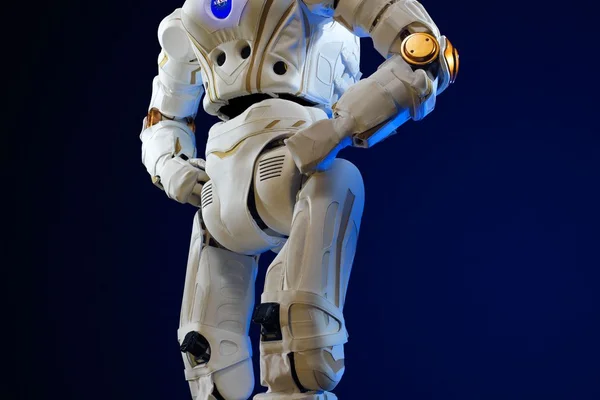
Generative Bionics to build 5,000 square metre Physical AI Data Factory in Italy for GENE.01
Backed by AMD Helios rack-scale compute, the Genoa humanoid maker plans three training sites, with the first 5,000 square metre hub in Italy targeted to be running by the fourth quarter of 2027.
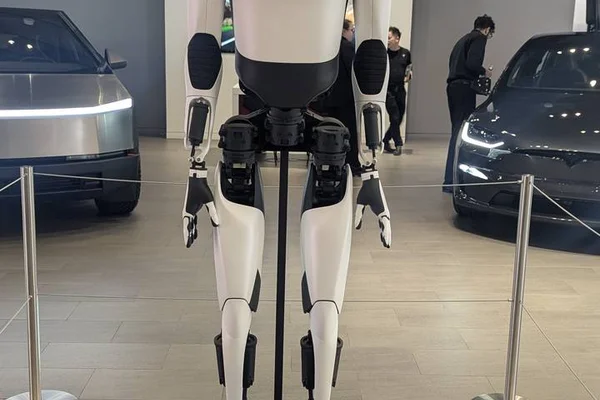
Tesla begins Optimus production in Fremont as Q3 net income falls 43 percent
Tesla says Optimus robots now roll off high-volume lines in Fremont, California, but it disclosed no unit counts as quarterly net income fell 43% to $787 million.
Comments (0)
Log in or sign up to leave a comment.
No comments yet. Be the first to share your thoughts.