For nearly 70 years, rockets have lifted off from Cape Canaveral Space Force Station in Florida and Vandenberg Space Force Base in California, carrying military satellites, NASA science missions and a growing commercial fleet into orbit. Those two ranges have long been the backbone of American access to space. Now they are approaching a capacity ceiling at the very moment launch demand is accelerating.
Space Force leaders want a third domestic spaceport capable of heavy and super-heavy launches operating by 2030. Lt. Gen. Philip Garrant, who heads Space Systems Command, laid out that goal on 21 October 2026 at AFCEA's annual Space Industry Days event. He called the timeline aspirational and acknowledged that building a spaceport is a substantial undertaking.
The search became public in May 2026, when Air Force Secretary Troy Meink told the House Armed Services Committee that a congressionally mandated study of Space Force launch infrastructure had identified the need for another site. Meink said the service probably needs a location capable of heavy and super-heavy launch, both for resilience and because of limited space at Cape Canaveral.
The White House signed an update to its National Space Transportation Policy in August 2026 that predicted the United States could reach 1,000 launches a year by 2030, a fivefold increase over 2025. The policy directed the Defense Department to work with the Department of Homeland Security and NASA on options for extra spaceport infrastructure on federal property.
Key Facts
Garrant did not announce a location, a land acquisition route or a decision schedule. He said the Space Force recently formed an operational planning team to take a hard look at what a third spaceport would require. "That work is pretty nascent, but we're going to take some ideas to leadership at NASA, the National Reconnaissance Office, and the Space Force," he said, according to Air & Space Forces Magazine. The team is weighing options that range from a public-private partnership to commercial land to a brand-new federal installation, and it is considering whether to buy or lease the land.
Air & Space Forces Magazine reported on October 21, 2026, that Garrant described the 2030 target as aspirational even as he stressed the importance of building out US military launch infrastructure. "We need this capability by 2030, but I'm also a pragmatist," Garrant said. "That is not an inconsequential demand to build a spaceport when you factor in orbital regimes, safety, access to commodities ... There are a lot of considerations." He also compared a spaceport to an airport, but louder, noting the Americans who live near it.
Aviation Week reported on October 22, 2026, that Space Systems Command has begun exploring the feasibility of a new domestic spaceport and has set up the operational planning team. The report, from El Segundo, California, by military space editor Vivienne Machi, appeared in Aerospace Daily & Defense Report. It said the effort is now formal inside Space Systems Command rather than an informal staff study, and that the driver is launch demand rather than a specific program of record. The service is examining a site capable of medium, heavy and super-heavy launch.
The capacity pressure is visible in the numbers. Ars Technica reported on October 23, 2026, that there were 175 orbital launch attempts last year from Cape Canaveral Space Force Station and Kennedy Space Center in Florida and from Vandenberg Space Force Base in California. Space Force officials project the established spaceports will need to support 700 launches a year by 2036. Air & Space Forces Magazine reported on August 28, 2026, that the service could oversee as many as 700 to 3,000 launches a year by 2036, with the Cape alone projected at 500 to 1,000 annually and Vandenberg growing from 66 missions in 2025 to 150 to 200 launches a year within five years.
Congress allocated $1.3 billion in 2024 for Spaceport of the Future range projects through fiscal 2028, and Vandenberg has allocated about $614 million to improve roads and utilities. Even so, Space Launch Delta 45 commander Col. Brian Chatman said 450 approved billets at the Cape are unfilled for lack of funds. Vandenberg hosts 54 tenant units and expects its workforce to double from 10,000 to 20,000 over five years.
Analysis
The 2030 date is the most important and least concrete part of the plan. Garrant himself called it aspirational, and no site, no land acquisition route and no decision timeline have been settled. What this really means is that the Space Force is using a public target to force momentum inside the Pentagon and among potential partners, not announcing a construction project that is ready to break ground. Four years is a short window for a project that must address orbital regimes, safety, access to commodities and the concerns of nearby residents, as Garrant listed.
The site selection puzzle is harder than it looks. A new federal installation would give the government the most control but would require land acquisition and a lengthy build. A public-private partnership or commercial land could move faster but would require the service to negotiate access, security and range operations with a private owner. The operational planning team is examining all of those paths, and Garrant said the work is nascent. That phrasing matters because it places the effort at the beginning of a process, not the end.
The demand picture explains why the service is starting now. Commercial operators such as SpaceX already run more than 10,000 Starlink satellites and plan another 1,000 within a year, while AST SpaceMobile and Amazon Leo are building their own constellations. The Space Force expects to deploy thousands of satellites between now and 2031 for missile warning and tracking, communications and space-based sensing. The White House policy's forecast of 1,000 launches a year by 2030 is five times the 2025 level, and the Space Force's own projections run as high as 3,000 launches a year by 2036 in some scenarios. The bigger picture here is that launch infrastructure, not launch vehicles, is becoming the binding constraint on American space power.
The existing ranges have already shown how fast cadence can rise. In 2025 the two spaceports more than tripled their total launches compared with 2022. In January 2026 SpaceX broke the record for pad turnaround at Cape Canaveral by launching two Starlink missions within 45 hours from the same pad. In June a Rocket Lab Electron lifted off from New Zealand less than 17 hours after the Space Force placed the order. Those are signs of operational agility, but they also show how much demand is pressing on a limited number of pads and ranges. A third site would add geographic resiliency against a natural disaster or a military attack that takes the Cape or Vandenberg offline, a benefit that has no substitute in the existing footprint.
Why It Matters
Resilience is not an abstract concern. In May 2026 Blue Origin's New Glenn exploded on its pad, and SpaceX launched within 12 hours of the incident. That recovery demonstrated the value of having multiple providers and pads, but it also showed how a single failure can threaten a range. If the Cape or Vandenberg were lost for a longer period, the United States would have no domestic heavy-lift alternative. A third spaceport would spread that risk across a wider geographic base.
The economic and strategic stakes are equally large. The White House policy forecasts 1,000 launches a year by 2030, and the Space Force projects 700 to 3,000 launches a year by 2036. Those numbers include national security missions for missile warning and tracking, communications and space-based sensing, as well as commercial constellations. If the ranges cannot keep pace, the cost shows up as delays for military users and commercial operators alike. The service's own data points to strain: 450 approved billets at the Cape are unfilled for lack of funds, even as the range is expected to support 500 to 1,000 launches a year by 2036.
The decision also has a congressional and interagency dimension. Congress mandated the launch infrastructure study and allocated $1.3 billion in 2024 for Spaceport of the Future projects through fiscal 2028. The White House policy directed the Defense Department to work with the Department of Homeland Security and NASA on options for extra spaceport infrastructure on federal property. Garrant said the planning team will take ideas to leadership at NASA, the National Reconnaissance Office and the Space Force. Any site choice will therefore have to satisfy multiple stakeholders, not just the service's launch needs.
Next Up
The operational planning team is the immediate venue for decisions. Garrant said the team will take a hard look at what a third spaceport would require and then bring ideas to leadership at NASA, the National Reconnaissance Office and the Space Force. There is no decision timeline, so the next public milestone may be a set of options rather than a chosen site. The service has not said whether it will buy or lease land, nor whether it prefers a public-private partnership, commercial land or a new federal installation.
The 2030 target remains the benchmark to watch. Garrant called it aspirational, and the gap between aspiration and construction is wide. The Space Force's launch demand projections, the White House's 1,000 launches a year forecast and the capacity limits at Cape Canaveral and Vandenberg all point in the same direction. Whether the service can turn the planning effort into a real third spaceport by the end of the decade will depend on land, money and a decision schedule that does not yet exist.
Related Articles
NASA Ends Swift Observatory Science Mission as Atmospheric Drag Forces Reentry
NASA has ended science operations for the Neil Gehrels Swift Observatory after nearly 22 years, and the spacecraft is expected to reenter Earth's atmosphere within weeks.
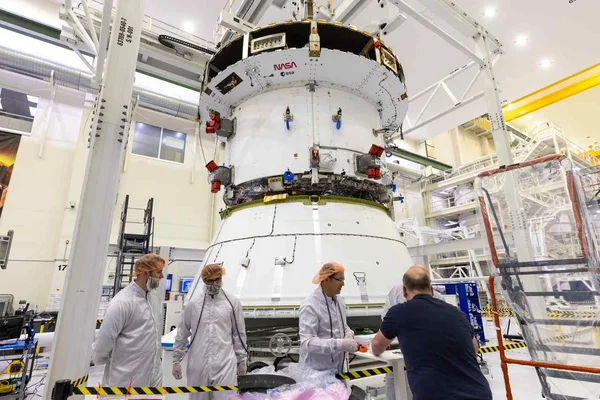
NASA holds Artemis III to summer 2027 as safety panel questions Artemis IV lander plan
NASA's October 23 update keeps four astronauts on a summer 2027 low Earth orbit rehearsal, while its safety advisers want the Artemis IV landing plan reconsidered over refueling risk.
Russian Satellite Kosmos 2612 Stalks ICEYE-X36 to Within 500 Metres in Low Earth Orbit
LeoLabs tracking data shows a Russian military spacecraft held station within roughly 500 metres of a US-registered radar satellite for several days before withdrawing.
Comments (0)
Log in or sign up to leave a comment.
No comments yet. Be the first to share your thoughts.