Tesla has spent years telling investors that Optimus, its humanoid robot, would eventually matter more than the cars that built the company. That claim has always been easier to make in a keynote than to prove on a factory floor, which is why the language inside the company's third-quarter 2026 shareholder update drew attention from both Wall Street and robotics researchers. Tesla said the machines now coming off its high-volume lines in Fremont, California are the first production-quality bots it has manufactured.
The location is symbolic as much as industrial. The Optimus line occupies manufacturing space once used to build electric vehicles, a swap that says a lot about where Tesla expects its next leg of growth to come from. It also lands at an awkward moment for the car business: Tesla delivered 486,532 vehicles in the quarter, roughly 6,000 more than in the previous three months but fewer than a year earlier.
Tesla is not alone in chasing humanoids, and it is no longer the most prolific shipper. MEKAWIRE reported on October 21, 2026 that Unitree disclosed more than 5,500 humanoids shipped in 2025 in its STAR Market filings, UBTech reported 921 humanoid units sold in the first half of 2026 in Hong Kong interim results, Figure said in April it had delivered more than 350 robots, and Agility Robotics disclosed more than $300 million of Digit orders. Against those numbers, Tesla's disclosure is a status label rather than a count.
What makes the Fremont milestone odd is the distance between the hardware claim and the software claim. Tesla says it has proven its manufacturing process is fit for a commercial product, yet executives spent much of the same earnings call explaining that the robot's hands, durability and autonomy stack are still being reworked. Both statements can be true at once, and the tension between them is the story of the quarter.
Key Facts
Tesla's third-quarter update, filed with the SEC on October 21, 2026, states that Optimus production has begun on high-volume lines in Fremont, California, and that the units coming off those lines are the first production-quality bots the company has manufactured. The shareholder letter added that Tesla will keep iterating on hardware and on the manufacturing process, but that it has proven the current process for Optimus is suitable for a commercial product.
TechCrunch reported on October 21, 2026 that CEO Elon Musk called the milestone early production on the earnings call and warned that the ramp will be slow and somewhat bumpy because Optimus is such a radically new product. He said Tesla should be able to build 20,000 of the robots per week by the end of 2027, while conceding that the design still needs tweaks so the machine is safe, reliable and does not wear out after a month.
The financial backdrop is stark. Revenue was essentially flat at $28.046 billion versus $28.095 billion a year earlier, while GAAP net income attributable to common stockholders fell 43% to $787 million from $1.373 billion. Operating income dropped to $718 million from $1.624 billion, cutting operating margin to 2.6%. Research and development spending rose 69% to $2.761 billion, or 9.8% of revenue, and capital expenditure reached $4.732 billion. Tesla cited lower regulatory credit sales and said spending on AI projects and Optimus took a big bite out of profits.
The Motley Fool's transcript of the October 21, 2026 earnings call, published on October 22, 2026, reported that Musk framed the ramp as an S-curve with a shallow initial slope, saying roughly 10,000 things have to go right for production of the robot and that progress will move as fast as the slowest and least likely of them. He said most of a line designed for 1 million robots a year is already installed in Fremont, but that hitting an annualized 20,000 units a week will take at least a year, maybe a little longer.
MEKAWIRE reported on October 21, 2026 that the capacity table in the filing now lists Optimus in California as Early Ramp and in Texas as Construction, and that the robot rows carry a status but no capacity figure, unlike earlier updates that cited about 1 million robots a year for the first-generation Fremont line and 10 million for a second-generation Texas line. No unit count, weekly rate, external customer, price or sales date was disclosed. The same filing showed free cash flow of $1.531 billion and cash and short-term investments of $45.4 billion.
Analysis
The bigger picture here is that Tesla has demonstrated manufacturing capability before it has demonstrated a product. A robot that can be assembled at volume but cannot yet be trusted to work unsupervised is a capital asset with no revenue attached, and Tesla's own executives described the machine in exactly those terms: hands unfinished, safety unfinished, autonomy unfinished. The achievement is real, but it is an industrial milestone rather than a commercial one, and the two should not be confused when a company reports to shareholders.
The Verge reported on October 22, 2026 that Musk used the call to list what still needs work, including the robot's hands, safety, reliability, durability and the AI that makes it productive, and that Tesla declined to say how many robots it has built, what tasks they perform autonomously or how often they succeed without help. Ken Goldberg, a robotics professor at UC Berkeley, told the outlet that you can produce robots but the software is lacking, and that a lot of hardware without software is a big problem.
Goldberg's broader point is the one investors should sit with. He said task success rates in robotics labs have stalled around 70% to 80%, which he called not acceptable for real industry, and that after 40 years working on these problems he does not expect them solved in the next year or two. Tesla's own timeline is consistent with that caution. Executives said privately owned vehicles with FSD (Supervised) could get an update enabling unsupervised driving around the second quarter of 2027, a delay from Musk's April 2026 statement that it would probably arrive in the fourth quarter of 2026.
What this really means is that Tesla is asking investors to underwrite a robotics option while its core automotive business stands still. Capital expenditure is running at approximately $20 billion for the year, focused on compute and on manufacturing capacity for new product lines, and research spending has climbed to 9.8% of revenue. Those are the numbers of a company investing for a future it has not yet sold. The Optimus headline buys time with that story, but the market will eventually want units, customers and revenue to match it.
Why It Matters
For the wider robotics sector, Tesla's move raises the bar on disclosure as much as on hardware. Rivals publish shipment figures: Unitree's 5,500 plus units, UBTech's 921 in a half year, Figure's 350 plus deliveries and Agility's $300 million order book. Tesla published a status label. If a company of Tesla's scale can call a line early ramp without a single unit number, competitors will be tempted to match that vagueness rather than the transparency.
The strategic logic behind internal deployment is sound, however. Musk said Tesla needs roughly 10,000 to 20,000 robots to practice tasks at what he called Optimus Academy, likening the self-play process to a toddler learning. That is a data strategy before it is a product strategy, because the first machines exist to generate the training signal that later machines will depend on. Tesla said it plans 400 megawatts of training compute by year end, with Cortex 2 in Texas already above 120 megawatts, and Musk wants the AI5 chip inside Optimus around April 2027 with roughly 10 times the compute of AI4.
There is also the supply chain question. Musk said most of a production line built for 1 million robots a year is landed in Fremont, but that Tesla has to stand up what he called an entire gigantic global supply chain and a very big domestic factory before any of the volume targets mean anything. Sourcing at that scale is a multiyear effort, and it will be judged against a car business whose deliveries fell 2% year over year in the quarter.
Next Up
The next checkpoints are already on the calendar. Integration of the AI5 chip into Optimus is planned for approximately April 2027, unsupervised driving for privately owned vehicles could arrive around the second quarter of 2027, and Tesla has pointed to the end of 2027 for both a 20,000 units per week rate and the possible start of deliveries to outside companies, though Musk did not name customers or tasks.
Between now and then, the disclosures that matter are unglamorous: unit counts, task success rates, customer names, prices and a capacity figure in the table where there is currently only a status. The fourth-quarter update will be the first real test of whether early ramp becomes a number or stays an adjective.
Related Articles
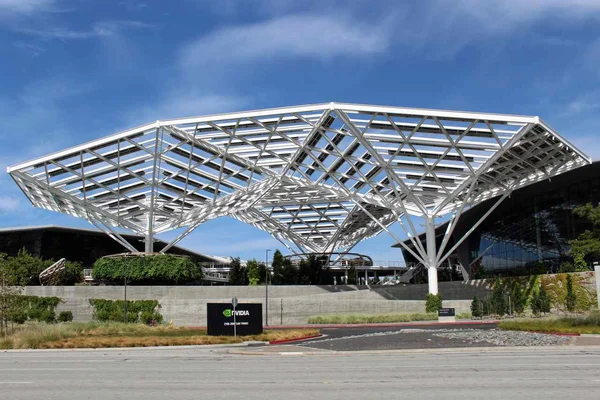
Agile Robots and Nvidia launch Agile ONE SN humanoid with plan for up to 2,000 units
Munich based Agile Robots introduced a 1.4 metre research humanoid preconfigured with Nvidia Isaac GR00T and Jetson Thor, aiming to start production by the end of 2026.
Eka Robotics raises 150 million dollars at a 1.45 billion valuation to scale force first AI
Eka Robotics closed a 150 million dollar Series A led by Andreessen Horowitz and F-Prime at a 1.45 billion dollar valuation, betting that force feedback beats vision alone.
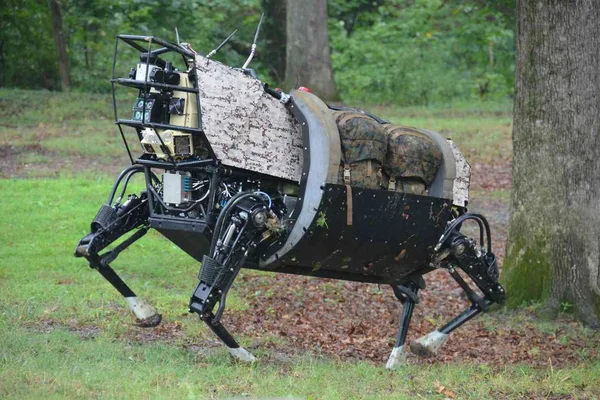
Hyundai commits to 50,000 robot deployments as Boston Dynamics scales Atlas
Boston Dynamics CFO Amanda McMaster said Hyundai has committed to roughly 50,000 robot deployments across Hyundai Motor and Kia plants, doubling an earlier Atlas target.
Comments (0)
Log in or sign up to leave a comment.
No comments yet. Be the first to share your thoughts.