For most of the past decade the dominant story in robotics has been about eyes. Cameras, depth sensors and the models that digest their output have become cheap and capable enough that a machine can locate a cup, a cable or a crate with impressive precision. What the same machine usually cannot do is judge how hard to squeeze the cup, how much give a cable has before it snaps, or when a screw has been driven far enough. Those judgements are the difference between a demonstration video and a robot that survives a factory shift.
The conventional fix has been to bolt force sensing on afterwards. A wrist mounted sensor, a fingertip pad or a strain gauge measures load at a single point and feeds the number back into the control loop. Such add-ons work in laboratories. On a production line they tend to be expensive, fragile and awkward to fit into small or sealed joints, and each one adds another component that can drift, break or need recalibration.
A new Zurich company thinks that attachment approach starts in the wrong place. Enact Intelligence, legally registered as Eta Robotics AG, argues that force should be sensed inside the actuator, the motor and gearbox assembly that plays the role of a muscle in a robot. That means designing hardware and AI together rather than treating touch as an accessory bolted onto a body that was designed for vision alone.
The company came out of stealth on October 22, 2026, with a $30 million pre-seed round and a twelve-person team. It is a small outfit holding an unusually large cheque for its stage, and it is making a claim that no outsider can yet verify: that putting force data at the centre of the stack will make manipulation reliable enough for real industrial work.
Key Facts
The headline number is $30 million, or EUR 26.68 million. The Robot Daily reported on October 22 that the round is one of the largest pre-seed raises in Europe to date and has been described as the largest in Swiss history. The money comes from the venture firms redalpine, Notion Capital and firstminute capital, alongside a list of individual investors drawn mostly from AI and robotics.
The investor list mixes funds and operators. EU-Startups reported on October 22 that the round saw participation from redalpine, Notion Capital and firstminute capital alongside angels including Arthur Mensch, founder of Mistral; Yann LeCun, founder of AMI Labs and former Chief AI Scientist at Meta; and Andrew Lonsberry, founder of Path Robotics. The Robot Daily reported on October 22 that the angel group also includes Thomas Wolf, co-founder of Hugging Face, and Paolo Cerruti of Northvolt. Enact has not disclosed a valuation.
The company was founded in March 2026 by Manuel Yves Galliker, who previously led the software team for the NEO humanoid at 1X, helped build that company's AI team in Silicon Valley and then worked at the robotics lab Physical Intelligence. Its twelve-person team includes engineers from DeepMind, 1X, Amazon Robotics, Helsing, Physical Intelligence and ETH Zurich, and Philip Kneis, previously a deeptech investor at redalpine, joined to lead growth.
The technical claim is specific. startupticker.ch reported on October 22 that Enact captures force in the actuators themselves, much as humans sense force through the tension in their muscles rather than only at their fingertips, and that it is rethinking the full stack from model architectures and data pipelines to actuators and sensors. The stated goal is a proprioceptive nerve system and the cortex that makes sense of it.
Enact says the design suits every form factor, from a simple arm to a full-scale humanoid. SiliconANGLE reported on October 22 that the algorithms are built to support a wide range of robot bodies rather than one, that job postings point to pre-training models from scratch instead of customising open source ones, and that a second posting indicates the use of field-programmable gate arrays. There is no public demo, no performance data and no published specification for the actuators themselves.
Analysis
The first thing to notice is that this is a bet on a data moat rather than on a finished product. Dr. Harald Nieder, General Partner at redalpine, said dexterity is the next frontier in robotics and that Enact is tackling it with high precision force data from bespoke actuators, rethinking the stack from the hardware up to build a data moat. That is a hardware first thesis wearing an AI company's clothes, and hardware first theses are slow and expensive to falsify.
The reasoning behind the bet is sound on its own terms. Vision tells a robot where a target is, but not how much force to apply, when to back off or when to stop, which is why fine tasks such as routing cables, fitting seals or driving screws still belong to human hands. Point sensors that capture force at one location are, in the company's telling, too costly and too brittle for the factory floor. Moving the measurement into the actuator removes a component from the outside of the robot and puts it where the load actually passes.
But the physics is not new, and that cuts both ways. SiliconANGLE reported on October 22 that earlier actuator as sensor work at Google and Allegro MicroSystems used Back EMF, where current spins a motor, the rotation generates a counter electromotive force and that signal can be measured to infer load. If the industry already knows this can be done, the question is whether Enact can do it accurately enough, cheaply enough and at enough scale to train useful models on the resulting stream of force data.
The bigger picture here is that the round is buying time and equipment, not proof. What this really means is that the next eighteen months of Enact's life will be judged on data nobody outside the company has seen: the quality of the force signal from its own actuators, whether that signal transfers between a robotic arm and a humanoid, and whether any industrial partner will put the result on a line. The absence of a valuation disclosure is normal at pre-seed, but the absence of a demo is a genuine gap for a company whose central claim is physical.
Why It Matters
The commercial targets are broad on purpose. The Robot Daily reported on October 22 that Enact says it is already talking to European players in manufacturing, infrastructure, retail and food processing, and the plan is to grow the team fivefold by the end of 2027 and seek first industrial deployments. Those four sectors share a common shape: repetitive physical work with tight tolerances, where a robot that misjudges grip force destroys product or tooling.
A working proprioceptive layer would also change the economics of robot learning. Models trained on force data recorded inside actuators could, in principle, be shared across very different machines, which is what Enact's multi form factor claim depends on. That would let a customer buy whatever arm or humanoid suits the task instead of committing to a single vendor's body, an appealing proposition for European manufacturers that rarely buy at Silicon Valley scale.
It matters for Europe too. The company chose Zurich over the Bay Area, arguing that Silicon Valley is thin on robotics and hardware engineering talent, and its roster of DeepMind, 1X, Amazon Robotics, Helsing and ETH Zurich alumni is a small experiment in whether a European deep tech cluster can keep that kind of hardware talent at home. One $30 million cheque does not settle that question, but it is a sizeable test case.
Next Up
The immediate milestones are hiring and hardware. Enact intends to reach roughly sixty people by the end of 2027 from its current twelve, which means recruiting across mechanical design, sensor engineering, model training and manufacturing, a mix that is hard to find in one city. Alongside that, the company has said it will accelerate its hardware and R and D pipelines and pursue first deployments with industrial partners.
The harder milestone is evidence. Until Enact publishes force data, a demonstration of a contact rich task or a named partner, the claim that actuator level sensing beats the add-on sensors it dismisses remains a well funded hypothesis. Watch for the first industrial pilot, the first public specification for an actuator, and any sign that outside researchers can reproduce the force signal the company is betting its data moat on.
Related Articles
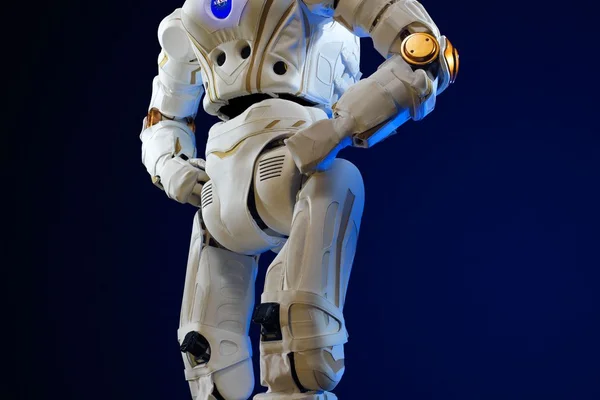
Generative Bionics to build 5,000 square metre Physical AI Data Factory in Italy for GENE.01
Backed by AMD Helios rack-scale compute, the Genoa humanoid maker plans three training sites, with the first 5,000 square metre hub in Italy targeted to be running by the fourth quarter of 2027.
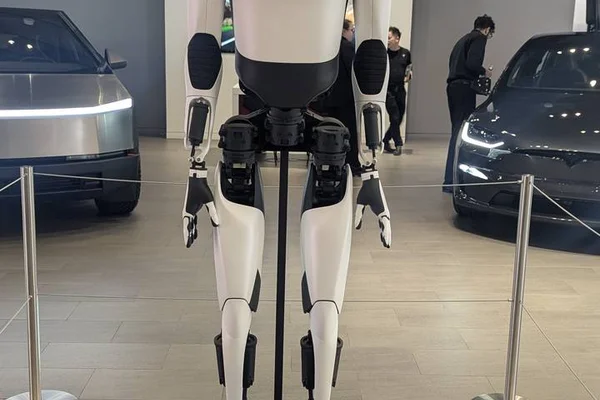
Tesla begins Optimus production in Fremont as Q3 net income falls 43 percent
Tesla says Optimus robots now roll off high-volume lines in Fremont, California, but it disclosed no unit counts as quarterly net income fell 43% to $787 million.

Agile Robots and Nvidia launch Agile ONE SN humanoid with plan for up to 2,000 units
Munich based Agile Robots introduced a 1.4 metre research humanoid preconfigured with Nvidia Isaac GR00T and Jetson Thor, aiming to start production by the end of 2026.
Comments (0)
Log in or sign up to leave a comment.
No comments yet. Be the first to share your thoughts.