On 10 April 2019 the Event Horizon Telescope collaboration released the first picture of a black hole: a bright ring of radio emission encircling a darker central region at the heart of the galaxy M87, roughly 55 million light years from Earth. The image was presented as a test of Einstein's general theory of relativity, and it became one of the most scrutinised pictures in astronomy. The ring was not photographed in any ordinary sense. It was computed.
The Event Horizon Telescope stitches together simultaneous data from ground based radio telescopes across several continents, reaching the resolution of a dish as wide as the planet. At millimetre wavelengths, with an effective aperture the diameter of Earth, it reached a resolution comparable to the angle subtended by the width of a human hair more than 1,000 kilometres away.
Because very long baseline interferometry measurements are sparse, turning the raw data into a picture is an inadequately constrained problem. The Nature paper notes that results are sensitive to instrument calibration, post processing algorithms and imaging hyperparameters. In the original publication, four independent imaging teams inside the collaboration all produced a ring like structure, but differed in fine scale features caused by human and algorithmic biases.
Scepticism followed. Starting in 2022, Junichiro Makino, an astrophysicist at Kobe University in Japan, and collaborators questioned the conclusions. Applying one of the telescope's own data analysis techniques with slightly different assumptions, they obtained a glob of radio emission rather than a ring, published as Miyoshi, Kato and Makino in the Astrophysical Journal, volume 933, article 36. If the ring could be an artefact of reconstruction choices, the most famous image in radio astronomy needed an answer that did not depend on them.
Key Facts
Nature reported on November 11, 2026, that an independent group had reanalysed the Event Horizon Telescope data and largely corroborated the 2019 ring image of M87*, with new images. The work was led by Samuel Lai, Nithyanandan Thyagarajan, O. Ivy Wong and Foivos Diakogiannis of CSIRO, Australia's national science agency. It appeared as Lai et al., Nature, doi:10.1038/s41586-026-11241-9, in volume 659, pages 317 to 323.
The team's imaging algorithm is called GenDIReCT. CSIRO announced on November 12, 2026, that the method was designed to reduce the effects of calibration errors and subjective image processing decisions. It relies on closure invariants, a class of observables that combines triplets of telescope measurements rather than the standard pairs, which cancels station based errors. Writing in an article republished by CSIRO from The Conversation on November 12, 2026, Lai and Thyagarajan explained that the machine learning component was trained on ordinary terrestrial images, including cats, dogs and cars, so the model had no prior knowledge of what a black hole looks like.
The headline numbers are close to the original. The reconstructed ring has an angular diameter of 42.2 plus or minus 1.5 microarcseconds. Under nominal scaling parameters that corresponds to a black hole mass of 6.5 plus or minus 0.5 billion solar masses, seen at an inclination of approximately 20 degrees from the approaching jet. The Nature paper, published on November 11, 2026, puts the mass of M87* in the range of 3 to 7 billion solar masses, at a distance of 16.8 megaparsecs.
The team froze its training and testing pipeline before the outcome could be known, then unblinded the method on 4 December 2025 and applied it to the M87 observations. The analysis covered datasets from 2017, 2018 and 2021, and the ring structure was consistent across all of them, matching a black hole of 6.5 billion Suns observed nearly face on. The method had been validated on non ring structures and on real data including Centaurus A, and a complementary method based on traditional statistics also validated the structure.
Lai compared the difficulty to standing in a backyard and photographing a doughnut on the Moon. In the CSIRO release he said the team found a black hole almost identical in size and shape to the historic image, and that the model had no idea what a black hole looked like beforehand. He called it the first truly independent validation of the Event Horizon Telescope image.
Analysis
The bigger picture here is that the dispute over M87* was never really about whether the ring was pretty. It was about how much of the ring came from the sky and how much came from the software. The 2022 challenge did not require anyone to doubt interferometry itself; it only required a plausible demonstration that a different set of defensible assumptions produced a different picture. The CSIRO result attacks both halves of that vulnerability, removing the dependence on calibration through closure invariants and the dependence on morphological expectation by training the model on cats, dogs and cars.
The independence should not be overstated. Both analyses rest on the same underlying Event Horizon Telescope measurements, so this is not a second telescope array confirming the first. What changed is the inference layer: the observables, the priors and the reconstruction pipeline. That is still a meaningful kind of independence, and it was the kind under attack, but it does not make the result immune to errors shared by the raw data. A calibration problem that survived the closure invariant construction would affect both teams.
The agreement is also not exact, and the paper does not pretend otherwise. The new image matches the Event Horizon Telescope image in diameter and orientation, with some differences in ring width and surface brightness. Those residuals are where the remaining argument will live, because they are the kind of fine scale features the four original imaging teams disagreed about. A confirmation of the gross morphology is a strong result, but it is not a pixel by pixel replication.
Nature reported on November 11, 2026, that the reanalysis largely corroborated the original findings, while the CSIRO account describes a pipeline frozen before it ever saw the M87 data, with the reveal on 4 December 2025. Freezing the model in advance does not eliminate bias, but it removes the most obvious route by which a team could unconsciously steer an image toward the expected answer. Laurent Loinard, director of the Event Horizon Telescope collaboration, said in the CSIRO release that it was extremely gratifying that GenDIReCT, an elegant and entirely independent method, recovers the ring structure of M87* across several years in excellent agreement with published results.
Why It Matters
What this really means is that the first image of a black hole can now be cited with a stronger evidentiary trail behind it. The 42.2 microarcsecond ring is not merely a rendering that four internal teams happened to agree on; it has been recovered by a group outside the collaboration, using observables designed to be insensitive to calibration and a model that had never been shown a black hole. Public accounts that lean on the 2019 picture have a firmer footing.
The result also strengthens the general relativity side of the story. A ring of roughly the predicted radius around a dark central region is what models based on Einstein's theory produce for a black hole of the mass attributed to M87*, and an independent estimate of 6.5 billion solar masses, within the established range of 3 to 7 billion, keeps the picture internally consistent. It is not a new test of gravity in the strict sense, since it uses the same photons, but it removes a methodological objection that had been used to discount the original test.
The spillover claims are worth noting without inflation. Thyagarajan said the closure invariant approach could also improve medical imaging and earthquake mapping. Those are plausible extensions of a method that reconstructs structure from sparse, error prone sensor arrays, but they are stated as possibilities rather than demonstrated results. The demonstrated result is narrower: a way to image an object when the instrument cannot be fully trusted and the observer must not know what the answer should look like.
Next Up
The immediate next step is scrutiny of the new paper, which is open access and therefore available to the researchers who raised the original objections. The interesting question is whether the 2022 critique can be answered on its own terms, by showing that the assumptions which produced a glob rather than a ring are excluded by the closure invariant analysis. The CSIRO team has published the method and its validation record, including tests on Centaurus A, which gives critics something concrete to check.
Beyond that, the technique is aimed at sensor arrays that resemble the Event Horizon Telescope in structure: sparse, calibration limited, and forced to infer a picture from far less information than a camera would need. Further Event Horizon Telescope campaigns will add data, and the CSIRO result suggests those data can be analysed with a pipeline whose morphological assumptions are near zero. For a field that spent seven years defending a picture, that is the more durable outcome.
Related Articles
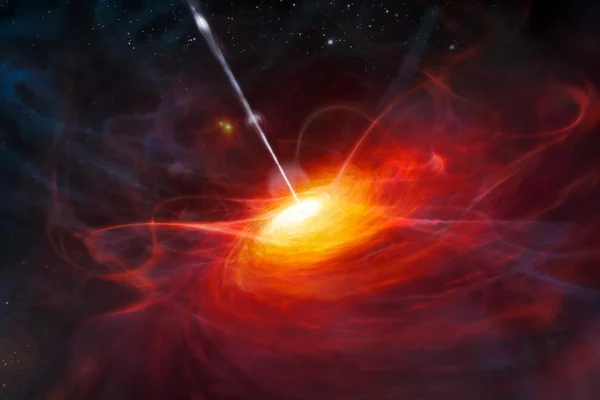
Astronomers Find Oldest Compact Quasar Pair, Two Giant Black Holes 900 Million Years After Big Bang
Two feeding black holes, weighing 1.5 billion and 400 million Suns, sit 18,100 light-years apart in a system seen 900 million years after the Big Bang.
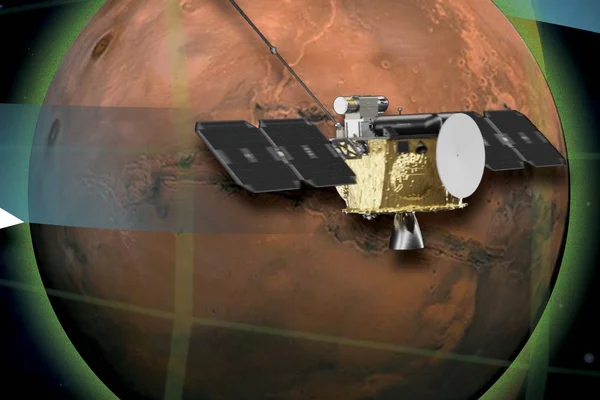
NASA Twin ESCAPADE Probes Complete First Powered Earth Flybys on the Way to Mars
Two small NASA satellites used engine burns during close passes over Earth to bend their path toward Mars, a maneuver the agency had never attempted on an interplanetary departure.
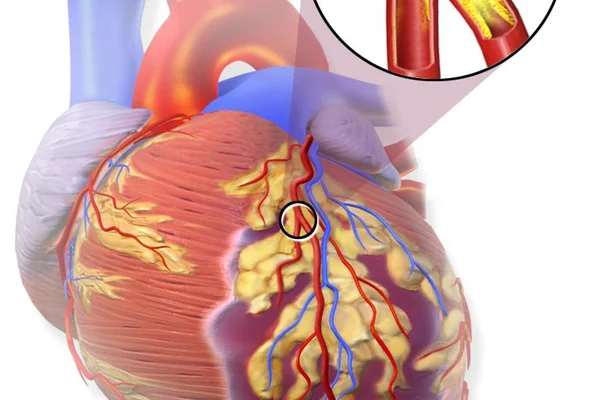
Cambridge mRNA Therapy Coaxes Adult Heart Cells to Divide and Restores Pumping in Mice
A transient, localized dose of modified mRNA encoding Myc and Cyclin T1 preserved cardiac output in mice after myocardial infarction, with benefit still measurable at 12 weeks.
Comments (0)
Log in or sign up to leave a comment.
No comments yet. Be the first to share your thoughts.