SpaceX has pushed the next launch of its Starship megarocket back by nearly a week, moving the vehicle's first attempt at reaching orbit from September 22 to September 28, 2026. The company announced the six-day slip on September 17 but gave no explanation for the delay, according to Space.com, which reported on September 17 that the change affects the 14th integrated test flight of the fully reusable rocket.
Flight 14 will be a landmark moment for a program that has so far stayed entirely within the atmosphere. The 408-foot-tall (124-meter-tall) stack has flown 13 times since its debut in April 2023, and every one of those missions followed a suborbital trajectory. On this flight, the upper stage, known as Ship 41, is supposed to complete roughly six orbits of Earth at an altitude of about 275 kilometers (171 miles) before splashing down in the Pacific Ocean west of Chile about 10 hours after liftoff.
The launch is scheduled from SpaceX's Starbase site in South Texas during a 75-minute window that opens at 7:15 a.m. Central Time (8:15 a.m. Eastern Time). The mission will also carry the first commercial payload for Starship: 26 next-generation Starlink V3 satellites, which the company says will add about 26 terabits per second of capacity to its constellation. That would make Flight 14 the first Starship launch to generate revenue for SpaceX's launch division, even if the customer is another part of the same company.
The delay from September 22 was reported by multiple outlets. TechCrunch reported on September 15 that SpaceX initially planned the test for September 22 but pushed it back on Thursday, September 17. TeslaNorth reported on September 15 that the original target was still gated on regulatory approval, stack readiness, weather, and range scheduling. Starlust reported on September 16 that the mission was pending regulatory approval from the Federal Aviation Administration.
Key Facts
SpaceX has published a mission profile for Flight 14 that calls for Ship 41 to perform its first orbital insertion maneuver, deploy 26 Starlink V3 satellites, conduct a single-Raptor in-space deorbit burn, and then execute a controlled reentry, descent, and splashdown. According to Starlust, the rocket is expected to fly at approximately 170 miles (around 275 kilometers) above Earth and complete about six orbits lasting roughly 10 hours. The flight will initially follow a passively safe suborbital trajectory before flight controllers decide whether to commit to orbit.
The Super Heavy booster will splash down in the Gulf of Mexico about seven minutes after liftoff, and there will be no chopstick catch of either stage on this flight. SpaceX has modified the booster after a hard landing on Flight 13 on July 24, 2026. Starlust reported on September 16 that in the terminal phase of the boostback burn, the three center engines showed signs of ice clogging, with only 8 of the 13 planned engines reigniting before the booster made a hard splashdown in the Gulf. The new Super Heavy features hardware modifications to improve engine filtering and software changes to enhance relight reliability.
The 26 Starlink V3 satellites are larger than the current generation. Each V3 adds about 1 terabit per second of constellation capacity, or 26 terabits per second on this mission alone, which SpaceX says is about 10 times the capacity of a single Falcon 9 V2 mini Starlink launch. Three of the V3 satellites have been outfitted with cameras and will photograph the heat shield on Ship 41 after deployment and transmit imagery during reentry. Starlink currently consists of more than 11,000 active spacecraft, according to Space.com, and none of them are the V3 version, which is designed to launch on Starship.
Ship 41 carries more than 500 physical sensors and includes two heat-shield tiles recovered from the previous upper stage, the first instance of tile reuse for Starship. SpaceX has also made additional heat-shield changes based on studying that recovered vehicle. CEO Elon Musk said on X that the V3 batch will deliver more than 100 times the bandwidth of the current 11,000 satellite constellation, according to Starlust.
The launch window opens at 7:15 a.m. CT (8:15 a.m. EDT) on September 28. The backup and original target was September 22. This is the second Starship test launch since SpaceX became a publicly traded company in the largest IPO in history in June 2026, according to TechCrunch. The first came in July, when SpaceX successfully deployed V3 Starlink satellites for the first time, though those burned up in Earth's atmosphere after roughly 20 minutes.
Analysis
What this really means is that SpaceX is attempting to cross a threshold that separates a test program from an operational launch system. For three years, Starship has demonstrated that a giant stainless-steel rocket can leave the pad, reach the edge of space, and come back in one piece, or at least in pieces that engineers can study. None of that proved the vehicle could stay in orbit, deploy payloads, and return on command. Flight 14 is designed to answer those questions in a single mission, with 26 working satellites as the proof of performance.
The stakes are unusually high because SpaceX has already spent billions on the program and is now looking to retire its Falcon 9 and Falcon Heavy rockets in favor of Starship, as TechCrunch reported on September 15. That transition only makes sense if Starship can reliably reach orbit, return to Earth, and get quickly reused. The company made massive launch cadence promises during its June IPO, and those promises depend on a vehicle that has not yet completed a single orbital flight. A success on September 28 would begin to validate the financial story that investors bought into.
The bigger picture here is that the Starlink V3 deployment is not just a payload test but a vertical integration play. SpaceX is both the launch provider and the customer, and the revenue that Flight 14 would generate stays inside the company even as it counts as the first revenue for the launch division. Each V3 satellite adds about 1 terabit per second, and the full batch of 26 adds 26 terabits per second, roughly 10 times a Falcon 9 V2 mini launch, according to TeslaNorth. If Starship can deploy these larger satellites in bulk, SpaceX can expand its constellation faster and more cheaply than any competitor can match.
The technical risk remains concentrated in the booster and the heat shield. Flight 13 suffered a hard splashdown after ice clogging cut the boostback burn to three center engines and only 8 of 13 engines relit, according to Starlust. SpaceX says it has addressed those issues with hardware and software changes, but the fix has not flown yet. The upper stage faces its own test: a deorbit burn that must work after six orbits, a heat shield that must survive reentry, and two reused tiles that have never before flown a second time. Three camera-equipped V3 satellites will photograph that heat shield after deployment, giving engineers their first close look at how the system behaves on an orbital return.
Why It Matters
A successful Flight 14 would mark the first time a fully reusable super-heavy rocket reaches orbit and deploys commercial satellites. SpaceX has spent years arguing that full and rapid reuse is the key to lowering the cost of space access, and the company says going to orbit allows the next phase of developing Starship to be fully and rapidly reusable to begin. If the flight works, that phase starts on September 28.
The mission also matters for Starlink's competitive position. The constellation already has more than 11,000 active satellites, but the V3 design is larger and more capable, and it can only launch on Starship. Delivering 26 of them at once would give SpaceX a capacity increase that no other operator can currently replicate. Musk's claim that the V3 batch will deliver more than 100 times the bandwidth of the current constellation is a marketing statement, but the underlying math of 26 terabits per second is real and significant.
For the broader launch industry, the flight is a test of whether SpaceX can retire Falcon 9 and Falcon Heavy on schedule. Those rockets have been the workhorses of the company's business, and replacing them with a single vehicle that has never reached orbit is a gamble. A failure on September 28 would not end the program, but it would push back the timeline for the reuse and cadence that the IPO case depends on. A success would put pressure on every competitor that is still flying expendable or partially reusable rockets.
Next Up
SpaceX will continue to target September 28 for liftoff from Starbase, with the 75-minute window opening at 7:15 a.m. CT. The mission remains pending regulatory approval from the FAA. Flight controllers will decide after the initial suborbital phase whether to commit to orbit, based on whether the stack has enough redundancy for the later deorbit burn.
If Flight 14 succeeds, the company is expected to move toward catching the Super Heavy booster and eventually the Ship, steps that were deliberately skipped on this mission. The next flight would also likely carry a larger batch of Starlink V3 satellites. For now, all eyes are on a six-day delay that turned September 22 into September 28 and a megarocket's first real shot at staying in space.
Related Articles

Simulation Ties JWST Little Red Dots to Rapidly Growing Heavy Seed Black Holes
A new Nature study led by Sunmyon Chon uses the ATERUI III supercomputer to show that James Webb Space Telescope little red dots are rapidly growing black holes formed from heavy seeds in the early universe.
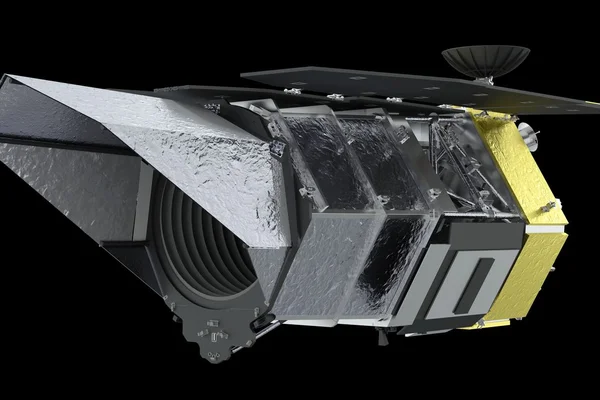
NASA Activates Roman Space Telescope Camera and Checks Out Coronagraph
NASA says its 300-megapixel Wide Field Instrument captured first starlight while the Coronagraph passed checkout, with the first science images expected in early 2027.
Europe launches FLEX and Copernicus Sentinel 3C on single Vega C rocket
The European Space Agency and Avio launched the FLEX Earth Explorer and Copernicus Sentinel-3C on a single Vega C rocket from French Guiana, with both satellites confirmed in orbit after separate deployments.
Comments (0)
Log in or sign up to leave a comment.
No comments yet. Be the first to share your thoughts.