NASA's Neil Gehrels Swift Observatory, a gamma-ray hunter that has watched the universe's most violent explosions for more than two decades, is now on a collision course with Earth. The U.S. Space Force predicts the 1.5-ton spacecraft will reenter the atmosphere on or around Friday, November 6, 2026, in an uncontrolled descent that ends a mission NASA had hoped to extend with a commercial rescue attempt.
Swift was never meant to finish this soon. Launched on November 20, 2004, the observatory was built to chase gamma-ray bursts, the brief flashes produced when massive stars collapse or neutron stars merge, and to swing its telescopes toward those flashes before their afterglows faded. It was renamed in 2018 to honor Neil Gehrels, its first principal investigator, after his death.
For most of its life the spacecraft had room to spare. Intense solar activity over the past few years thickened the upper atmosphere and dragged Swift down faster than engineers had projected, leaving NASA with a choice between watching the observatory spiral toward reentry and paying a commercial company to lift it. NASA chose the second option, contracting Katalyst Space Technologies in September 2025 to mount what amounted to a rush rescue.
That rescue failed. Katalyst's three-armed robot, named LINK, launched in July 2026 but never got closer than 12 to 15 kilometers to Swift, and it reentered the atmosphere on September 25, 2026. Swift briefly resumed observations after the attempt was called off, but by late October it was too low to hold steady, and its systems were shut down.
Key Facts
The Associated Press reported on October 31 that the Space Force prediction places Swift's reentry on or around Friday, November 6, 2026. Most of the 1.5-ton (about 1,500 kilogram) telescope should burn up, but NASA chief scientist Brad Cenko said a handful of pieces made of tungsten, a metal denser than lead, along with some mirror parts, could survive the plunge. Any surviving wreckage will most likely fall into the ocean, although swaths of Africa, Australia, India, Southeast Asia and Central and South America lie within the reentry zone.
NASA's own account of the mission's end fixes the trigger point precisely. The agency ended Swift's science mission after the spacecraft sank below 275 kilometers (171 miles) above Earth's surface, a height at which atmospheric drag prevents the telescopes from holding a steady gaze on their targets. Swift conducted its final observation on October 20, 2026.
The ledger is large. NASA reported on October 23 that Swift observed more than 2,000 gamma-ray bursts and studied more than 1,400 supernova explosions over its career, work that contributed to about 7,000 published scientific papers. Its archive holds nearly 22 years of brightness measurements, more than 1.5 million Ultraviolet/Optical Telescope images and roughly 12 terabytes of data, which the agency compares to the storage equivalent of about 600 high-definition movies.
Space.com reported on November 1 that the reentry will be uncontrolled and that debris is expected to fall within a band about 21 degrees of the equator. That band is mostly ocean, but it crosses populated parts of Africa, South and Southeast Asia and Latin America. Dean Sladen, a quality manager and aerospace engineer at U.K. supplier Accu Components, told the outlet that once Swift drops to about 120 kilometers the end comes within minutes, with solar panels and antennas tearing off first and the main body breaking apart around 78 kilometers.
NASA reported on September 28 that the boost attempt had concluded without raising the orbit, with the agency and Katalyst gaining experience for future in-space servicing programs. NASA contracted the Flagstaff, Arizona, company in September 2025, giving it roughly one year to design, build, test and launch a satellite able to meet, grab and lift Swift. LINK lifted off from Kwajalein Atoll in the Republic of the Marshall Islands in July 2026 aboard a Northrop Grumman Pegasus XL rocket. After initial checkouts it suffered intermittent communications losses and problems with its orientation control, and NASA formally concluded its involvement on September 3, 2026. Katalyst operated LINK on orbit for 85 days. The LINK mission was a $30 million effort.
Analysis
The failure is easy to frame as one unlucky robot, but the numbers point elsewhere. Katalyst had about a year to go from concept to a working satellite, and it did reach space and operate for 85 days. What it could not do was close the last 12 to 15 kilometers, and in orbital mechanics that gap is the whole mission: a servicing spacecraft that cannot rendezvous cannot boost anything.
The bigger picture here is that low Earth orbit is filling with hardware that was never built to be serviced, while solar activity is shortening the lives of satellites already there. Darren McKnight, a senior technical fellow at LeoLabs, told Space.com that there are 10 times more objects reentering per year than there were just five years ago, driven by growing low Earth orbit constellations and technology refresh cycles. Swift is not an exception to that trend. It is an early, unusually well-documented example of it.
The debris math is less alarming than some headlines suggest, but it is not trivial. NASA's orbital debris requirements state that the risk of human casualty from surviving debris shall not exceed one in 10,000. Sladen expects the six heavy reaction wheels and tougher telescope parts such as lenses and mirrors to be the most likely survivors, while Swift's mask of around 52,000 tiny lead tiles will almost certainly melt. Because the orbit stays within about 21 degrees of the equator, most of whatever survives should land in water, but the band includes large populations, which is why the Space Force is tracking its path.
The harder judgement concerns not Swift but the model it tested. Shawn Domagal-Goldman, director of the Astrophysics Division at NASA Headquarters, called the effort a high-risk, high-reward mission and noted that without intervention Swift was going to reenter the atmosphere by the end of the year. That is an honest description of a bet made quickly, and Katalyst chief executive Ghonhee Lee has argued that the company went from mission concept to launching and operating the first commercial space robot in less than a year. Both statements can be true at once: the attempt produced real flight experience and still failed at the only task that would have saved the telescope. What this really means is that rendezvous and docking, not launch, remain the hard part of commercial satellite servicing.
Why It Matters
Swift's value was speed. As principal investigator S. Bradley Cenko of NASA's Goddard Space Flight Center explained, the spacecraft had to detect and locate a gamma-ray burst, tell other observatories where it was, and then swing its telescopes around to image the burst before the afterglow faded. That sequence typically took about a minute. The capability made Swift a first responder for Hubble, Webb and the other telescopes that followed its alerts.
The scientific return also outlived every projection made at launch. Domagal-Goldman said Swift was designed for a two-year primary mission but remained productive for more than 10 times as long, and its 7,000 papers cover exploding stars and active galaxies. The archive itself survives the spacecraft: the 12 terabytes of measurements and 1.5 million ultraviolet and optical images remain available to researchers, which means the loss is one of future observations rather than past data. Domagal-Goldman said NASA is exploring how to use and augment its fleet of existing space telescopes, from fast-to-orbit commercial capabilities to new missions, to support rapid response to cosmic events in a post-Swift world.
The reentry is also a rehearsal for a busier sky. McKnight's estimate of 10 times more objects coming down each year than five years ago describes a regime in which uncontrolled reentries stop being rare events and become routine traffic. Swift's mass, its tungsten components and its 21-degree orbital band give engineers a real test case for models that predict which parts survive and where they land, and the one-in-10,000 casualty threshold gives regulators a benchmark to check those models against.
Next Up
The Space Force will keep publishing tracking data as Swift's orbit continues to decay, and the final prediction is likely to narrow only in the last day or two. The band it crosses is mostly ocean, though it includes populated parts of Africa, South and Southeast Asia and Latin America. The practical work now belongs to tracking networks such as LeoLabs, which will follow the descent to the end.
For NASA, the immediate task is to keep gamma-ray astronomy moving without Swift. The agency has said it is exploring commercial fast-to-orbit capabilities and ways to augment existing telescopes, with rapid response to cosmic events as the stated goal. John Nousek, the Pennsylvania State University astronomer who led Swift's control team, put the ending plainly: the community knew this day would come since before launch, and in low-Earth orbit what goes up must come down, and that end is catastrophic for the spacecraft.
Related Articles
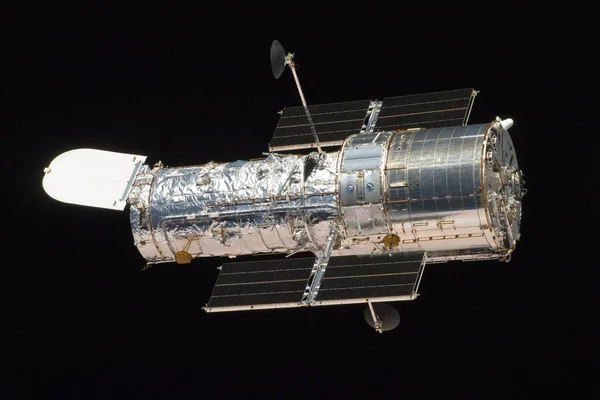
NASA asks industry to boost, service or safely dispose of Hubble before 2033 reentry
NASA's Goddard center wants industry concepts for lifting Hubble to 600 kilometers, upgrading the telescope or bringing it down in a controlled way, with replies due by late November.
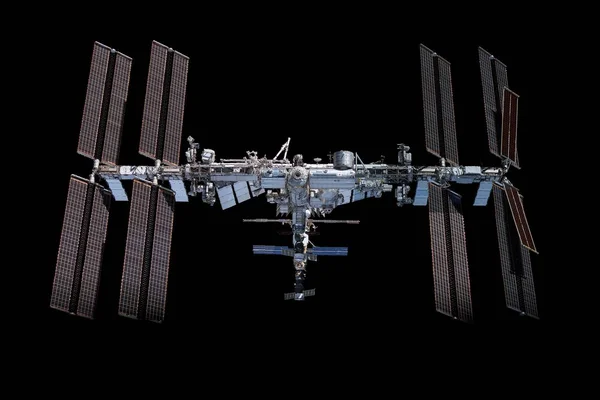
NASA and CSA Astronauts Complete 100th US Spacewalk From ISS and Install Seventh Solar Array
Two Expedition 75 crewmates capped the station's hundredth US spacewalk by unrolling a 340 kilogram solar wing on the 2A power channel, edging the outpost toward a 30 percent power increase.
Virgin Galactic names Apeiron and ferries first Delta-class spaceplane to Spaceport America
Virgin Galactic's first Delta-class ship, named by a worldwide vote, is now in New Mexico for avionics work, ground tests and a powered flight campaign before paying passengers board.
Comments (0)
Log in or sign up to leave a comment.
No comments yet. Be the first to share your thoughts.