After 378 days sealed inside a 1,700 square foot 3D-printed habitat at NASA's Johnson Space Center in Houston, the four volunteers of CHAPEA Mission 2 stepped back into open air on Saturday, 31 October 2026. Commander Ross Elder, medical officer Ellen Ellis, flight engineer James Spicer and science officer Matthew Montgomery had entered the structure on 19 October 2025 and had not gone outside since. Their exit ends the agency's second year-long simulated Mars mission and gives researchers a second full archive of medical, behavioural and operational data collected under conditions built to mimic a planet that cannot be reached quickly.
The habitat is the centrepiece of the Crew Health and Performance Exploration Analog, known as CHAPEA, a program that sits inside NASA's Human Research Program. The first CHAPEA crew spent 378 days in isolation at Johnson Space Center across 2023 and 2024, and the second mission was designed to repeat that run with a different four-person team and a refined set of experiments. NASA treats such analogs as a practical way to study the human side of deep space flight before hardware for an actual Mars transit exists.
Life inside the 1,700 square foot, 158 square metre facility followed a Mars script. The crew grew crops, exercised, performed habitat maintenance, conducted simulated spacewalks on a mock Martian surface and coordinated with mission control under deliberately imposed delays. They also lived with the resource limits that a real Mars outpost would impose, including constrained food systems, limited supplies and finite communications bandwidth.
The defining constraint was distance. Mars is roughly 140 million miles from Earth, so every message in either direction carried an artificial lag. The crew's only channel to their families was email, and replies arrived on the same delayed clock as operational traffic. The experiment was less about whether people can survive a small room and more about what a year of that room does to sleep, mood, teamwork, medical care and decision making.
Key Facts
NASA said in a media advisory published on October 27, 2026, that the four volunteers would exit the habitat on Saturday, 31 October after 378 days of isolation. The advisory, numbered M26-083 and written by Lauren E. Low, said NASA would provide live coverage from 3 p.m. EDT streamed on NASA Johnson's YouTube and social accounts. Johnson Space Center Director Vanessa Wyche and NASA astronaut Jack Hathaway were scheduled to speak alongside the four crew members.
The crew held defined roles. Ross Elder served as mission commander, Ellen Ellis as medical officer, Matthew Montgomery as science officer and James Spicer as flight engineer. NASA reported on October 19, 2026, that the team had just marked a full year inside the habitat, and that families had been reached only by email during the mission because of the Mars-like communication delay. The same article noted that the crew would begin two weeks of post-mission evaluations and debriefs after egress.
Houston Public Media reported on October 31, 2026, that the crew was welcomed back by their families after 378 days inside the 1,700 square foot facility in a hangar at Johnson Space Center. Wyche said the crew lived with limited resources, maintained their habitat, grew crops and carried out simulated Mars operations within that footprint. The simulation imposed communication delays between 26 and 44 minutes, Wyche said, meaning a single exchange could take well over an hour.
Reuters reported on November 1, 2026, that the crew emerged after 378 days in isolation in an endeavour designed to prepare for a possible future NASA astronaut mission to Mars. The wire service noted that the crew entered the 158 square metre 3D-printed habitat on 19 October 2025 and grew crops in simulated Martian soil while interfacing with NASA officials on delays that recreated interplanetary communications. Reuters also recorded that this was NASA's second CHAPEA mission, following the earlier 378-day isolation spanning 2023 and 2024.
The numbers behind the isolation are specific. Co-investigator Suzanne Bell said the crew went a full two weeks without communicating with the outside world at one point, a blackout designed to simulate the Sun sitting between Earth and Mars. Spicer said he received more than 4,000 emails during the mission. NASA has said the data could help build decision-making support systems for communication delays lasting up to 45 minutes each way, and could inform food system design, crew time management and bandwidth allocation on the Deep Space Network.
Analysis
The headline number is 378 days, but the more useful figure is the lag. A crew that can talk to Earth in near real time can lean on ground specialists for almost everything, from a balky experiment to a bad night's sleep. A crew waiting up to 44 minutes for an answer cannot. CHAPEA Mission 2 was constructed to see what people build in place of that lifeline: local procedures, crew-level autonomy, and the social habits that keep four people functional when no one outside the room can help quickly.
What this really means is that NASA is testing institutions and habits, not just endurance. The habitat is a pressure cooker for the unglamorous questions that decide whether a Mars mission works. Who makes a medical call when the flight surgeon is 26 minutes away by radio? How does a science officer argue for a sample when the schedule is already slipping? What happens to a team's morale after two weeks of total silence from home? None of those questions can be answered by a rover, and none of them can be answered by a short duration test.
The program has limits, and NASA is careful about them. A simulated habitat inside a hangar cannot reproduce the radiation environment of deep space, nor the genuine impossibility of return. The crew knew they could open the door. Bell described the experience as sensory deprivation, and that description points at the soft edge of the experiment: the volunteers were isolated, but not truly trapped. The data is best read as a study of isolation and delay, not of Mars itself.
The bigger picture here is that human Mars planning has quietly moved from propulsion problems to people problems. NASA has already solved, or nearly solved, the transport questions well enough to talk about a crewed mission as early as the 2030s. What remains uncertain is whether a small group can stay healthy, sane and productive for the durations a real Mars mission would demand. CHAPEA is one of the few programs generating evidence on that question rather than speculation.
Why It Matters
The Moon is the nearer beneficiary. NASA says the CHAPEA data can aid lunar preparation by optimising food system design, crew time use and bandwidth planning, all of which apply to the Artemis era as much as to Mars. Michael Stenger, chief scientist for NASA's Human Research Program, said the mission was incredibly valuable in starting to teach the agency how to understand requirements for year-long missions, including medical and psychological care delivered across communication delays.
The medical and psychological findings matter beyond spaceflight. A closed group of four people, isolated for a year, with delayed contact with family and limited resources, is an extreme version of problems that hospitals, remote research stations and long deployments already face. Grace Douglas, CHAPEA principal investigator, said the team was extremely proud of the crew for their commitment and achievements over the last year on such a fast-paced, highly demanding mission. The behavioural protocols developed here can be adapted elsewhere.
There is also a strategic dimension. NASA has explored Mars with robotic rovers and orbiting spacecraft, and it now speaks openly about sending people there in the 2030s, with a return to the Moon first for the first time since 1972. Each CHAPEA run gives the agency a defensible evidence base for budget requests and mission architecture decisions. Without that evidence, year-long crewed missions remain a slogan rather than a plan.
Next Up
The crew now enters two weeks of post-mission evaluations and debriefs. Bell called it a critical data collection period, and it is easy to see why: the first days after egress are when researchers can compare baseline measurements taken before isolation with the crew's current physical and cognitive state, and when fresh recollections of disputes, workarounds and coping strategies are still accurate.
NASA plans to fold CHAPEA into a broader Moon and Mars Exploration Analog, or MMEA, which could begin a simulated mission as soon as August 2027. If that timeline holds, the agency will have converted a single 378-day experiment into a standing analog program, and the lessons from the Houston hangar will start feeding directly into the design of missions that aim first at the Moon and, in Wyche's phrasing, one day at Mars.
Related Articles
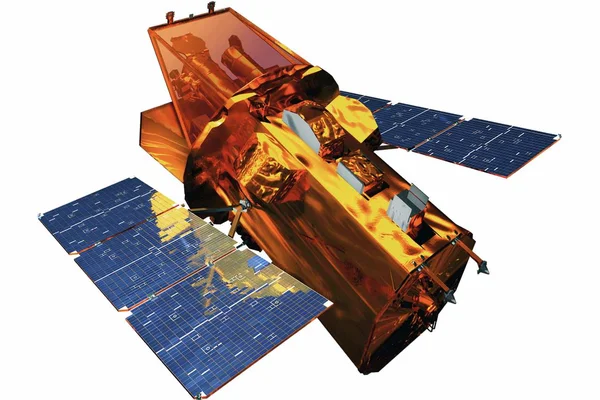
NASA's Swift telescope to fall to Earth around November 6 after commercial rescue fails
The 1.5-ton gamma-ray observatory will make an uncontrolled reentry after a robot sent to lift it never got closer than 12 kilometers, closing a 22-year mission.
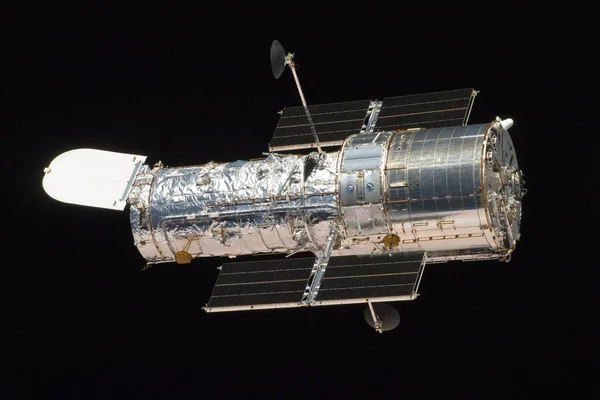
NASA asks industry to boost, service or safely dispose of Hubble before 2033 reentry
NASA's Goddard center wants industry concepts for lifting Hubble to 600 kilometers, upgrading the telescope or bringing it down in a controlled way, with replies due by late November.
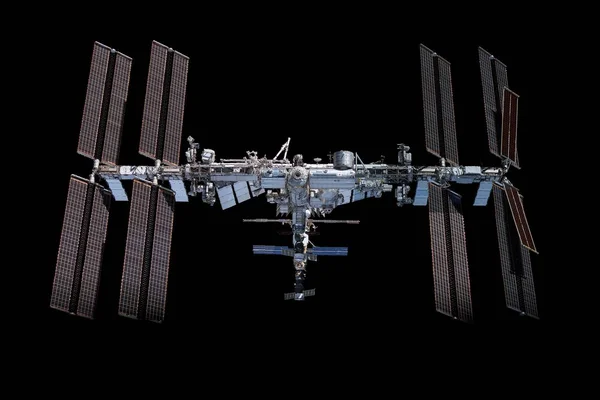
NASA and CSA Astronauts Complete 100th US Spacewalk From ISS and Install Seventh Solar Array
Two Expedition 75 crewmates capped the station's hundredth US spacewalk by unrolling a 340 kilogram solar wing on the 2A power channel, edging the outpost toward a 30 percent power increase.
Comments (0)
Log in or sign up to leave a comment.
No comments yet. Be the first to share your thoughts.