For a certain slice of the games industry, Toshihiro Nagoshi is not merely a veteran designer but the author of a particular kind of Japanese crime drama. At Sega he built the Yakuza series, known in Japan as Ryu ga Gotoku, a long running franchise about honor, nightlife districts and men with complicated pasts. When he left Sega in 2021, his next move was watched closely, and the answer arrived in the form of a new Tokyo studio funded entirely by NetEase Games, the Chinese publisher then spending heavily to secure Japanese creative talent. The pitch was simple: an auteur with a proven commercial instinct, backed by deep pockets, building something under his own name.
The studio opened its official site in January 2022, and VGChartz dates the company's founding to November 2021. It operated as a 100 percent subsidiary of NetEase Games. Then, in December 2025, the studio finally showed its hand. At The Game Awards 2025 it announced Gang of Dragon, an action adventure set in Kabukicho, the nightlife district of Shinjuku in Tokyo, with a protagonist modeled on the Korean actor Ma Dong-seok. It was a flashy reveal, the sort that generates a year of speculation about release dates.
The speculation ended before the game did. On November 2, 2026, Japan's official gazette, Kanpo, carried a dissolution notice for Nagoshi Studio Inc. The notice, published in Extra Edition No. 240, states that the company was dissolved by a shareholders' resolution passed on October 31, 2026. It names Minoru Morinaga as representative liquidator and instructs anyone holding a claim against the company to file within two months of the day after publication, warning that claims not submitted in that window will be excluded from the liquidation. There was no farewell post, no final trailer and no game. The studio that was supposed to define Nagoshi's second act closed without shipping a single title.
The end did not arrive suddenly. Bloomberg had already reported in March that the money was being pulled, and the studio's public footprint eroded in stages: a YouTube channel that disappeared in April and was later restored, a website that became unreachable in May, a Steam page left untouched with the words coming soon. Each signal was easy to explain away at the time. Together they trace a company being quietly decommissioned while its only real asset, an announcement, was still live.
Key Facts
IGN reported on November 2, 2026, that Nagoshi Studio had officially shut down before releasing a game, citing Gematsu, and confirmed both the October 31 shareholders' resolution and the November 2 gazette publication. VGChartz reported on November 1, 2026, that the Kanpo notice described the same resolution, and noted that the studio's Steam page for Gang of Dragon still listed the title as coming soon with no release date attached.
4Gamer reported on November 2, 2026, that the notice appeared in Extra Edition No. 240 and that Nagoshi Studio was a 100 percent NetEase Games subsidiary founded in 2022. The same report set out the creditor window and named Morinaga as representative liquidator, and it noted that Gang of Dragon, the studio's only announced title, was set in Kabukicho and had never been given a release date. It described the project as an action adventure built around a protagonist modeled on the Korean actor Ma Dong-seok.
Funding had been in question since early 2026. Bloomberg reported on March 7, 2026, that NetEase would stop financing the studio from May 2026 after learning that Gang of Dragon needed at least another 7 billion yen, roughly $44.4 million, to be completed. Nagoshi was said to be looking for new investors who might buy the studio out, and those efforts did not succeed.
Game*Spark reported on November 2, 2026, that Nagoshi and the other directors had already resigned effective March 31, 2026, and that Morinaga was appointed a director on May 31, 2026, taking on the representative director role while provisions requiring a board of directors and an auditor were removed. By October 5, the report said, Morinaga was the only director in office and the commercial register still showed no dissolution.
Analysis
The corporate paperwork tells a story that no press release will. Directors leaving at the end of March, a single representative installed at the end of May, governance provisions stripped out: that is not the shape of a studio fighting for its life. It is the shape of a company being reduced to a shell so that it can be wound down cheaply. The months between the Bloomberg report and the gazette notice were not a period of negotiation with saviors. They were a period of administration. What this really means is that the decision to end Nagoshi Studio was made long before the public was told, and the announcement was the last administrative step in a process running since the spring.
The bigger picture here is about NetEase's changing appetite rather than about one designer's misfortune. The studio was created during a period when Chinese publishers competed aggressively for Japanese console talent, offering autonomy and long horizons. That era has cooled, and the reason is visible in the arithmetic. A project that had already consumed years of salaries needed another $44.4 million before anyone could play it, with no guarantee the result would find an audience. When a publisher is retrenching internationally, a single unreleased game with an open ended budget is the easiest line item to cut.
There is also a creative argument buried in the business one. Gang of Dragon was announced at The Game Awards in December 2025 and dissolved roughly eleven months later, a lifespan shorter than many marketing campaigns. The timing matters because the reveal was the studio's only real proof of existence. A trailer buys credibility with players and, more importantly, with investors. Here it bought neither enough time nor enough money. Nagoshi's name opened doors in 2022, but by 2026 it could not close a $44.4 million gap, and the game behind the name had not been shown in a form that could.
None of this is a verdict on the work itself. Nobody outside the studio has played Gang of Dragon, and it may have been excellent. The failure was structural: a new studio, a new property, an escalating budget and a parent company that changed strategy mid stream.
Why It Matters
For developers in Tokyo, the closure is a warning about how much of a studio's fate sits outside the building. Nagoshi Studio was not a small independent team scraping together a prototype. It was fully owned by a major publisher, staffed around a famous creator and given a prime slot at a globally watched awards show. If that combination can end in a gazette notice and a liquidation, then the security offered by publisher ownership is more conditional than it appears.
For NetEase, the episode is a reputational data point as much as a financial one. The company spent years building the case that it could be a patient partner to Japanese talent. Ending a flagship arrangement before its first game shipped complicates that pitch for the next creator weighing an offer. Publishers can always cite portfolio discipline, and the $44.4 million figure gives them a defensible story. Creators will look at the eleven months between the reveal and the dissolution and draw their own conclusions about what a commitment is worth.
For players, the practical loss is smaller but stranger. Gang of Dragon still exists as a store page, a trailer and a set of interviews, a game that was formally announced and never formally cancelled. There will be no refunds to process and no servers to shut down, because there was never anything to buy. What remains is a coming soon label that no longer points anywhere.
Next Up
The immediate business is liquidation. Claims against Nagoshi Studio must be filed within two months of the day after the November 2 publication, and Morinaga, as representative liquidator, is named to handle the process. After that window closes, the remaining question is what happens to the assets: the Gang of Dragon name, whatever code and art were completed, and any contracts attached to the project. Japanese liquidation practice does not guarantee that a game in progress finds a buyer, and nothing in the reporting suggests one has been lined up.
The larger question is what Nagoshi does next, and none of the reporting offers an answer. He left Sega in 2021, built a studio, announced one game and saw it dissolved before release. Whether he returns with a new backer, moves to a different kind of role, or steps away from studio building altogether is unknown. What is known is the timeline: a December 2025 reveal, a March 2026 funding decision, an October 31 resolution and a November 2 notice. For a career built on long running series, that is an unusually short final chapter.
Related Articles
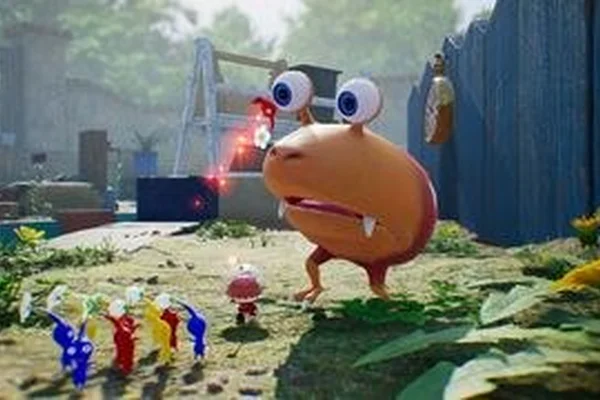
Nintendo Names November 1 Pikmin Day and Sets November 12 Launch for Pikmin 4 Switch 2 Edition
A surprise nine minute Direct turned a Halloween morning into a franchise milestone, pairing a new annual holiday with a dated Switch 2 upgrade, a free demo and a Pikmin Bloom expansion.
Donald Glover to Write, Direct and Star in Netflix Live Action PUBG Series
Krafton confirms its battle royale hit is heading to Netflix as a live action show, with the Glover brothers writing and producing and no release date yet set.

Phantom Blade Zero Storms Steam With 723,876 Concurrent Players and an 88 Metacritic Score
S-Game's wuxia action RPG drew 723,876 simultaneous Steam users at its peak and earned an 88 Metacritic score, ranking sixth among single-player action RPG debuts on the platform.
Comments (0)
Log in or sign up to leave a comment.
No comments yet. Be the first to share your thoughts.