For more than 35 years the Hubble Space Telescope has been one of the most productive observatories ever flown. It was launched with the expectation that astronauts would periodically visit, repair and upgrade it, and that is what happened across five space shuttle servicing missions. Those visits replaced instruments, restored failed hardware and, in 2002, lifted the telescope back to a higher orbit.
That arrangement ended with the shuttle. Hubble has no propulsion system of its own, so it cannot raise its altitude or steer itself toward a safe ending. Atmospheric drag at its current height bleeds away orbital energy every day, and the telescope has been sinking ever since the last reboost. Left alone, it will eventually re-enter the atmosphere, and the question of when has become closely watched.
Hubble is a joint NASA and European Space Agency project, managed by NASA's Goddard Space Flight Center in Greenbelt, Maryland, with Lockheed Martin Space supporting mission operations and the Space Telescope Science Institute conducting science operations. It remains in heavy demand: the telescope is oversubscribed by more than 7 to 1, and its archive supports more than 1,000 scientific papers a year. No replacement is expected before roughly 2040, when the Habitable Worlds Observatory could become operational.
Against that backdrop, NASA has opened a new conversation with the commercial space industry about what to do with the telescope. The agency is not buying anything yet, and it has no money set aside for a mission. What it has issued is a formal request for information, a market survey asking whether private companies believe they can capture Hubble, move it, fix it or bring it down safely.
Key Facts
NASA Science reported on October 30, 2026 that the agency issued a Request for Information on October 29, 2026 to learn more about industry capabilities for in-space servicing of the Hubble Space Telescope. The request covers three broad options: a mission to boost Hubble to a higher altitude to extend its science lifetime, a servicing mission to enhance its capabilities, or a safe and controlled re-entry into Earth's atmosphere or orbital disposal at the end of its mission. Responses are due by 3 p.m. EST on Monday, November 30, 2026.
Ars Technica reported on October 30, 2026 that NASA wants information on capturing Hubble and boosting it to an altitude of at least 373 miles, or 600 kilometers. The telescope currently orbits at roughly 292 miles, about 470 kilometers, down from about 362 miles, or 583 kilometers, after the 2002 shuttle reboost. It took 24 years for Hubble to drift from that 2002 altitude to its present orbit, and a boost back to 600 kilometers would likely keep it flying for at least 25 more years.
SAM.gov posted on October 29, 2026 that the notice, numbered 80GSFC27RFIHSTS, is a sources-sought announcement and not a request for proposals, that responses are capped at 25 pages in PDF form, and that the agency will not pay for information submitted. The notice also sets a constraint: the boost and any servicing mission must not harm Hubble, and the work is expected to occur by 2032. Goddard would supply technical information and coordinated operations; the contractor would bring the launch vehicle, spacecraft, crew if applicable and mission operations.
Lifetime analysis performed in July 2026 produced the numbers driving the schedule. The solicitation states a 10 percent probability of reentry by September 2032 and a 50 percent probability by December 2033, which is why NASA's public materials describe a likely reentry in the 2033 to 2034 timeframe. Orbital dynamicists quoted by Ars Technica reached the same conclusion independently.
Orbital Wire reported on October 30, 2026 that the agency framed the request around protecting the taxpayer investment in an asset already on orbit. NASA Administrator Jared Isaacman said Hubble still has important science ahead of it and that the agency should be looking at every reasonable opportunity to keep it delivering for as long as possible.
Analysis
This is the second time in four years that NASA has gone to industry with essentially the same question, and the contrast between the rounds is the story. In 2022 the agency received eight responses to a similar request, including an Astroscale and Momentus robotic reboost proposal, and then declined to pursue a mission in 2024. That round was a study exercise without a schedule forcing the issue. This one arrives with a July 2026 probability analysis, a stated 2032 deadline for flight and an administrator who has argued publicly for exploring cheaper ways to keep the telescope alive.
What this really means is that NASA is trying to convert a slow-motion ending into a procurement decision it can actually afford. The agency is not committing to buying a rescue mission and currently has no funding allocated for procuring a Hubble reboost or servicing mission, according to Ars Technica. A request for information costs almost nothing and produces option value. If several credible companies say they can capture Hubble and lift it to 600 kilometers for a plausible price, NASA gains a number it can take to Congress. If nobody credible answers, the agency has documented its due diligence before accepting an uncontrolled reentry.
The technical precedent cuts both ways. In 2022 Isaacman, who is now NASA administrator, proposed a SpaceX Dragon servicing mission, and in September 2022 NASA and SpaceX agreed to study, without NASA funding, whether a Dragon capsule could dock with Hubble and lift it to a higher orbit. SpaceX and the Polaris Program offered the study for free, and NASA said then that it did not plan to pay for or carry out a servicing mission. Hubble was about 335 miles up at the time. Less encouraging: NASA's $30 million Katalyst Space Technologies attempt to rescue the Swift observatory reached within about 6 miles, or 10 kilometers, of the satellite before ground teams stopped short over power and reaction-control problems.
The bigger picture here is that Hubble's fate is becoming a test of whether commercial satellite servicing is a real market or a demonstration category. Capturing an uncooperative, decades-old observatory with no docking port and no propulsion is harder than servicing a purpose-built commercial satellite. Hubble was designed for astronauts in pressure suits working from close range, not for a robotic vehicle making a first-time approach. Whoever bids has to solve inspection, capture, berthing and orbit raising without touching anything fragile, then prove the telescope still points and observes as well as it did before. Nicky Fox, associate administrator of the Science Mission Directorate, says commercial industry has rapidly evolved to offer new capabilities for in-space satellite capture and servicing.
Why It Matters
Hubble is not a nostalgia project. It is a working facility with a 7 to 1 oversubscription rate and an output of more than 1,000 papers a year, and nothing comparable is scheduled to replace it before roughly 2040. Every year it operates is a year of observations that no other instrument can currently make, and every year it spends sinking brings a reentry that would end that stream of data permanently.
There is also a safety dimension that rarely makes headlines. An uncontrolled reentry of a large observatory is not a neutral outcome; it is a debris event whose timing and footprint are governed by solar activity, atmospheric density and the object's attitude. A controlled disposal mission would remove that uncertainty and give the agency a planned ending instead of a predicted one. That is why disposal sits alongside reboost and servicing in the same request.
And there is an institutional dimension. NASA is simultaneously developing its successor flagship mission and asking industry to save the telescope it already has. If the commercial answers are strong, the agency gets a template for extending the life of other aging assets. If they are weak, the 2033 to 2034 reentry becomes the default, and the last reboost of Hubble will remain the one performed by shuttle Columbia in 2002.
Next Up
The immediate next step is the response deadline. Companies have until 3 p.m. EST on Monday, November 30, 2026 to submit PDF responses of no more than 25 pages, without export-controlled information. NASA has said it will not pay for the information it receives, so the submissions will reveal how much of this work industry is willing to price on speculation. After that, the agency has to decide whether to turn any concept into a funded acquisition, which would require money that does not currently exist in the program.
The clock is the binding constraint. A mission is expected by 2032, and the July 2026 analysis already assigns a 10 percent chance of reentry by September 2032. Anything that flies has to be designed, built, launched and operated inside that window, which leaves little room for a drawn-out procurement fight. Isaacman has said Hubble still has important science ahead of it and that the agency should look at every reasonable opportunity to keep it delivering for as long as possible.
Related Articles
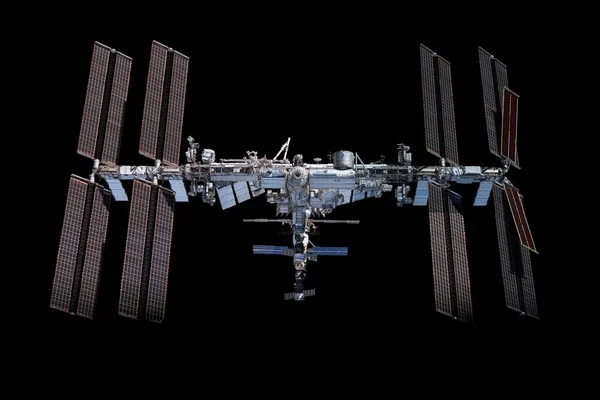
NASA and CSA Astronauts Complete 100th US Spacewalk From ISS and Install Seventh Solar Array
Two Expedition 75 crewmates capped the station's hundredth US spacewalk by unrolling a 340 kilogram solar wing on the 2A power channel, edging the outpost toward a 30 percent power increase.
Virgin Galactic names Apeiron and ferries first Delta-class spaceplane to Spaceport America
Virgin Galactic's first Delta-class ship, named by a worldwide vote, is now in New Mexico for avionics work, ground tests and a powered flight campaign before paying passengers board.

FCC Approves Amazon Leo's $11.5 Billion Globalstar Takeover and Satellite Spectrum
Regulators cleared the $11.5 billion transaction, handing Amazon two dozen satellites and 25 megahertz of airwaves as it races SpaceX into phone-to-satellite service.
Comments (0)
Log in or sign up to leave a comment.
No comments yet. Be the first to share your thoughts.