For most of the history of the commercial space industry, a satellite has been treated as a sensor and a radio. Instruments collect images, signals or telemetry, the spacecraft stores the results, and a ground station eventually pulls the raw data down for processing on Earth. That model worked when bandwidth was cheap relative to computing and when missions could tolerate hours of delay between collection and decision. It works less well when the product is an AI model that needs to act on what it sees while the spacecraft is still over the area of interest.
That mismatch has pushed a small group of hardware companies toward what the industry calls onboard or orbital computing: radiation-tolerant processors, storage and networking that let a satellite filter, compress and analyze data before sending anything home. The engineering problem is not simply shrinking a data center. Cosmic radiation flips bits, temperatures swing across extreme ranges, power budgets are fixed by solar arrays and batteries, and there is no air to carry heat away from dense electronics.
Ramon.Space has been building toward that market for two decades. Globes reported on November 17, 2026 that the company was founded in 2004 and shifted its focus in 2020 to computing infrastructure for space, building systems that let satellites process, store and transmit data instead of relying on downlinking raw data to Earth. The company operates primarily in Israel, maintains a presence in the United States and the United Kingdom, and is setting up a new center in Germany. It is named in honor of Ilan Ramon, Israel's first astronaut, a detail The Jerusalem Post reported on November 17, 2026.
On November 17, 2026, the company said it had closed a $124 million Series B round, money it intends to use to ramp production, accelerate delivery against a growing pipeline, speed next-generation products to customers and expand into new markets. The round was led by the growth equity firm PSG, with Micron Technology joining as a strategic investor. The announcement turns a quiet supplier of space hardware into one of the better-funded bets on the idea that computing, not launch, is the next bottleneck in the space economy.
Key Facts
The round was led by PSG, a growth equity firm that specializes in software and technology-enabled services companies. New investors included Micron Technology, Senvest and Phoenix Financial, while existing backers StageOne, Deep Insight and Grove Ventures also participated. Ramon.Space said the $124 million brings total funding to roughly $180 million, a figure Calcalist reported on November 17, 2026 and attributed to the company.
Headcount is small relative to the ambition. Globes reported on November 17, 2026 that Ramon.Space has 130 employees and that CEO Avi Shabtai intends to roughly double the workforce. The company's customers are described as communications mega-constellation operators and Earth observation providers, spanning commercial and government programs worldwide. Calcalist reported on November 17, 2026 that the customer base includes SES, which it described as one of the major operators, along with clients that have not been publicly named.
The technical pitch is that Ramon.Space delivers what it calls Earth-grade performance in orbit while withstanding radiation, extreme temperatures and power constraints. Its systems combine software with AI and machine-learning processors, high-capacity storage, networking and edge computing. The company says it can produce at enterprise scale to deliver millions of computing nodes, a manufacturing claim that matters as much as the chip design itself.
Target markets listed by the company include communications constellations, 5G non-terrestrial networks, Earth observation and remote sensing, and future space-based data centers. Shabtai told Calcalist that the company does not touch the satellite's flight-control system, which he described as relatively simple, and instead integrates advanced computing elements into spacecraft built by others. He also described the retrofit problem: you cannot add systems to a satellite after launch, so Ramon.Space has to be designed into new satellites before they leave the ground.
PSG managing director Ronen Nir said in the announcement that processing and managing data in orbit is becoming essential to the growth of the space economy. Shabtai's own framing was broader. 'We have proven that Earth-grade computing works in space, and we are delivering it today,' he said, adding that the funding can help the company scale to create the computing foundation for the space economy's accelerated growth.
Analysis
The bigger picture here is that investors are no longer underwriting space companies as launch or hardware stories alone. They are underwriting a layer of infrastructure that sits between the spacecraft and the ground segment, and that layer looks increasingly like a terrestrial cloud business with much harder physics attached. PSG's lead is a signal that growth equity, not only deep-tech venture capital, sees a scalable software and systems business inside the radiation shielding.
Ramon.Space's argument rests on three barriers it says it has already crossed: technology, manufacturing capability and a customer base. That is a credible way to describe a moat in a market where the alternative is often to fly a general-purpose chip and accept failures, or to process everything on the ground and accept latency. Shabtai told Globes that orbital computing is far harder than terrestrial computing because of radiation, extreme temperatures, energy limits and the absence of air for cooling, and that the technology cannot simply be taken from a ground-based system and installed on a satellite.
The replacement cycle is the underappreciated part of the thesis. Shabtai told Calcalist that most satellites have a lifespan of about five years, which means operators refresh fleets on a predictable schedule and each new build is a chance to insert more computing. He also said space contracts are relatively large, potentially reaching tens of millions of dollars or even more. If that contract size is real and repeatable across constellations, the $180 million raised to date is modest relative to the installed base it could address.
The presence of Micron as a strategic investor is the detail worth watching. A memory and storage manufacturer does not take a position in an orbital computing company unless it expects the space market to become a meaningful destination for chip-grade components, and Shabtai has said he expects more entrants and possible collaboration. What this really means is that the boundary between the semiconductor road map and the satellite road map is thinning, and the companies that qualify parts for orbit early may end up setting the reference designs that others follow.
Why It Matters
The strategic logic extends beyond commercial margins. Shabtai told Globes that nations seek two kinds of sovereignty, sovereignty in AI and sovereignty in space. Governments that want intelligence, surveillance and Earth observation products delivered on their own timelines have reason to keep the processing chain close to the sensor rather than depending on ground stations and foreign data links.
There is also an economic argument about bandwidth. If a satellite can decide which images or signals matter and discard the rest, the ground segment carries less traffic and the operator can serve more customers with the same spectrum and ground infrastructure. That is the same logic that made edge computing attractive on Earth, transplanted into an environment where a repair mission is not an option and a software update has to survive a launch.
The Jerusalem Post reported on November 17, 2026 that Ramon.Space maintains offices in the United States, the United Kingdom, Germany and Israel, and that its hardware lets spacecraft store, manage and run artificial intelligence on data in orbit rather than beaming raw data to ground stations. That geographic spread matters for procurement rules, export controls and the ability to sell into allied government programs, which is where much of the near-term demand sits.
Next Up
The immediate test is execution on manufacturing. Ramon.Space says the proceeds will expand production capacity and accelerate delivery against a pipeline it describes as growing, and Globes reported on November 17, 2026 that the company plans to grow in international markets with a new center in Germany. Doubling a 130-person workforce while qualifying new hardware for flight is the kind of scale-up that routinely slips.
Beyond that, watch for signs of consolidation. Shabtai has said he does not rule out acquisitions, and a strategic investor such as Micron gives the company both a potential partner and a potential channel into chip supply. The next twelve months should reveal whether orbital computing becomes a standard line item in satellite procurement or remains a premium option for a handful of well-funded operators.
Related Articles

ICEYE bids 2.05 billion euros for Avio to build a European space and defence champion
Finnish satellite operator ICEYE has offered 41 euros a share in cash for Italian rocket maker Avio, attaching twelve conditions and a one billion euro investment pledge for Italy.
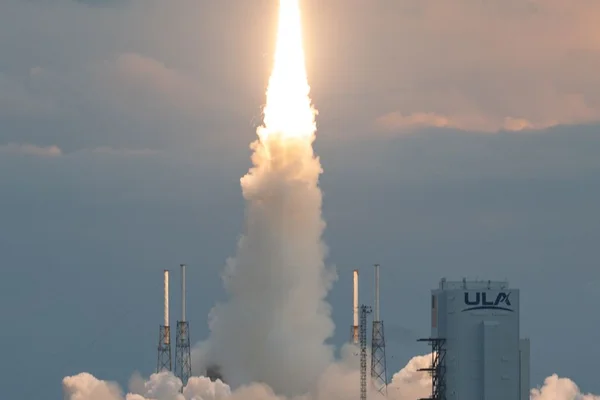
ULA's Vulcan Fails on Return to Flight, Destroying 40 Amazon Leo Satellites
The first total mission failure in United Launch Alliance's 20-year history grounds its flagship rocket indefinitely and complicates Amazon's plan to field a 3,292-satellite broadband network.

SpaceX Catches Starship Upper Stage With Tower Arms for First Time, Completing Orbital Round Trip
Ship 42 returned from orbit and was snagged by Mechazilla's chopstick arms at Starbase, a first for an orbital-class upper stage, while the Super Heavy booster was lost over the Gulf.
Comments (0)
Log in or sign up to leave a comment.
No comments yet. Be the first to share your thoughts.