Astronomers searching for faint worlds around bright stars face a problem that is easy to state and hard to solve: the star is overwhelmingly brighter than the planet. The Nature paper states that even the brightest young giant planets are about 100,000 times fainter than their host stars in the near infrared. The planet is present in the data, but its light is buried inside the optical glare of its star.
JWST carries a coronagraph, which lead author Rodrigo Ferrer-Chavez described as something like an artificial eclipse. The instrument blocks most of a star's light, but some glare escapes. Astronomers have therefore relied on reference star libraries: they observe a similar star, measure its glare, and subtract that template from the science image. The approach can work, but it assumes that the telescope behaves the same way during both observations.
That assumption is never quite true. Stars sit slightly off centre, temperatures shift, and JWST's 6.5 metre mirror flexes. The telescope is optically stable at the nanometer level, but tiny changes are enough to alter the pattern of leaked starlight. The result is a moving smudge that can hide a planet. Standard pipelines such as KLIP try to suppress this residual glare statistically, but their sensitivity is bounded by how well the reference observation matches the science observation.
A different strategy emerged from a collaboration led by Northwestern University, with Caltech and other partners. Instead of treating the telescope as a fixed optical system whose imperfections must be averaged out, the researchers built a digital twin of JWST's Near Infrared Camera, or NIRCam. The twin simulates how starlight travels through the mirrors and detectors, including instabilities. By tuning millions of parameters, the team can model the glare of each star and subtract it more precisely. The method is called FLIP, short for Physics-based Learning for Imaging Planets.
Key Facts
Nature reported on November 4, 2026, that the paper describing FLIP appears in volume 659, pages 58 to 62, under the title Imaging exoplanets below the telescope stability limit. The work replaces empirical reference star libraries with a differentiable physical model of the telescope. Automatic differentiation is used to optimize millions of model parameters. The instrument model is first pre calibrated on a reference JWST NIRCam observation, then tuned on the science image so that instabilities are modeled rather than assumed away.
On real on sky coronagraphic data, FLIP delivered sensitivity 2 to 15 times better than the standard KLIP pipeline. The paper reports the first image of the giant planet 51 Eridani b at 4.3 micrometres. The detection has a signal to noise ratio of 6.3 in the F430M filter, at a location where the original published analysis saw nothing. Sensitivity at the planet's position improved by about a factor of four.
Two other targets extend the evidence. FLIP produced 2.1 times better signal to noise on 51 Eridani b in F410M and 1.6 times on HIP 65426 b. For TYC 5899, a star with no known companions, the method achieved roughly 15 times better sensitivity at 0.5 arcseconds. Across three systems, the gain was consistent. 51 Eridani lies about 97 light-years from Earth, and 51 Eridani b had already been detected by ground based telescopes, but the planet was drowned out in previous JWST observations.
Caltech reported on November 4, 2026, that researchers manipulated physical parameters to model and subtract starlight in existing JWST images. Co author Katie Bouman, a professor of computing and mathematical sciences, electrical engineering and astronomy at Caltech, said the work shows how computation can help overcome limitations of the telescope itself. The release described the approach as combining a physical instrument model with machine learning optimization to remove starlight more precisely.
Northwestern University reported on November 4, 2026, that the study was led by Rodrigo Ferrer-Chavez, a Ph.D. student in astronomy at the university's Weinberg College of Arts and Sciences and a member of Jason Wang's research group. Wang, an assistant professor of physics and astronomy, is a co author. Ferrer-Chavez said that planets are a million times fainter than their stars and that even the tiniest changes in the telescope can affect how the glare appears. The work was supported by the Space Telescope Science Institute, the Sloan Foundation and the National Science Foundation.
Analysis
The first thing to understand about FLIP is what it is not. Live Science reported on November 6, 2026, that the authors stressed this is not an AI model that identifies planets; the machine learning machinery is used to optimize the physical model. FLIP encodes the optics, the detector behavior, and the moving imperfections of the telescope, then fits those parameters to the data. The planet detection is still a physical inference, not a pattern matching shortcut.
What this really means is that the limiting factor in exoplanet imaging is shifting from hardware stability to the quality of the instrument model. JWST is an extraordinary machine, but it is not perfectly rigid. Its mirror flexes and temperatures shift. FLIP does not eliminate those effects. It predicts them and removes their contribution. If the model is good enough, the telescope can be allowed to be slightly less perfect without losing the faint planet. That is a different engineering bargain.
The gains are largest close to the star, where the glare is strongest and where planets like Earth are expected to orbit. Scientific American reported on November 4, 2026, that FLIP was two to 15 times more sensitive than standard techniques and that the biggest improvements came near stars. That spatial pattern is important. A method that only improves the outer field would be useful for wide orbit giant planets. A method that improves the inner field addresses the harder and more consequential problem: the region where a habitable world would sit.
The result also reframes the reference star method. Reference star subtraction is not wrong; it is an approximation. FLIP shows that a physics based model can outperform that approximation on real data. The paper states this is the first time model based point spread function subtraction has substantially surpassed standard techniques on real, on sky coronagraphic imaging. That is a strong claim, and it is supported by three different systems, multiple filters, and a detection that the conventional pipeline missed.
Why It Matters
The result matters first because it changes what counts as a usable observation. The team reanalyzed existing JWST data, including two year old observations, rather than waiting for a new instrument. 51 Eridani b was already known from ground based telescopes, but it was drowned out in previous JWST observations. FLIP pulled it out of the same kind of data that standard methods had already processed. That makes archival observations a renewable resource: a better model can extract a detection that an earlier pipeline left behind.
The scientific payoff is not just one planet. Carbon dioxide in the atmosphere of 51 Eridani b absorbs light at the infrared wavelength JWST observes, making the signal even fainter. Recovering a planet under those conditions demonstrates that the method can handle a signal shaped by atmospheric absorption as well as by telescope glare. For future targets, that combination is the difference between a marginal detection and a measurement that can be followed up.
The engineering implications reach beyond JWST. Caltech reported on November 4, 2026, that the technique is not specific to JWST and could be used on the Roman Space Telescope, ground based telescopes, and the planned Habitable Worlds Observatory. The paper notes that the framework could relax the extreme stability requirements for Roman and HWO. Scientific American reported that HWO is planned for the 2040s and that its goal is to image Earth like planets about 10 billion times fainter than their stars. If software can clean up more glare, the hardware can be allowed to wobble a bit more, though HWO's optics will still need to hold steady to within a trillionth of a metre.
Next Up
The immediate next step is to apply FLIP to more stars and more wavelengths. The published analysis covers 51 Eridani, HIP 65426, and TYC 5899. A broader survey would test whether the 2 to 15 times sensitivity gain holds across more stars and more observing conditions. The authors also position the framework as a path toward the Roman Space Telescope and the Habitable Worlds Observatory, where the same model based approach could be adapted to those observatories.
A second question is how far the method can be pushed toward Earth like planets. The current detections are giant planets, and the paper's sensitivity gains are largest close to the star. If those gains can be extended to the contrast levels needed for Earth like worlds, the practical case for a less rigid space telescope becomes stronger. For now, the 51 Eridani b image is a proof of concept at 4.3 micrometres. The next test is whether the same digital twin can reveal planets that no one has seen before.
Related Articles
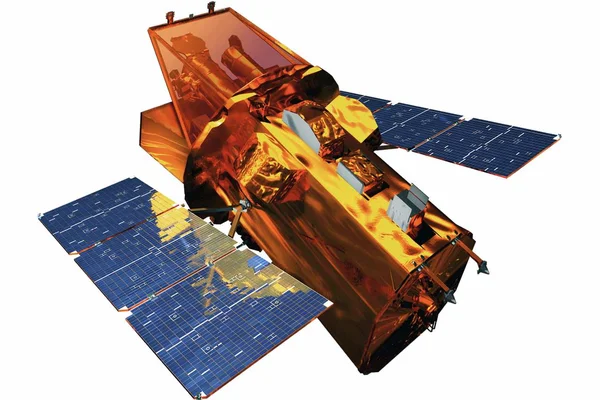
NASA's Swift Observatory Burns Up Over Indonesia After 22 Years and a Failed Robotic Rescue
The Neil Gehrels Swift Observatory fell silent over North Sumatra on November 4, 2026, after a $30 million Katalyst Space tug failed to lift the aging telescope to safety.
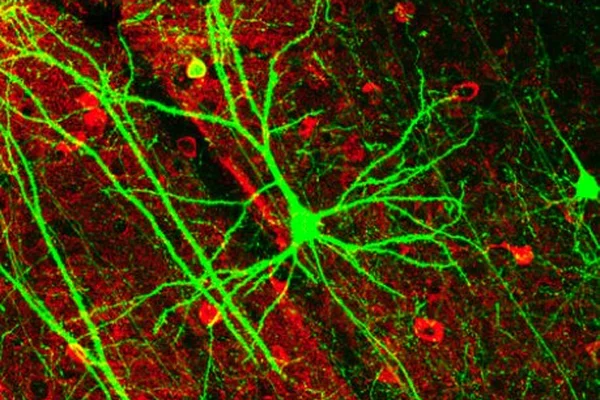
Five Labs Ran the Same Psilocybin Mouse Study and Most Lasting Effects Did Not Replicate
A five-laboratory replication published in Nature Neuroscience finds that psilocybin's immediate effects in mice hold up across sites while its reported 24-hour behavioral benefits do not.
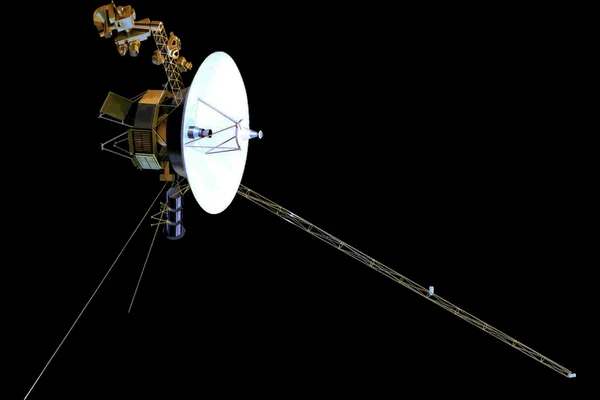
Voyager 1 Set to Become First Human Made Object One Light Day From Earth
NASA's Voyager 1 will reach 16.094 billion miles from Earth on November 18, 2026, the first time any human-built object has been one light-day away, after a September power swap and a 48 hour communications blackout.
Comments (0)
Log in or sign up to leave a comment.
No comments yet. Be the first to share your thoughts.