Blue Origin has spent most of 2026 trying to turn New Glenn into a rocket that flies often enough to matter. The vehicle is central to Jeff Bezos' effort to challenge SpaceX, and Amazon is counting on it to build its Leo broadband constellation. That plan took a sharp detour on May 28, 2026, when New Glenn exploded during a hot-fire test at Cape Canaveral Space Force Station, badly damaging Launch Complex 36 and destroying the rocket days before it was to carry 48 Amazon Leo satellites.
The fallout has been measured in months. New Glenn stands 322 feet (98 metres) tall and has flown only three times, all in the 7x2 configuration: January 2025, November 2025 and April 19, 2026, when it put AST SpaceMobile's BlueBird 7 into the wrong orbit and the satellite was lost. Blue Origin began rebuilding the pad and held to a December 2026 return. In October, Bezos told Fox News the company still expected a December launch, joking it could be 'probably December 31st.'
On November 5, the picture changed twice in one afternoon. CNBC reported on November 5, 2026, that CEO Dave Limp told employees in an internal memo that New Glenn will not fly again until January 2027, roughly 10 days past the December target, because pad reconstruction had slipped, including through bad weather over the summer. The Financial Times reported on November 5, 2026, that it had earlier obtained the memo, and The Verge reported on November 5, 2026, that the new window is about 10 days later than the old one.
Hours later, at the invite-only UP.Summit at Kennedy Space Center, Limp unveiled two programs meant to make New Glenn cheaper and more capable once it returns: Northstar, a new first-stage engine, and GS3, a third stage that can push payloads directly to geostationary orbit and onto Earth-escape trajectories. The juxtaposition was deliberate: Blue Origin wants customers and employees to look past the grounding to a roadmap in which the rocket flies far more often at a far lower cost.
Key Facts
According to CNBC, Limp wrote that rebuilding at the damaged pad has not been easy. 'This small adjustment doesn't diminish what we've accomplished or the importance of the work still ahead,' he wrote, adding that returning New Glenn to flight remains the top priority and that it is worth it. He said that in just six months, Team Blue has accomplished what many thought would take years.
Spaceflight Now reported on November 5, 2026, that Northstar is a liquefied natural gas and liquid oxygen first-stage engine producing 715,000 pounds of thrust, against 640,000 pounds for the BE-4 now on New Glenn. Blue Origin said in a release dated November 5, 2026, that the engine cuts mass by 30 percent and parts count by 50 percent, that more than 65 percent is additively manufactured, and that it went from program approval to development testing in 11 months. Ars Technica reported on November 6, 2026, that the target manufacturing cost is 25 percent of a BE-4 and that eventual assembly takes less than a day. Blue Origin gave no first-flight date and said it will keep building BE-4 for United Launch Alliance's Vulcan.
GS3, or Glenn Stage 3, is a hydrogen and oxygen upper stage powered by a single BE-7 engine, the same engine used on the Blue Moon Mark 1 and Mark 2 landers. Spaceflight Now reported on November 5, 2026, that it can deliver up to 14 metric tons to geostationary orbit and 20 metric tons to trans-lunar injection on the 9x4 vehicle, and up to 8 and 10 metric tons on the 7x2. Blue Origin said it fits inside an interstage and preserves the full fairing volume. The figures include better than 460 seconds of vacuum specific impulse. A composite liquid hydrogen tank was pressurised to 100 percent of maximum expected operating pressure for 2.5 hours and to 150 percent for 10 minutes, and it is expected to be the first composite liquid hydrogen tank flown in space. A government customer has booked a 2028 cislunar mission.
The commercial argument is cadence. Ars Technica reported on November 6, 2026, that Limp told the summit there has never been higher demand for launch, ever, and that Blue Origin aims eventually to launch more than 1,000 times a year. The company announced new investment in its Florida facilities in October, targeting multiple flights per week by the end of the decade. Limp called Northstar a simplified but more powerful BE-4.
Analysis
The delay itself is smaller than the headline suggests. Ten days is a rounding error against a rebuild that has already taken more than five months, and the pad, not the rocket, is the pacing item. But the timing is revealing. Blue Origin paired bad schedule news with good hardware news on the same day, a classic move for a company that wants the story to be about its roadmap rather than its reliability.
The bigger picture here is that Blue Origin is no longer selling a rocket. It is selling an industrial system. Northstar is built around additive manufacturing, a 50 percent parts reduction, a 30 percent mass reduction and a target cost of one quarter of a BE-4, with assembly in under a day. Those numbers matter less for performance than for throughput: if an engine can be built in a day at a fraction of the cost, the constraint on launch rate moves to pad turnaround and range scheduling. The engine is a cadence play dressed as a thrust upgrade, even though the rise from 640,000 to 715,000 pounds is real.
GS3 is a different bet. A stage that injects directly to geostationary orbit removes a long coast and a costly apogee raise, and it opens Earth-escape trajectories that the two-stage rocket cannot reach with heavy payloads. Using the BE-7 that already flies on Blue Moon spreads development cost across two programs, and the composite tank, if it flies, would be a genuine first. Blue Origin says GS3 is not required for current crewed lunar landing plans but could support sustained operations around the Moon, a careful way of saying the stage is optional for Artemis and strategic for what follows.
The judgment that matters is about credibility, not specifications. Blue Origin now has to execute on a schedule it did not choose, in front of customers who have alternatives. Northstar's 11 month path to testing and the GS3 tank tests show engineering velocity, but neither has flown, and neither fixes a record of three flights and one pad explosion. Flying more than 1,000 times a year is a decade scale ambition. Flying twice in 2027 would be progress.
Why It Matters
Amazon is the most exposed customer. The explosion destroyed the vehicle days before it was to deploy 48 satellites for Amazon's Leo internet service, and CNBC reported on November 5, 2026, that the delays have hampered the constellation buildout and forced Amazon toward United Launch Alliance and Arianespace.
NASA is the second stakeholder. The agency has tapped Blue Origin for Artemis lunar lander work, and the same BE-7 and Blue Moon hardware sit at the center of GS3. A healthy New Glenn supply chain supports both the commercial market and the lander program, while a long grounding narrows the field of American heavy lift options. The 2028 cislunar booking gives Blue Origin a government anchor customer for GS3 before the stage has flown.
United Launch Alliance has a quieter stake. Blue Origin builds the BE-4 that powers Vulcan and says it will keep making BE-4 even as Northstar takes over on New Glenn. If Northstar really costs 25 percent of a BE-4 to build, pressure on Vulcan pricing and on the wider American engine market becomes hard to ignore.
Next Up
The immediate milestone is January 2027, when Blue Origin intends to return New Glenn to flight from a rebuilt Launch Complex 36. No payload or day has been named, though the lost mission carrying 48 Amazon Leo satellites is the obvious candidate for restoring confidence. The pad must be certified and the return vehicle, still powered by BE-4, must finish its test campaign.
After that comes a 2028 government cislunar mission on GS3, the first flight of a composite liquid hydrogen tank, and the eventual arrival of Northstar on the 9x4. Blue Origin has promised no dates beyond 2028 and has not said when Northstar will fly. What this really means is that the next year will be judged on one question: whether a company that just unveiled cheaper propulsion and a deeper reaching stage can get its existing rocket off the ground on time.
Related Articles
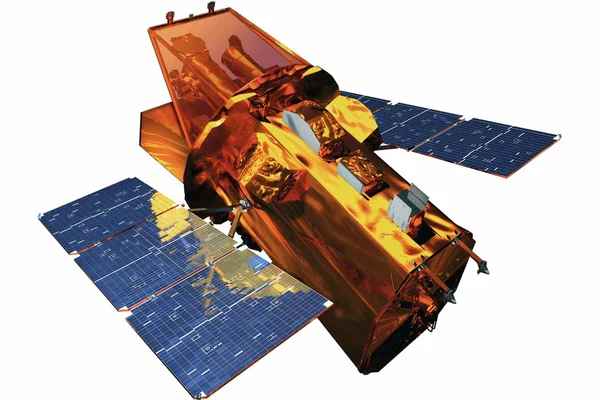
NASA Swift Observatory Burns Up Over Indonesia After Failed 30 Million Dollar Rescue Bid
The 3,200 pound telescope fell silent over North Sumatra after a 30 million dollar robotic tug failed to lift it, ending a 22 year run of gamma-ray discoveries.

ESA Signs EUR 554 Million Deal With OHB for Sentinel-3 Topography Successor
ESA has commissioned OHB System AG to develop the Sentinel-3 Next Generation Topography mission under a EUR 554 million contract that carries an option for a second altimetry satellite.

China commits to two launches and lunar orbit rendezvous to land taikonauts before 2030
Wang Xiang used the 7th Manned Space Symposium to describe two Long March 10 launches, a lunar orbit docking and a 2027 to 2029 test ladder before any crew flies.
Comments (0)
Log in or sign up to leave a comment.
No comments yet. Be the first to share your thoughts.