Psilocybin has become a central subject in behavioral neuroscience, and much of the evidence about what it does comes from mice. A single dose has been reported to produce changes that outlast the drug itself: reduced anxiety-like behavior, reduced depression-like behavior, faster fear extinction and altered social learning. Those reports are the foundation for broader claims about the drug's lasting effects, and they are cited far beyond the laboratories that produced them.
Most of that evidence comes from one laboratory at a time. Small samples, a single mouse colony and one set of handlers can generate striking results that are hard to reproduce elsewhere. As psychedelic behavioral research has grown rapidly, the reproducibility and reliability of its findings has remained uncertain, a gap the field had not systematically tested.
The stakes are statistical as much as biological. A result that appears in one lab, or under one set of conditions, can still enter the literature and be cited as established. When the underlying effect is modest, the published record can drift away from the true effect size, and later studies inherit an inflated sense of how strong the signal is.
On November 2, 2026, Nature Neuroscience published an open-access study that tests that gap directly. Five independent laboratories at three Bay Area institutions ran identical psilocybin experiments in mice and pooled their data. The result is a split verdict: the acute effects replicated robustly, while most of the reported 24-hour behavioral effects did not.
Key Facts
The paper, assigned DOI 10.1038/s41593-026-02500-z, was received on March 27, 2025, and accepted on September 28, 2026. Nature Neuroscience reported on November 2, 2026, that the consortium was formed specifically because the reproducibility and reliability of rapidly growing psychedelic behavioral research remained uncertain. The design was unusually standardized for preclinical work: identical mouse strains, a dose of 2 milligrams per kilogram of body weight injected intraperitoneally, and the same behavioral battery at every site, covering locomotion, open-field avoidance, social preference, fear learning and stress-coping behavior.
UC Berkeley News reported on November 2, 2026, that the project was conceived by Stanford neuroscientist Robert Malenka and enlisted Stephan Lammel and Andrea Gomez at Berkeley, Vikaas Sohal and Mazen Kheirbek at UCSF, and Boris Heifets at Stanford. It ran for four years with support from an anonymous donor. The laboratories spent a year securing federal approval and began synchronized experiments in 2022, with roughly 200 male and female mice per experiment across the five sites.
The acute results were consistent. Nature Neuroscience reported on November 2, 2026, that psilocybin acutely increased anxiety- and avoidance-related behaviors and decreased fear expression in a robust and replicable manner. All five sites reproduced the 5-HT2A-receptor-mediated head-twitch response, a transient rise in avoidance behavior at 10 minutes after injection, and immediate suppression of learned fear.
The 24-hour results were not. The same paper found that the drug did not have replicable effects 24 hours after administration in terms of reducing anxiety- and depression-like behaviors or facilitating fear extinction learning. The team also did not observe psilocybin-induced alterations in social preference or social reward learning.
The statistical split is the most telling detail. Neuroscience News reported on November 2, 2026, that in the forced swim test, two of the five laboratories observed statistically significant improvements while three observed none. The pooled analysis showed no effect. The consortium also re-tested earlier claims that psilocybin reopens a juvenile critical period for social reward learning in adult mice and found no reproducible evidence.
Analysis
The headline finding is not that psilocybin fails to affect mouse behavior. It clearly does, and quickly. Head twitching, avoidance and fear suppression appeared within minutes at every site, which confirms that the drug was active, that the dose was adequate and that the assays could detect a signal when one existed. The failure is narrower and more consequential: it concerns persistence.
What this really means is that a substantial portion of the published case for psilocybin's lasting behavioral effects in rodents may rest on effects too small or too variable to survive replication across laboratories. Co-first author Odilia Lu, a Berkeley doctoral student, described the persistent effects as modest, if anything. Two of five labs seeing a significant antidepressant-assay result, while the pooled data show none, is precisely the pattern that produces a positive paper from a single lab working alone and a null result when everyone's data are combined.
The authors were careful about mechanism. They note that individual lab results often differed in statistical significance even under identical protocols, and that variables such as handler sex, mouse vendor, enclosure size and time of dosing did not explain the pattern. That rules out several tidy explanations and points instead to sampling noise and effects that are, at most, modest. Nature Neuroscience reported on November 2, 2026, that the authors conclude several acute effects are robust while some reported persistent effects in mice may be modest and/or inconsistent.
There is also a measurement problem that no amount of standardization fixes. Lu told Neuroscience News that the mouse tasks used to assay depression just cannot capture the really complicated human. A forced swim test is a stress-coping screen, not a stand-in for human experience, and fear extinction in a chamber is a laboratory assay rather than a measure of durable change. The bigger picture here is that rodent behavioral batteries can validate target engagement and acute pharmacology far better than they can validate claims about persistent mood effects. Standardization can remove procedural differences, but it cannot manufacture an effect that is not there.
Why It Matters
Preclinical mouse work is not decorative. It supplies the biological rationale for claims about what a single dose of psilocybin can do, and it is the evidence base that sits behind statements about lasting behavioral change. If the persistent signal in mice is weaker than the literature implied, then confidence in single-dose effects needs to be recalibrated, even as the acute pharmacology remains solid.
The study also matters as a methodological precedent. Five labs, one protocol, pooled data and an open-access publication are expensive and slow, but they produced something a single lab could not: an estimate of the true effect size rather than a significance test from a small sample. Lu said multi-lab work helps estimate true effect sizes and reduce publication bias. For a field that has expanded quickly, that is a durable contribution regardless of how the behavioral results turned out.
Finally, the split verdict should discourage overreading in both directions. The acute findings replicated, so the drug's immediate 5-HT2A-mediated activity in mice is not in question. The persistent findings did not, so claims that a single dose reliably changes mouse behavior for a day or more should be stated with far more caution than they often are.
Next Up
The immediate task is consolidation. The consortium's design, with identical strains, a fixed 2 milligram per kilogram dose and a shared behavioral battery, gives other groups a template for testing persistent effects at larger sample sizes and for reporting pooled estimates rather than isolated significant results. The paper's own conclusion, that some persistent effects may be modest and/or inconsistent, is an invitation to design studies that can detect modest effects rather than assume them.
The larger question now moves back to translation. The mouse tasks used here, as Lu noted, cannot capture the really complicated human, so the meaning of the persistent-effect literature for people cannot be settled by rodent data alone. The five-laboratory experiment does not resolve what psilocybin does for people. It settles that the mouse literature alone cannot carry that claim. The value of the consortium's template will depend on whether other groups adopt it and report results the same way, including the null ones.
Related Articles
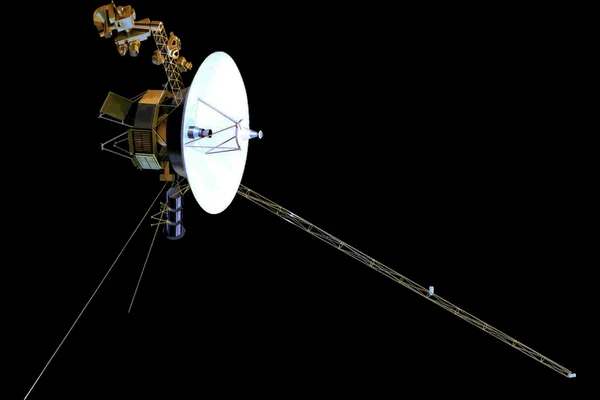
Voyager 1 Set to Become First Human Made Object One Light Day From Earth
NASA's Voyager 1 will reach 16.094 billion miles from Earth on November 18, 2026, the first time any human-built object has been one light-day away, after a September power swap and a 48 hour communications blackout.

Weill Cornell Team Turns Chromosome 8p Deletion Into a Tumor-Selective WNT Drug
A structure-guided compound called TDI-012804 exploits a chromosome 8p deletion that removes TNKS1, selectively blocking WNT signaling in cancer cells while sparing normal tissue in preclinical tests.
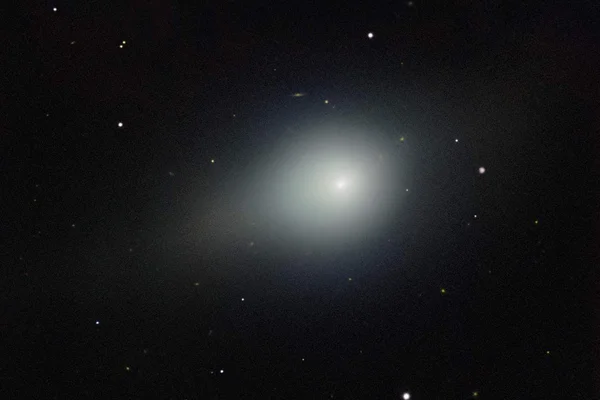
JWST Finds Interstellar Comet 3I/ATLAS Methane Is Rich in Heavy Hydrogen
Webb spectra show that methane in the interstellar comet 3I/ATLAS has a deuterium-to-hydrogen ratio about 13 times that of methane at comet 67P, a sign of ice formed in extreme cold.
Comments (0)
Log in or sign up to leave a comment.
No comments yet. Be the first to share your thoughts.