For more than two decades, a small NASA spacecraft with three telescopes served as astronomy's fastest responder, swinging around to catch the most violent explosions in the universe within about a minute of receiving a warning. The Neil Gehrels Swift Observatory was built to chase gamma-ray bursts, and it did that job far longer than anyone expected, becoming one of the most productive scientific machines ever flown by the agency.
Swift left Earth on November 20, 2004, riding a Delta II rocket from Cape Canaveral. NASA designed the mission around a two-year prime phase, enough time to demonstrate that a multiwavelength observatory could rapidly repoint itself and coordinate follow-up observations across the world. The spacecraft carried three instruments to pick up gamma rays, X-rays, and ultraviolet and optical light, a combination that let it characterize a burst across the electromagnetic spectrum.
The mission refused to end on schedule. Over nearly 22 years, Swift detected more than 2,000 gamma-ray bursts and studied more than 1,400 supernovae, according to tallies reported after its re-entry. Its data fed roughly 7,000 scientific papers. Its targets ranged from active galaxies powered by supermassive black holes and stars undergoing X-ray flares to supernova explosions, comets, and asteroids in the solar system.
But Swift had no engine, and by 2026 the planet's swollen upper atmosphere was dragging it down. A privately built robotic tug meant to lift it to safety never got the chance. On November 4, 2026, the observatory came home over Indonesia, ending a mission that had outlived its design life by roughly two decades.
Key Facts
NASA's official blog stated on November 4 that Swift re-entered Earth's atmosphere at 7:39 a.m. EST over the North Sumatra region of Indonesia, at approximately 3.4 degrees north latitude and 98.6 degrees east longitude. The U.S. Space Force confirmed the re-entry, and NASA said most of the spacecraft was expected to burn up, though some components may have survived the fall.
Spaceflight Now reported on November 4 that the Space Force had predicted re-entry between 6:42 and 8:42 a.m. EST, and Swift came down near the center of that window. The outlet put the risk of anyone on the ground being harmed by surviving fragments at about 1 in 2,100, a figure NASA also cited. Scientific American reported on November 4 that the 3,200-pound (1.5-metric-ton) telescope was projected to enter the atmosphere in the early morning hours, with NASA estimating an approximately one-in-2,100 chance that falling debris would harm anyone.
The numbers behind the mission are large. Reuters reported on November 4 that the spacecraft weighed roughly 1,452 kg and circled the globe at about 27,359 km/h, and that the mission cost about $500 million. Swift made its final observation on October 20, 2026, from about 171 miles (275 kilometers) above Earth, an altitude too low for continued operations. Launched from Cape Canaveral on November 20, 2004, it had been designed for a two-year prime mission.
The rescue attempt was equally expensive and equally final. NASA paid Katalyst Space Technologies, an Arizona-based startup, $30 million to send a robotic tug called LINK to grab Swift and push it higher. The craft launched on July 3, 2026, lost control of its orientation weeks later, and NASA called off the capture on August 19. Katalyst said it designed, built, and tested LINK on a nine-month schedule.
Swift's instruments produced a steady stream of discovery to the end. Scientific American reported on November 4 that the observatory gathered data on gamma-ray bursts and alerted astronomers within seconds so ground telescopes could follow up. Its name, originally a reference to the fast-flying birds in the family Apodidae, was amended in 2018 to include astrophysicist Neil Gehrels, the mission's principal investigator, after he died in 2017.
Analysis
What this really means is that NASA has lost a capability it cannot quickly replace, and not because of a single failure but because of a chain of them. Swift was not the most famous observatory in the fleet, but it was the one that made other telescopes better, telling ground stations where to look while a burst was still bright. Scientific American reported on November 4 that the observatory's loss leaves a hole in NASA's space science fleet that is unlikely to be filled anytime soon.
The proximate cause was orbital mechanics rather than engineering error. Starting about two years ago, high-energy particles from heavier-than-usual solar activity puffed up the upper atmosphere, increasing drag on a spacecraft that had no way to fight back. Reuters reported on November 4 that Swift had been drifting toward its demise for months. Jonathan McDowell of Durham University's Space Research Centre told Reuters that the satellite was in a very circular orbit skimming the top of the atmosphere, and that the question was at what point it would heat up enough to start breaking up.
The rescue attempt was the more instructive failure. The $30 million LINK mission was the first U.S. effort of its kind, a demonstration of orbital grappling that was closely watched for its potential dual-use military applications. It failed when the tug began spinning uncontrollably soon after reaching space. The bigger picture here is that the emerging market for satellite servicing and orbital debris removal remains unproven at exactly the moment more satellites need it, and a high-profile failure raises the cost of the next attempt.
There is also a blunt safety arithmetic to consider. A one-in-2,100 chance of harm is small, but it is not zero, and it was carried by people who never consented to it. Scientific American reported on November 4 that NASA projected a debris swath stretching nearly 1,500 miles in latitude above and below the equator, putting parts of South and Central America, Africa, Southeast Asia, and Australia in the potential path, though most of the re-entry profile was over remote ocean. The North Sumatra landing point fell inside that band.
Why It Matters
Swift's value was speed. It slewed its telescopes toward fleeting cosmic explosions within about a minute and sent alerts to other facilities to coordinate follow-up observations, a role that turned a lone spacecraft into a global network's switchboard. Losing it means fewer targets caught early, when the afterglow is brightest and the physics is most legible.
The mission also demonstrates how much science can come from a modest, long-lived platform. A two-year design life stretched to nearly 22 years, and roughly 7,000 papers followed. Jamie Kennea, former lead of science operations, said in Scientific American's account: "Swift was a one-of-a-kind mission that the community will hugely miss." That is the return on a $500 million investment that no one planned for.
The re-entry is a reminder that low Earth orbit is a finite resource with a maintenance bill. Solar activity can shorten a satellite's life regardless of how well it was built, and the options for extending that life depend on machines that have not yet proven reliable.
Next Up
The immediate task is accounting for what came down. NASA said some components may have survived, and the Space Force's tracking data will define the footprint. The agency has not announced any replacement mission, and no funded successor to Swift's rapid-response role appears in the materials released around the re-entry.
Katalyst and its LINK tug now face the harder question of whether the technology can be made to work, and whether NASA or the military will pay for a second attempt. For astronomers, the practical next step is improvisation: routing burst alerts through other facilities and accepting that some fast transients will be caught later, or not at all.
Related Articles

Five Labs Ran the Same Psilocybin Mouse Study and Most Lasting Effects Did Not Replicate
A five-laboratory replication published in Nature Neuroscience finds that psilocybin's immediate effects in mice hold up across sites while its reported 24-hour behavioral benefits do not.
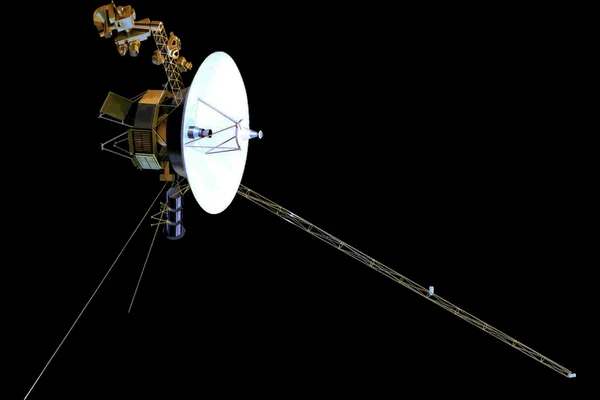
Voyager 1 Set to Become First Human Made Object One Light Day From Earth
NASA's Voyager 1 will reach 16.094 billion miles from Earth on November 18, 2026, the first time any human-built object has been one light-day away, after a September power swap and a 48 hour communications blackout.

Weill Cornell Team Turns Chromosome 8p Deletion Into a Tumor-Selective WNT Drug
A structure-guided compound called TDI-012804 exploits a chromosome 8p deletion that removes TNKS1, selectively blocking WNT signaling in cancer cells while sparing normal tissue in preclinical tests.
Comments (0)
Log in or sign up to leave a comment.
No comments yet. Be the first to share your thoughts.