The European Union's Copernicus programme has spent more than a decade building the world's largest civilian Earth observation system, a constellation of Sentinel satellites that feeds free and open data to scientists, public agencies and commercial users. Copernicus is led by the European Commission in partnership with the European Space Agency, and EUMETSAT operates several of its satellites. Among the fleet, the Sentinel-3 series carries responsibility for measuring the height of the sea surface, the state of the oceans and the topography of ice and inland water, data that underpin weather forecasting, marine safety and climate records.
Altimetry is a deceptively specialised craft. A radar altimeter fires a pulse downward, times its return and converts that measurement into a height, which sounds simple until the required precision is centimetres across an ocean thousands of kilometres wide. Sentinel-3 satellites have done this work since the series began, and their data are used to track sea level rise, ocean currents, wave height, sea ice thickness and the level of lakes and rivers. The measurements also feed numerical weather prediction models and the operational services that warn coastal communities about storm surges.
The Sentinel-3 programme has been preparing a successor architecture for several years, and that planning reached a concrete milestone on November 4, 2026, when ESA signed a development contract with OHB System AG, the Bremen-based subsidiary of OHB SE, to build the Sentinel-3 Next Generation Topography mission, known as S3-NGT. The award places a firm, euro-denominated anchor in OHB's order book and gives Europe a defined path to continue radar altimetry into the 2030s and 2040s.
OHB is not a newcomer to European space hardware. The group builds satellites, payloads and ground systems, and it has become one of the continent's main prime contractors alongside Airbus and Thales Alenia Space. The Bremen site has particular depth in altimetry and in the compact, high performance platforms that Earth observation missions demand. For ESA, choosing OHB as prime contractor with a European industrial consortium is also a decision about industrial policy, spreading work across member states while keeping a strategically important capability inside Europe.
Key Facts
EQS News reported on November 4, 2026, that OHB SE had announced at 13:06 CET that ESA commissioned its Bremen-based subsidiary OHB System AG to develop the next generation of the Sentinel-3 mission within the Copernicus programme. The contract is valued at EUR 554 million and includes an option for a second satellite. OHB described Sentinel-3 Next Generation Topography as one of Europe's most advanced altimetry missions, combining proven technologies with new instruments.
Miguel Such Taboada, ESA's S3-NGT project manager, called the signature a major milestone for Copernicus altimetry that builds on the heritage of Sentinel-3 and Sentinel-6 while significantly improving observation of oceans, inland waters and ice. Marco Fuchs, chief executive of OHB SE, said ESA had entrusted OHB as prime contractor to develop the satellites with a strong European industrial consortium, and he framed the mission around climate research, environmental monitoring and the protection of polar ice caps.
The architecture splits instruments across two mission lines. Optical instruments that observe the surface in visible, infrared and spectral ranges will fly on a dedicated mission, while radar altimeters will fly on both new S3-NGT satellites. According to OHB, that division improves coverage of ocean surfaces, coastal regions, sea ice and inland water. Ann-Theres Schulz, S3-NGT project manager at OHB System AG, said the mission improves height measurement accuracy, covers larger areas and enables faster revisit rates. The two identical satellites will operate in a sun-synchronous orbit.
The CEOS Earth Observation Handbook reported on November 4, 2026, that the S3NGT-B mission is listed as approved with ESA, the European Commission and EUMETSAT as the mission agencies. The entry records a sun-synchronous orbit at 807 kilometres altitude, an inclination of 98.65 degrees, a 101-minute orbital period, an 18:00 local solar time and a 27-day repeat cycle. It gives a launch date of December 2036 and an end-of-life date of September 2046, while noting that the record reflects published mission specification rather than a confirmed launch manifest.
The same database entry lists the instrument suite as the Poseidon-4 SAR radar altimeter and SAOOH, a swath altimeter for oceanography and operational hydrology. Measurements include ocean topography and currents, ocean surface winds, wave height and spectrum, ice sheet topography, sea ice cover, edge and thickness, inland waters, landscape topography, and gravity and magnetic field measurements. The mission is intended to provide continuity of Sentinel-3 radar altimetry while increasing the quantity and quality of products and services.
Analysis
The financial significance of the award is straightforward but easy to overstate. AD HOC NEWS reported on November 4, 2026, that the contract gives OHB a firm, euro-denominated anchor for its order book, and it stressed that the option for a second satellite remains distinct from a binding follow-on order. The same article cautioned that order intake is not earnings: the award is a concrete business hook but not proof of higher margins. That distinction matters for a company whose value depends on converting backlog into profitable output.
For scale, AD HOC NEWS reported on November 4, 2026, that OHB targets total output of EUR 1.4 billion for 2026 alongside an adjusted EBITDA margin of 10.5% to 11%, citing media reports. A EUR 554 million development contract is a substantial multi-year commitment against that baseline, even if revenue recognition will be spread across the development cycle rather than booked at signature. Jefferies analyst Chloe Lemarie kept a Buy rating and a EUR 280 price target on October 29 ahead of the third-quarter figures, arguing that solid margin performance should extend earlier momentum.
What this really means is that Europe is buying continuity rather than novelty. The S3-NGT design deliberately reuses proven altimetry technology and adds a wide-swath capability, which lowers technical risk but also limits the mission to an evolutionary step. That is a rational choice for an operational programme that must deliver routine data to public services, and it is also a signal that ESA and the European Commission are prioritising reliability over spectacle as Copernicus enters its next phase.
The bigger picture here is about data dependency. Copernicus data are free and open, and that policy has made the programme a reference point for climate monitoring worldwide. A gap in altimetry coverage would be difficult to fill from other sources, because commercial altimetry remains limited and the scientific value of the record depends on continuity of calibration and orbit geometry. Paying for a successor now, years before the first launch, is how the programme avoids exactly that gap.
Why It Matters
The mission matters most for climate science and for the operational services that depend on sea level and ocean state measurements. Ice sheet topography and sea ice thickness are among the most closely watched indicators of polar change, and OHB explicitly framed the mission around protection of the polar ice caps. Inland water measurements support hydrology, flood monitoring and water resource management, which are increasingly operational concerns for European agencies and their partners.
There is also an industrial dimension. Selecting OHB as prime contractor keeps a strategically important capability inside Europe and sustains a supply chain that includes instrument builders, software suppliers and ground segment providers. The contract is denominated in euros, which removes currency exposure for ESA and gives OHB a firmer planning basis than a dollar-denominated order would. For a mid-sized European prime, that predictability is worth nearly as much as the headline value.
For EUMETSAT, listed by the CEOS handbook as a mission agency alongside ESA and the European Commission, the mission extends an operational mandate that already covers weather satellites and marine services. The division of instruments between an optical mission and two altimetry satellites also clarifies responsibilities across the programme, which should simplify long-term operations and data processing.
Next Up
OHB has scheduled publication of its nine-month 2026 results for November 12, 2026, one week after the contract announcement, and investors will look for evidence that margin performance is tracking toward the 10.5% to 11% adjusted EBITDA target. The company also has other pipeline items in motion: a strategic partnership announced on October 26 with MediaMobil Communication under which OHB would take a 25% stake through a capital increase, and a memorandum of understanding signed with Astroscale Holdings on October 28 to examine cooperation in space safety, space situational awareness and in-orbit services, with no contract volumes disclosed.
On the mission side, the next milestones are the detailed design reviews that turn a signed development contract into flying hardware, followed by instrument integration and the long path to a launch that the CEOS database currently places in December 2036. That date is a specification, not a manifest, and it will move as the programme matures. Between now and then, the measure of success will be whether S3-NGT delivers altimetry at least as good as its predecessors, on schedule and inside the budget that ESA has now committed.
Related Articles

China commits to two launches and lunar orbit rendezvous to land taikonauts before 2030
Wang Xiang used the 7th Manned Space Symposium to describe two Long March 10 launches, a lunar orbit docking and a 2027 to 2029 test ladder before any crew flies.

NASA CHAPEA Crew Exits Simulated Mars Habitat After 378 Days of Isolation
Four volunteers left a 1,700 square foot 3D printed facility in Houston on 31 October 2026, closing NASA's second year long Mars analog and handing researchers a fresh archive of isolation data.
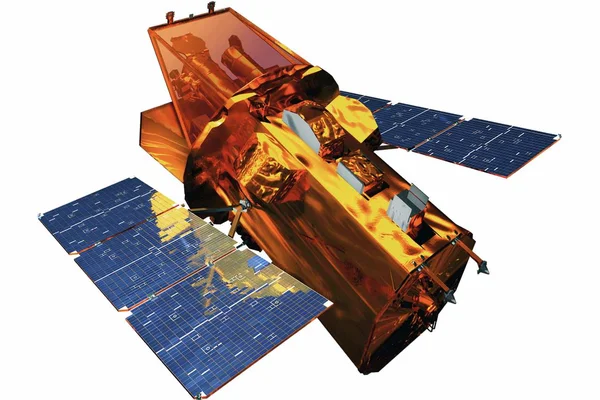
NASA's Swift telescope to fall to Earth around November 6 after commercial rescue fails
The 1.5-ton gamma-ray observatory will make an uncontrolled reentry after a robot sent to lift it never got closer than 12 kilometers, closing a 22-year mission.
Comments (0)
Log in or sign up to leave a comment.
No comments yet. Be the first to share your thoughts.