China has said since 2023 that it intends to place taikonauts on the lunar surface before 2030, but for three years it declined to explain in public precisely how that would be done. The silence ended on the first weekend of November 2026, when a senior engineer walked an audience in Beijing through the launches, dockings and descent that the program intends to fly. The disclosure turned a long standing deadline into an engineering schedule with named vehicles, named rockets and a test sequence.
The pieces have been visible for some time. China has been developing a heavy lift rocket called Long March 10, a crew spacecraft called Mengzhou, which translates as dream vessel, and a lunar lander called Lanyue, which translates as embracing the Moon. All three are tied to the Wenchang Space Launch Center on the southern island of Hainan, a coastal site whose latitude and sea access suit launches toward the Moon. Until this month, however, the public record described the hardware without describing the mission.
The venue for the explanation was the 7th Manned Space Symposium in Beijing, which concluded on Sunday, November 1, 2026. Wang Xiang, deputy chief designer of China's manned space program and chief designer of the lunar exploration program, outlined what officials now call a two launches, lunar orbit rendezvous architecture. Xinhua reported on November 1 that under the scheme two rockets would separately send the Lanyue lander and the Mengzhou crewed spaceship into the Earth-moon transfer orbit, where the two spacecraft would meet and dock.
The approach echoes the architecture NASA chose for Apollo in the 1960s, when a crew capsule and a separate lander traveled to the Moon and separated once in lunar orbit. The difference is that Apollo rode a single Saturn V, a rocket in a class China has not built. By splitting the mission across two launches of a smaller vehicle, China can reach the Moon with the industrial base it actually has rather than waiting for a super heavy launcher that does not yet exist.
Key Facts
The mission profile is now specific. Two Long March 10 rockets would lift off from Wenchang and deploy the lander and the crew ship into lunar orbit, where they would rendezvous and dock. Two of the three crew members would enter Lanyue, undock and descend for an engine assisted soft landing, while the third remains aboard Mengzhou to support the surface crew. On the Moon, the two taikonauts would drive a rover named Tansuo to conduct scientific work and collect samples, then return to Lanyue, which would carry them back to the waiting spaceship. The crew would transfer the samples into Mengzhou, which would undock and return to Earth.
Behind the crewed flight sits a ladder of three uncrewed missions. Ars Technica reported on November 2 that the plan calls for an uncrewed test of the Long March 10A, a single stick version without boosters, carrying Mengzhou to low Earth orbit in early 2027. A second test in 2028 would use the full Long March 10, with a core stage and two boosters, to send Lanyue on a mission that includes descent and ascent from the lunar surface. In 2029, two Long March 10 rockets would launch with uncrewed Mengzhou and Lanyue and dock in lunar orbit, a dress rehearsal that SpacePolicyOnline described on November 3 as covering the full sequence, including a lunar landing.
Several major tests are already complete. According to Xinhua, these include the Mengzhou spacecraft's zero height abort test and its maximum dynamic pressure escape test, the Lanyue lander's landing and takeoff test, and a low altitude demonstration and validation test for the Long March 10 rocket. In August 2025, the China Manned Space Agency tested a high fidelity mock up of the 26 ton Lanyue lander near Beijing, using tethers to simulate lunar gravity during landing and takeoff. The Mengzhou spacecraft intended for the 2027 Long March 10A flight has already arrived at Wenchang.
Wang framed the schedule around verification rather than speed. China Daily reported on November 3 that he told China National Radio that deploying a rover on the first crewed landing would substantially expand the capability to conduct a wide range of operations on the lunar surface and boost operational flexibility. He also said that everything planned on the Moon would first be tested in near Earth orbit, and that all manned missions would be validated through unmanned tests first, describing astronaut safety as the highest priority.
Analysis
The most striking feature of the plan is what it does not contain. Ars Technica noted on November 2 that the ladder omits any Apollo 8 or Artemis II style mission in which a crew flies to the Moon and returns without landing. China will not send taikonauts around the Moon as a standalone rehearsal. Instead, crew experience continues to accumulate in low Earth orbit aboard the Tiangong space station, while every lunar specific step is proven by robots. What this really means is that China has chosen to buy schedule confidence with uncrewed flights rather than to buy political spectacle with a crewed flyby.
That choice carries risk in both directions. A purely robotic precursor program cannot fully replicate the human factors of a crewed lunar transit, and the 2029 dress rehearsal is the only full integration of the two launch streams before people are aboard. Yet the sequence also concentrates the unknowns into a rehearsal that can be repeated if it fails. The 2027 flight of the single stick Long March 10A is a deliberately smaller step: it tests the capsule and the escape logic without the boosters or the lander.
The bigger picture here is industrial rather than merely architectural. Wang argued that the approach matches China's existing technical capabilities and infrastructure, and that separate development of the spaceship and the lander can help standardize production and support the formation of a long term family of vehicles. A two launch architecture turns the Moon into a destination served by a repeatable transportation system rather than a one off demonstration. It also spreads work across more launch opportunities and more contractors.
Comparison with the United States is unavoidable. NASA targets a landing in 2028, but Ars Technica reported on November 2 that lander development by SpaceX and Blue Origin could push a US landing to 2030 or later. NASA contracted SpaceX in 2021 and Blue Origin in 2023 for landers and wants both to put astronauts on the Moon in 2028. SpacePolicyOnline reported on November 3 that NASA Administrator Jared Isaacman, speaking at an Artemis Acceleration news conference on October 23, 2026, said the weight of institutional inertia and misplaced priorities had held the US program back.
Why It Matters
If the schedule holds, China becomes the second country to land people on the Moon, and the first to do so in more than half a century. That is a diplomatic fact as much as a technical one. A successful landing before 2030 would validate a model of state led, centrally coordinated development at exactly the moment when the US program is arguing publicly about its own pace. The symposium was a statement aimed at audiences well beyond the room in Beijing.
The scientific payoff is narrower but real. A rover on the first landing, rather than a static flag and footprint mission, means surface mobility, sample collection and a broader range of experiments from the outset. Wang's point about operational flexibility is the practical version of that argument: a crew that can drive can choose its sampling sites. The program also benefits from the Chang'e lunar exploration effort, which Xinhua reported shares key technologies, infrastructure and personnel with the crewed effort.
There is also an institutional lesson in how the plan was released. Rather than a single dramatic announcement, the architecture emerged through a conference presentation, slides circulated on social media, and briefings to state media, then was corroborated and analyzed by outside outlets within two days. That pattern suggests a program confident enough to show its homework, including the difficult parts: the booster configuration, the test order and the omission of a crewed flyby.
Next Up
The next observable milestone is the 2027 flight of the Long March 10A with an uncrewed Mengzhou. The spacecraft is already at Wenchang, so the near term question is not whether the vehicle exists but whether the single stick variant and its abort systems perform as designed. A successful flight would clear the path to the 2028 Lanyue descent and ascent test, the first time the lander must operate in the environment it was built for.
After that comes the 2029 dress rehearsal: two Long March 10 launches, a lunar orbit docking and, by SpacePolicyOnline's account, a landing without crew. Only then does the crewed attempt follow, targeted before 2030. The schedule has little slack, with three uncrewed flights in three consecutive years, each dependent on the one before it, and a crewed mission waiting at the end of the chain.
Related Articles

NASA CHAPEA Crew Exits Simulated Mars Habitat After 378 Days of Isolation
Four volunteers left a 1,700 square foot 3D printed facility in Houston on 31 October 2026, closing NASA's second year long Mars analog and handing researchers a fresh archive of isolation data.
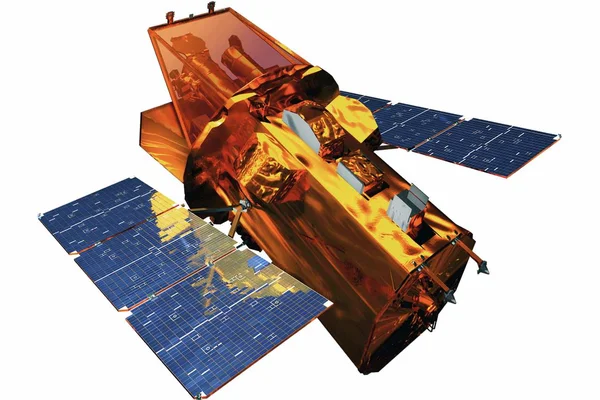
NASA's Swift telescope to fall to Earth around November 6 after commercial rescue fails
The 1.5-ton gamma-ray observatory will make an uncontrolled reentry after a robot sent to lift it never got closer than 12 kilometers, closing a 22-year mission.
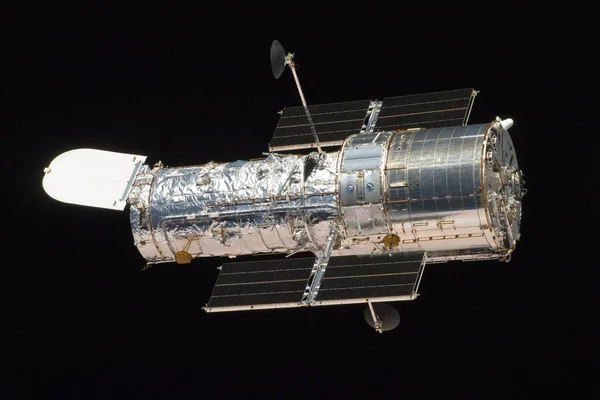
NASA asks industry to boost, service or safely dispose of Hubble before 2033 reentry
NASA's Goddard center wants industry concepts for lifting Hubble to 600 kilometers, upgrading the telescope or bringing it down in a controlled way, with replies due by late November.
Comments (0)
Log in or sign up to leave a comment.
No comments yet. Be the first to share your thoughts.