LES DIABLERETS, Switzerland: Swiss glaciers lost more than 5 percent of their ice volume during 2026, the second worst year of melt ever measured in the Alpine country, after a winter that brought too little snow and a summer of record heat across Europe.
The finding was published on October 1 in the annual monitoring report from Glacier Monitoring in Switzerland, known as GLAMOS, and the Swiss Commission for Cryosphere Observation of the Swiss Academy of Sciences. The work was led by Matthias Huss, director of GLAMOS and a glaciologist at ETH Zurich, who has spent years measuring the ice that remains on the country's mountain flanks and who has watched the numbers move in only one direction.
Swiss glaciers are among the most closely watched gauges of climate change in Europe because they are measured every year at the end of the melt season, when most of the snow that fell during winter has gone and the ice that remains can be compared directly with earlier years. That long record, built up year after year at the same sites, is what makes the new figures so striking to the scientists who compile them. In Switzerland the monitoring has run long enough to separate real trends from the noise of individual weather years, which is why the five year figures carry so much weight.
Over the past five years, Swiss glaciers have shed almost a fifth of their ice, the report showed, a loss that threatens future water supplies and raises difficult questions about the long term survival of Europe's ice fields. The Guardian described a dramatic reshaping of the Alpine country, whose big white glaciers have been reduced to moonlike rock deserts.
Key Facts
Reuters reported on October 1 that Switzerland's glaciers lost more than 5 percent of their ice in 2026 and that the reduction over five years comes to nearly a fifth of their volume. The Guardian reported on October 1 that glaciers shrank by 5.5 percent in the first eight months of 2026, which brings the total loss of glacier ice since 2021 to 19.4 percent. That places 2026 just behind 2022, the worst year on record, when dust clouds from North Africa settled on the snow and accelerated the melting.
AFP reported on October 1 that the melt rate between 2022 and 2026 was more than twice as high as in any previously monitored period of five years. The same report found that 10 percent of Swiss ice volume disappeared between 1990 and 2000, while 27 percent was lost in the past 10 years, a clear sign that the pace of loss is accelerating rather than holding steady.
The measurements were taken at 23 reference glaciers in September and then extrapolated to the nearly 1,300 glacial formations that still exist in Switzerland. The mean thickness of individual glaciers fell by between 2.5 metres and 4 metres during 2026, while more exposed glacier tongues lost up to 10 metres of thickness over the summer. Four major glaciers set records this year, among them the Rhone Glacier and the Aletsch, the biggest glacier in the Alps. Glacier de Tsanfleuron lost more than 4 metres of average thickness, and the Aletsch suffered its biggest ever melt. Huss said this level of loss would have been unthinkable a few years ago.
Reuters reported on October 1 that scientists estimate Swiss glaciers lost around 2.2 trillion litres of water between July and September alone, an amount equivalent to more than four times the annual drinking water consumption of Swiss households. AFP put the same figure at 2.2 trillion litres, or 580 billion gallons.
The melt followed a combination of a winter with too little snow and record summer temperatures, which Huss called enormous melting. AFP reported on October 1 that June, July and August were each the hottest on record for those months in Switzerland since measurements began in 1864, while The Guardian reported on October 1 that analysis published by MeteoSwiss found the summer half year from April to September was the hottest and driest since records began in 1864. Reuters reported on October 1 that the findings underscore the accelerating pace of glacier retreat as extreme melt years become routine.
Analysis
The bigger picture here is that Switzerland is no longer dealing with a slow and predictable retreat of ice that can be managed with gradual adaptation. Each of the last five years has delivered losses that would have been treated as extraordinary a generation ago, and the cumulative result is a mountain landscape that is being rebuilt in real time. The report does not describe a single catastrophic event but a sequence of bad years that together have removed ice which took centuries to accumulate.
The five year total of 19.4 percent means that roughly one fifth of the ice present in 2021 is gone, and the annual losses are stacking on top of each other rather than being offset by any recovery year. Huss has described what is happening as a complete explosion of melt rates.
He said scientists were increasingly seeing glaciers fall apart from the inside, the result of internal streams beneath the ice that excavate caverns, rather than simply retreating because of heat at the surface. He described huge holes like cheese in the middle of the ice, with collapsing roofs, and said these are processes that tear the glaciers apart and make them retreat even faster.
What this really means is that the benchmark for a bad year keeps moving. 2026 did not break the 2022 record only because many glaciers carried more snow into the summer and because less Saharan dust settled on their surfaces. Those two accidental advantages will not last, and without them the record would have fallen again.
Huss has also pointed out how quickly the reference points have shifted. He said many people do not realise how fast glaciers are retreating, or that just one generation ago some now barren sites sat beneath hundreds of metres of ice. In September he visited the former Plattalvafirn, also known as the Griess glacier, which once covered a mountain flank but has lost 99 percent of its area in just 20 years, and he said glaciers are really just falling apart.
Why It Matters
The most immediate consequence is water. Reuters reported on October 1 that glacier melt contributes to easing summer water shortages in Switzerland, and the 2.2 trillion litres that ran off between July and September show how large that contribution can be. But as ice covered areas shrink, that benefit decreases, and the report makes clear that the buffer is being drawn down rather than refilled.
Reuters reported on October 1 that Huss said the country is now in a new world, in a future where glaciers are simply melting away, adding that extreme years are arriving almost every year now and that this is a really worrying situation. Standing on the Scex Rouge glacier at nearly 3,000 metres in altitude, he said the glacier is not surviving and that there will probably be no ice there in 10 or maybe 15 years.
The wider context is a continent warming twice as fast as the global average because of fossil fuel pollution and the destruction of nature, with Alpine regions experiencing some of the most dramatic changes anywhere. Huss said that to see the colours of the mountains where no snow is left, just bare rock, makes him sad.
Next Up
GLAMOS will return to its 23 reference glaciers next September, and the next few melt seasons will show whether the rate stays above twice the historical pace or continues to climb. The 27 percent of ice volume lost in the past 10 years, compared with 10 percent between 1990 and 2000, shows how far the trend has already moved.
One small scene from this year captures the speed of the change. On the Scex Rouge glacier, Huss dismantled a four metre aluminium measurement stake that had been installed in late July, when it was completely embedded in the ice. By the time he removed it, more than three metres of the stake were protruding from the grey surface, a marker of ice that is not expected to survive another decade or two.
Related Articles
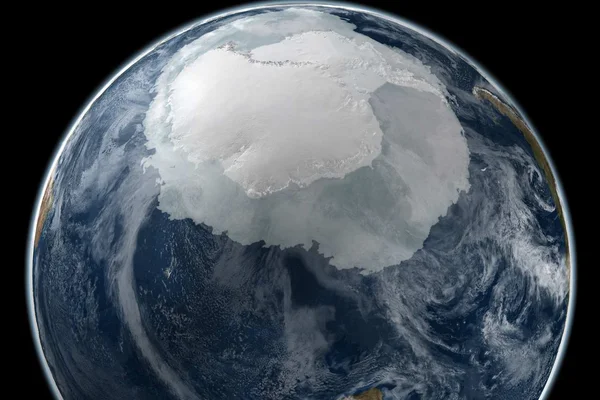
Antarctic winter sea ice hits third lowest maximum on record as four worst years cluster since 2022
Provisional satellite data show the Southern Ocean's winter ice cover peaked on 14 September at 17.59 million square kilometers, the third smallest in a record that begins in 1979.
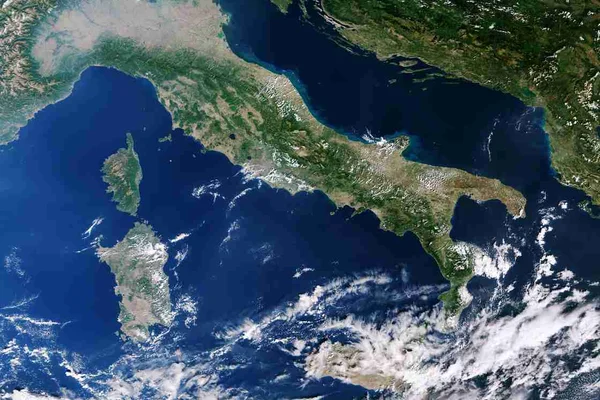
Copernicus report: oceans absorbed record 23 zettajoules of heat in 2025
The 10th Copernicus Ocean State Report documents record ocean heat, accelerating sea level rise, a 17 percent rise in acidity and unprecedented polar warming.
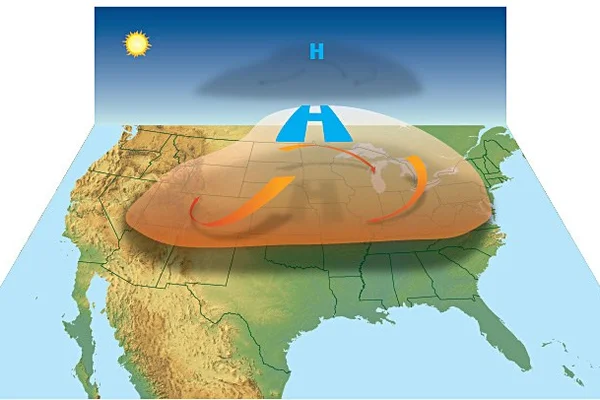
Global heatwave season grows 39 days longer as first heat arrives two weeks earlier
A Nature Climate Change study led by the Chinese Academy of Sciences finds the global heatwave season expanded 39 days since 1979, with earlier starts and faster peaks.
Comments (0)
Log in or sign up to leave a comment.
No comments yet. Be the first to share your thoughts.