Bladder cancer is among the most common malignancies in the United States, with roughly 85,000 new diagnoses each year according to the American Cancer Society. For patients, the road to a diagnosis often begins with cystoscopy, a procedure in which a camera is threaded into the bladder through the urethra. That method, while standard, can miss up to 30 percent of cancer cases, and for people with high-risk disease, surveillance may require repeated examinations every three months.
Standard urine cytology, which looks for intact cancer cells under a microscope, has long been used as a noninvasive adjunct. Yet cytology performs poorly for low-grade tumors, and it cannot reveal what a tumor is doing at the molecular level. More recent liquid biopsies have focused on circulating tumor DNA, hunting for mutations that cancer cells shed into blood or urine. Those DNA-based tests can be powerful, but they typically require matched tumor sequencing to interpret results, and they can be confounded by field-effect mutations, which are bystander changes in the normal bladder lining that are not themselves cancerous.
A new approach flips the molecular target from DNA to RNA. Researchers at Stanford Medicine and the VA Palo Alto Health Care System have developed a urine cell-free RNA liquid biopsy called uRARE-seq, short for urine random priming and affinity capture of cell-free RNA fragments for enrichment analysis by sequencing. Instead of asking whether tumor DNA is present, the test measures RNA messages that tumor cells release into urine. Because RNA reflects which genes a cancer cell is actively using, the method captures a tumor's behavior as well as its presence. The peer-reviewed study appeared in Nature Medicine on October 2, 2026.
The research team, led by graduate student Kevin J. Liu, with senior authors Maximilian Diehn, Joseph Liao, and Ash Alizadeh, applied the test to 683 urine samples from patients with cancer and controls. Their results suggest that urine cfRNA analysis can outperform both standard urine cytology and DNA-based urine tests for localized bladder cancer, and that it may predict which patients will respond to Bacillus Calmette-Guerin (BCG) immunotherapy versus chemotherapy. The findings point toward a future in which a simple urine sample could guide both diagnosis and treatment decisions for a disease that currently relies on invasive surveillance.
Key Facts
Nature Medicine reported on October 2, 2026, that uRARE-seq achieved 95 percent sensitivity at 90 percent specificity for detecting localized bladder cancer. Across 683 urine samples from patients and controls, the test correctly identified 95 percent of people with the disease and correctly classified 90 percent of those without it. The performance exceeded that of standard urine cytology and a DNA-based urine test, according to the study.
The method profiles cell-free RNA in urine. In patients with prostate, kidney, or bladder cancer, urine cfRNA contained tumor-derived transcripts. Notably, the test was unaffected by field-effect mutations, the bystander mutations in normal bladder lining that can complicate DNA-based approaches. Because RNA reflects active gene expression, uRARE-seq captures tumor biology rather than merely tumor presence.
Medical Xpress reported on October 2, 2026, that about 85,000 people in the United States are diagnosed each year with bladder cancer. Diagnosis and surveillance rely on cystoscopy, which can miss up to 30 percent of cancer cases. High-risk patients may need surveillance every three months. In the 683-sample study, the test detected residual disease after surgery and after BCG immunotherapy, distinguishing complete molecular responses after surgery from those after intravesical BCG.
Newsweek reported on October 2, 2026, that in pretreatment urine from 114 patients, a biomarker derived from RNA signatures predicted likelihood of response to BCG versus chemotherapy with an area under the curve of 0.93. Complete responders to BCG had pretreatment urine enriched for T cell and other immune signatures, suggesting a preexisting antitumor immune response. Nonresponders showed higher expression of proliferation-related genes, indicating rapidly dividing tumor cells.
Stanford Medicine announced on October 2, 2026, that the test measures RNA messages shed by tumor cells into urine rather than hunting for cancer-related mutations in DNA. Senior author Maximilian Diehn, professor of radiation oncology, said that measuring tumor DNA in urine can tell whether a cancer is present, while analyzing RNA can tell not only whether a cancer is present but also what it is doing.
Analysis
What this really means is that the diagnostic paradigm for bladder cancer may be shifting from anatomy to activity. Cystoscopy sees the surface of the bladder; DNA tests detect the presence of mutations. RNA, by contrast, reports on which genes are switched on. That distinction matters because two tumors with identical mutations can behave very differently, and because immune activity in the tumor microenvironment leaves a transcriptomic fingerprint. The uRARE-seq data suggest that a urine sample can capture both the presence of cancer and the immunological context that determines whether BCG will work.
The biomarker performance is striking. An area under the curve of 0.93 for predicting BCG versus chemotherapy response in 114 patients is high for any predictive test in oncology, let alone one based on a noninvasive urine sample. The association with recurrence risk strengthens the case that the signal is biologically meaningful, not statistical noise. If validated, such a test could resolve a longstanding clinical dilemma: BCG is recommended for high-risk non-muscle invasive bladder cancer, but it fails in a substantial fraction of patients, and there is no reliable way to predict who will benefit.
The bigger picture here is that RNA liquid biopsies may complement or even replace DNA liquid biopsies for certain cancers. DNA-based urine tests require matched tumor sequencing to distinguish tumor mutations from background changes, and they can be confounded by field-effect mutations. RNA does not require matched tumor tissue, and it is not affected by those bystander mutations. That said, RNA is less stable than DNA, and the uRARE-seq workflow involves random priming and affinity capture followed by sequencing, which is more complex than a simple mutation assay. The study is retrospective, and the authors themselves note that prospective studies are needed for clinical utility.
Independent commentary, reported by Newsweek on October 2, 2026, underscored that point. Dr. Dan Theodorescu, director of the University of Arizona Cancer Center, called the ability to capture tumor biology and immune activity from urine notable but said rigorous prospective comparison against existing tests is the critical next step.
Why It Matters
Bladder cancer is one of the most expensive cancers to manage because of lifelong surveillance. If a urine test could reliably rule out recurrence, many patients could avoid repeated cystoscopy, which is invasive, uncomfortable, and costly. The 95 percent sensitivity and 90 percent specificity reported for localized disease suggest that uRARE-seq could serve as a triage tool, sending only those with positive results to confirmatory cystoscopy. For the roughly 85,000 Americans diagnosed each year, that would represent a meaningful reduction in procedural burden.
The treatment prediction angle may be even more consequential. BCG is manufactured by a single global supplier, and shortages are common, forcing clinicians to ration doses. A test that identifies likely responders with an area under the curve of 0.93 could allow doctors to reserve BCG for patients who will benefit and move nonresponders to chemotherapy or other options sooner. That is both a clinical and an ethical improvement, because it avoids exposing patients to a six-week course of intravesical therapy that is unlikely to help them.
Beyond bladder cancer, the study opens a path for urine cfRNA analysis in other urologic malignancies, including prostate and kidney cancer, where tumor-derived transcripts were also detected. The authors conclude that urine cfRNA analysis is a promising biomarker approach, though prospective studies are needed. If those studies confirm the findings, the test could become part of routine urologic practice, turning a waste product into a rich source of diagnostic and predictive information.
Next Up
The Stanford Medicine and VA Palo Alto team plans to validate uRARE-seq in larger, prospective, multicenter trials. Those studies will need to enroll diverse patient populations, including those with benign urologic conditions that could cause false positives, and to compare the test head-to-head against cystoscopy, cytology, and DNA-based urine assays. The researchers also aim to bring personalized treatment to bladder cancer patients, using the RNA signature to guide BCG versus chemotherapy decisions.
Key questions remain: how reproducible is the assay across laboratories, what is the turnaround time and cost, and whether the T cell and proliferation signatures hold up in patients who have received prior BCG or other therapies. Regulatory clearance will require demonstration of clinical utility, not just analytical performance. If the prospective trials succeed, the test could be available in urology clinics within a few years, but the path from a 683-sample study to standard of care is long and requires rigorous validation.
Related Articles
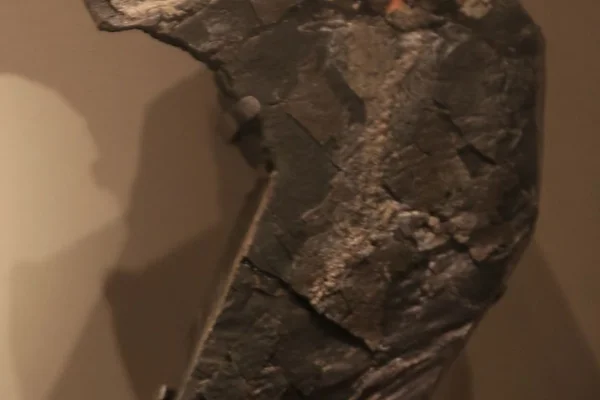
Fossil Called World's Oldest Reptile Is Reclassified as Aquatic Amphibian
Synchrotron X-ray scans of the 345 million year old Westlothiana lizziae fossil reveal internal gills and a fish-like mouth, forcing a reclassification as an aquatic stem tetrapod, not the earliest reptile.
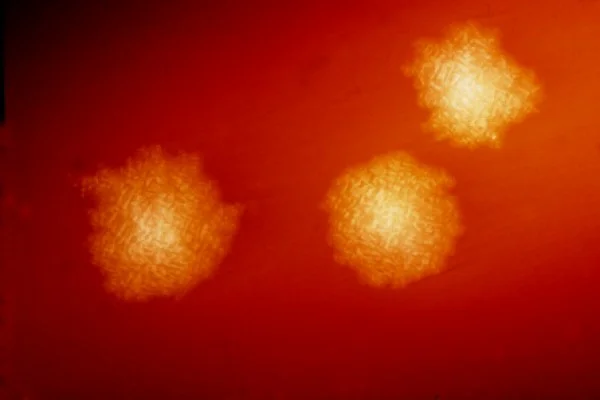
Monash scientists find first antibiotic resistance gene inside bacterial spores
A Monash University team has shown that Clostridioides difficile can carry an antibiotic resistance gene inside its dormant spores, helping them survive bleach, antibiotics and hot laundry.
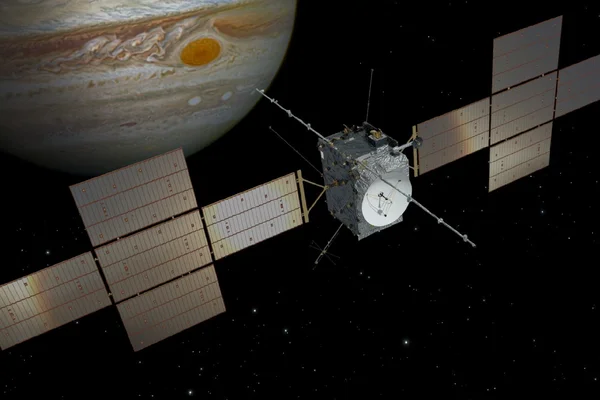
ESA Juice Probe Skims Earth at 8,640 km to Gain Speed for Jupiter
The European Space Agency's Juice spacecraft used Earth's gravity on September 28, 2026, to bend its path toward Jupiter, saving fuel for its 2031 arrival and 2034 Ganymede orbit.
Comments (0)
Log in or sign up to leave a comment.
No comments yet. Be the first to share your thoughts.