A new era of orbital computing took a small but significant step forward on October 1, 2026, when Google's first Project Suncatcher prototype satellite reached orbit aboard SpaceX's Transporter-18 rideshare mission. The spacecraft, built in partnership with Planet Labs, carries four Google Tensor Processing Units (TPUs) and is designed to test whether high-performance AI chips can survive the harsh conditions of space. Google confirmed that its team has made contact with the satellite and that it is operating as expected, marking the first in-orbit hardware test of the company's space-computing research effort.
Project Suncatcher was first unveiled in November 2025 as a research moonshot, pitching networks of solar-powered satellites equipped with TPUs and linked by high-speed optical connections. At the time, Google planned two prototype satellites with Planet by early 2027, but the October 1 flight moved the first hardware test forward by months. The mission is deliberately narrow: it tests whether AI chips can withstand launch stress, radiation, and thermal extremes, not a working orbital data center or a commercial cloud service.
The launch took place from Vandenberg Space Force Base in California, as part of a dedicated small-satellite rideshare flight that carried 130 payloads in total, according to SpaceX. Planet Labs launched 20 satellites on the same mission, including the Project Suncatcher demo, its Tanager-2 hyperspectral satellite, and 18 SuperDoves. The flight was part of a busy October 1 for SpaceX, which also flew NASA's Crew-13 astronaut mission to the International Space Station and a classified Falcon Heavy payload for the National Reconnaissance Office (NROL-97) later that night.
At the heart of the Suncatcher prototype, called MVP, are four TPUs that will run Gemini workloads hundreds of miles above Earth. The satellite is roughly refrigerator-sized and paired with solar panels expected to provide about one kilowatt of electricity, a tiny amount by data-center standards. Because no air carries heat away in orbit, Google uses heat pipes and radiators to move heat from the TPUs into space. For this first mission, the chips are expected to run Gemini workloads for roughly 15 minutes at a time before shutting down so the thermal system can recover.
Key Facts
Google said in a post dated October 1, 2026, that its prototype satellite for Project Suncatcher launched into orbit aboard the Transporter-18 rideshare mission with SpaceX. The company described the flight as the first step in a long-term research moonshot exploring whether space could one day host scalable machine learning infrastructure. Over the coming weeks, Google will gather in-orbit data on how its TPUs handle the physical stress of spaceflight and the radiation and thermal extremes of space. Google also stated that its peer-reviewed paper is now available in Joule, detailing the research behind the mission.
RuntimeWire reported on October 2, 2026, that the prototype carried four TPUs and was built with Planet as one of 130 payloads. SpaceX's deployment schedule lists the satellite as Project Suncatcher M1, deployed roughly 61 minutes after liftoff. Travis Beals, Google's senior director of Paradigms of Intelligence, leads the project publicly. The immediate experiment is narrow: data will show how the TPUs withstand launch stress, radiation, and temperature extremes.
Google's research paper sketches a network of solar-powered satellites in close formation linked by free-space optical links. One illustrative design uses 81 satellites in a cluster with a one-kilometer radius at an average altitude of 650 kilometers, described as a proposed configuration, not a deployment plan. Google says solar panels in its proposed dawn-dusk, sun-synchronous orbit could receive up to eight times more annual solar energy than panels at Earth's mid-latitudes. The paper reports a bench-scale optical-link demonstration transmitting 800 gigabits per second in one direction, a ground experiment and not an in-orbit result.
On radiation, Google tested its V6e Trillium TPU on the ground with a proton beam at UC Davis. TechStartups reported on September 25, 2026, that the chips survived radiation exposure exceeding what they would be expected to receive during a five-year space mission. The paper notes no hard failures up to the maximum total ionizing dose applied, with memory irregularities beginning at a dose nearly three times its estimate for a shielded five-year mission. Components can experience forces reaching 50 to 100 g during launch, which Google also simulated through vibration testing.
The paper estimates launch costs could fall below $200 per kilogram by the mid-2030s, a projection dependent on sustained launch-price declines. Planet Labs announced in a press release dated October 1, 2026, that it successfully made initial contact with the Project Suncatcher spacecraft and Tanager-2, checking their systems before the customer's payload tests begin. The broader Transporter-18 flight carried 130 payloads in total, according to SpaceX, on a Falcon 9 launched from Vandenberg.
Analysis
The bigger picture here is that Google is making a calculated bet that the economics of space-based AI computing could eventually compete with terrestrial data centers, even though the current test is modest. Four TPUs running 15-minute bursts at roughly one kilowatt are nowhere near the scale of a commercial cloud region, but they represent the first time Google has put its custom AI silicon in orbit to see how it behaves. The company is not promising an orbital data center; it is gathering data to refine designs, which is a sensible first step for a research moonshot.
What this really means is that the race for orbital compute is heating up, and Google wants a seat at the table. TechStartups noted that SpaceX has filed with the FCC and described an initial AI1 satellite architecture of roughly 120 kilowatts of sustained compute. That is orders of magnitude more than Google's one-kilowatt prototype, but SpaceX's plan is also at an earlier regulatory stage. Google's advantage lies in its TPU expertise and its partnership with Planet, which provides the spacecraft bus. The competition is not just about launching hardware; it is about proving that AI chips can reliably operate in the radiation and thermal environment of low Earth orbit.
The technical hurdles remain significant. Radiation can cause memory errors, and Google's ground tests show that irregularities begin at a dose nearly three times the estimated shielded five-year mission exposure. Thermal management is another challenge: without air convection, heat must be radiated away, which limits how long the TPUs can run. The 15-minute Gemini bursts are a direct consequence of that constraint. Scaling from four TPUs to an 81-satellite cluster would require solving these problems at a completely different level, not to mention the optical links that would need to transmit data at 800 gigabits per second or more between satellites.
Launch costs are the final piece of the puzzle. Google's paper projects costs below $200 per kilogram by the mid-2030s, but that depends on sustained price declines from SpaceX and other providers. If launch costs fall as predicted, the economics of solar-powered orbital data centers could become attractive, especially for workloads that can tolerate intermittent connectivity. For now, Google is wisely keeping expectations low and focusing on learning what it can from this first mission.
Why It Matters
This mission matters because it is the first in-orbit hardware test of AI chips specifically designed for machine learning workloads. If Google's TPUs can survive and operate reliably in space, it opens the door to a future where some machine learning infrastructure is hosted in orbit, powered by near-constant solar energy. The proposed dawn-dusk, sun-synchronous orbit could receive up to eight times more annual solar energy than panels at Earth's mid-latitudes, which could make space an attractive location for energy-hungry AI computations.
It also signals that major technology companies are seriously exploring space as a computing platform, not just as a communications or Earth-observation domain. Google's partnership with Planet Labs shows how the space industry is evolving: established satellite manufacturers can provide the hardware while cloud and AI companies provide the processing payload. This division of labor could accelerate innovation and reduce the barrier to entry for other companies interested in orbital computing.
However, the mission is not without caveats. The prototype is a research experiment, not a product, and Google has not announced any commercial service. The company will need to demonstrate that its TPUs can operate for extended periods, that the thermal system can handle continuous workloads, and that the economics work at scale. Until then, space-based AI data centers remain a compelling but unproven idea.
Next Up
In the coming weeks, Google will collect data on how its TPUs perform in orbit, focusing on launch stress, radiation, and thermal extremes. The company said it will use what it learns to refine its designs. Meanwhile, Planet Labs continues to check the systems on Tanager-2 and the Project Suncatcher spacecraft before the customer's payload tests begin. Google's original plan called for two prototype satellites with Planet by early 2027, so a second mission may follow if the first one succeeds.
The research paper in Joule outlines a long-term vision of solar-powered satellite clusters linked by optical connections, but Google is careful to frame it as a proposed configuration rather than a deployment plan. The next milestone will be whether the TPUs can run Gemini workloads repeatedly without failure. If they can, the company will have taken a meaningful step toward understanding whether space can host scalable machine learning infrastructure.
Related Articles
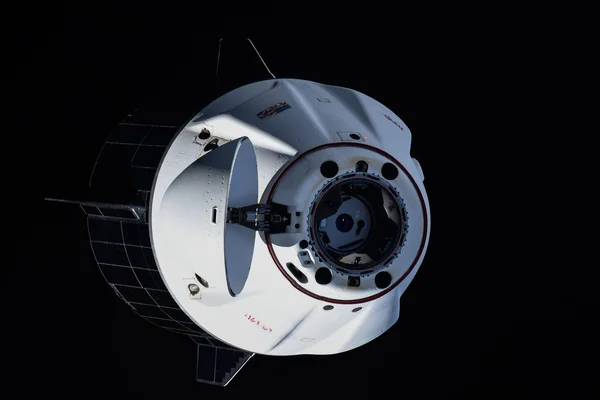
NASA and SpaceX Send Four Astronauts to Space Station in Record 7 Hour 50 Minute Trip
The Crew 13 mission lifted off from Cape Canaveral on October 1, 2026, carrying four astronauts to the International Space Station on a planned 7 hour 50 minute transit that NASA says is the fastest by a U.S. spacecraft.
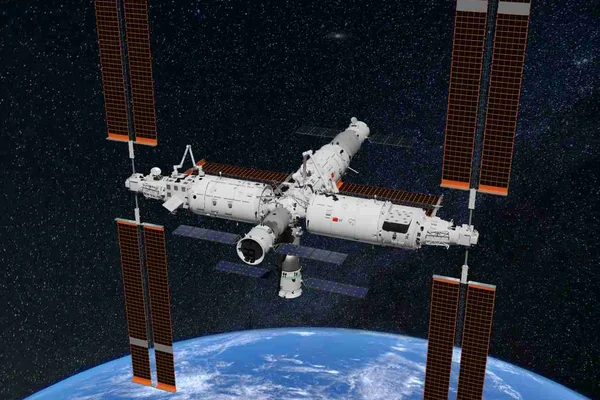
Pakistan to Pick First Astronaut for China Tiangong Flight as Two Pilots Train in Beijing
Two Pakistani pilots are training in Beijing for a one-week Shenzhou-24 mission to China's Tiangong station, with SUPARCO set to choose the first foreign astronaut in October.
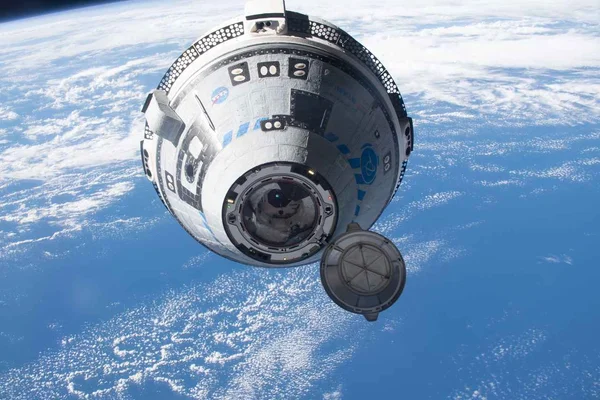
NASA Taps Woody Hoburg to Lead Starliner Crew Flight as Boeing Capsule Heads for December Test
NASA will fly an uncrewed Starliner as early as December 2026 and has named astronaut Woody Hoburg to command the first operational crew mission no sooner than mid 2028.
Comments (0)
Log in or sign up to leave a comment.
No comments yet. Be the first to share your thoughts.