The European Space Agency's Jupiter Icy Moons Explorer, known as Juice, has completed a daring return to Earth. On 28 September 2026, the spacecraft skimmed just 8,640 km above the Indian Ocean, using Earth's gravity to reshape its long route to Jupiter. The European Space Agency reported on September 28, 2026, that the flyby successfully improved Juice's course and did so with very little fuel. The encounter was the third gravity assist of a mission that began with an Ariane 5 launch from Europe's Spaceport in French Guiana in April 2023.
Juice is not simply sightseeing. The spacecraft is designed to study Jupiter and its ocean bearing moons Ganymede, Callisto and Europa. To reach the Jovian system without carrying impossible amounts of propellant, ESA planners built a path that borrows energy from planets. The journey already included the first ever lunar Earth flyby in August 2024, a braking manoeuvre that sent Juice on a shortcut via Venus, and a Venus flyby in August 2025 that bent its orbit and added speed. The September 2026 Earth pass was the next step in that interplanetary relay.
Closest approach came at 13:45 CEST, which is 11:45 UTC, on 28 September 2026. At that moment Juice was above the Indian Ocean, moving fast and low enough that mission teams had to account for satellites in Earth orbit. The European Space Agency reported on September 21, 2026, that the flyby would bring the spacecraft within 8,640 km of Earth, deflect its trajectory by about 20 degrees and increase its velocity by about 3.5 km per second. Those numbers define a gravity assist: a planetary encounter that changes a spacecraft's speed and direction almost for free.
The flyby also served as a rare calibration opportunity. Juice carries 10 science instruments, and during the encounter it spent several days flying through Earth's magnetotail. The European Chinese Smile mission simultaneously observed the northern lights and measured near Earth magnetic fields and particles, offering a chance to connect distant magnetotail activity with processes at Earth's poles. High resolution images of the Moon and Earth from Juice's JANUS camera were expected to be published in the coming weeks.
Key Facts
The closest approach distance was 8,640 km, or about 5,370 miles. Space.com reported on September 28, 2026, that Juice gained roughly 7,830 miles per hour, equivalent to 3.5 km per second, during the encounter. Tech Times reported on September 29, 2026, that the gravity assist changed JUICE's path by about 20 degrees. The spacecraft reached its closest point over the Indian Ocean at around 7:45 a.m. EDT, which is 1145 GMT.
The navigation campaign began on 17 August 2026. ESA set aside six timeslots for tiny trajectory corrections, including windows at four weeks, two weeks, one week and three days before the flyby. In the end, operators needed only one tiny nudge out of those six opportunities to put Juice on exactly the right approach trajectory. Tracking continued until 10 October 2026. Angela Dietz, Juice's Spacecraft Operations Manager, said, 'The flyby required ultra-precise navigation in real time. Thanks to our very careful planning, we used only a small amount of the propellant reserved for this flyby. This gives us more to use at Jupiter to carry out observations of the planet's icy moons.'
Juice launched on 14 April 2023 aboard an Ariane 5 from Europe's Spaceport in French Guiana. The spacecraft has a mass of about 6,070 kg, or 13,381 lb, and carries 85 square metres of solar wings. Its mission cost about 1.5 billion euros. Before the September 2026 encounter, it had already performed the world's first lunar Earth flyby in August 2024 and a Venus flyby in August 2025. The September pass was therefore the third gravity assist of the mission.
The scientific payoff was not limited to navigation. Claire Vallat, Juice Project Scientist, said, 'All flybys are risky, requiring very careful planning and continuous monitoring. But the upcoming Earth flyby is much simpler from an operational perspective than the 2024 lunar Earth flyby, where a flyby of the moon set Juice up for a flyby of Earth the next day. This is great news for science, because it means we will be able to turn Juice in all different directions to point its science instruments at different parts of Earth and the moon.' Claire Vallat also said Juice's journey 'provides only a few opportunities to calibrate and validate the instruments under well understood environmental conditions.'
The mission plan calls for about 35 flybys of the Jovian moons. Juice is designed to enter orbit around Jupiter in July 2031 and then around Ganymede, the largest moon in the solar system, in 2034. Its target moons, Ganymede, Callisto and Europa, are believed to hold oceans beneath their icy surfaces, which makes them central to the mission's search for habitable environments.
Analysis
What this really means is that Juice's Earth flyby was more than a navigational stunt. It was a fuel conservation measure that directly extends the mission's scientific reach. A direct route to Jupiter would demand an enormous rocket and unthinkable amounts of fuel to reach the required speed, plus much more fuel to brake on arrival. By stealing energy from Earth, the Moon and Venus, ESA avoids those costs. The European Space Agency reported on September 28, 2026, that the flyby deflected Juice by 20 degrees and added 3.5 km per second while using very little fuel. The propellant saved now can be spent later at Jupiter, where precise orbits around icy moons matter.
The judgement is straightforward: the flyby succeeded because precision navigation kept risk under control. The 8,640 km pass was close enough to bend the trajectory but far enough to avoid the worst dangers. Space.com reported on September 28, 2026, that careful adjustments helped the probe avoid colliding with satellites around Earth. The fact that only one nudge was needed out of six planned correction windows shows how well the team understood the approach. That matters because a gravity assist is unforgiving: a small error at Earth could become a large error at Jupiter.
The science calibration angle is equally important. Juice's 10 instruments need to be tested against known targets before they face Jupiter's harsh radiation environment. Earth and the Moon provide those known targets. During the flyby, instruments pointed at different parts of Earth and the Moon, and the spacecraft spent several days in Earth's magnetotail. The simultaneous observations by the European Chinese Smile mission added a rare cross check between distant magnetotail activity and Earth's northern lights. In practical terms, the encounter was a rehearsal that also produced real data.
There are limits to what this flyby proves. It does not remove the need for the final Earth flyby in January 2029, and it does not guarantee that every instrument will perform perfectly at Jupiter. But it does show that ESA's navigation campaign, which ran from 17 August to 10 October 2026, can deliver the required accuracy. The bigger picture here is that interplanetary exploration is as much a logistics exercise as a scientific one. The mission's success at Jupiter will depend on how much propellant remains, how well the instruments are calibrated, and how precisely the spacecraft can be steered years in advance.
Why It Matters
Gravity assists are the reason a mission like Juice can exist within realistic budgets and launch vehicles. ESA explained that flying straight to Jupiter would require enormous fuel, so controllers devised a strategy to make the most of the gravity of Earth, the Moon and Venus. The September 2026 flyby is a link in that chain. It sets up the January 2029 Earth flyby, which will put Juice on the optimum path to intercept Jupiter in July 2031. Without such encounters, the mission would require immense amounts of fuel to reach the speeds needed to get to Jupiter and to avoid shooting straight through the Jovian system.
The destination matters because Jupiter's icy moons are among the most compelling targets in the solar system. Ganymede, Callisto and Europa are thought to contain oceans beneath their icy crusts. Juice is designed to study them with 10 instruments, and plans call for about 35 flybys of the Jovian moons. In 2034, the spacecraft is expected to enter orbit around Ganymede, the largest moon in the solar system. The fuel saved by the Earth flyby helps make those orbits possible.
For the public, the flyby also offered a visible reminder that space missions are not instantaneous. Juice launched in April 2023 and will not reach Jupiter until 2031. It has already used the Moon, Earth and Venus to adjust its path. The 28 September 2026 pass was a carefully planned moment in a decades long journey. The images from JANUS, expected in the coming weeks, will give the public a direct look at Earth and the Moon through the eyes of a spacecraft bound for Jupiter.
Next Up
The next milestone is the third and final Earth flyby in January 2029. That encounter will put Juice on the optimum path to reach Jupiter in July 2031. After arrival, the mission plans about 35 flybys of the Jovian moons, focusing on Ganymede, Callisto and Europa. In 2034, Juice is expected to enter orbit around Ganymede.
In the near term, ESA will continue tracking Juice until 10 October 2026. High resolution images of the Moon and Earth from the JANUS camera were expected to be published in the coming weeks. Those images, along with the magnetotail measurements and the Smile mission's simultaneous observations, will help engineers and scientists prepare for the next phases of the mission. The spacecraft's journey to Jupiter continues, with Earth now behind it and the giant planet still years ahead.
Related Articles
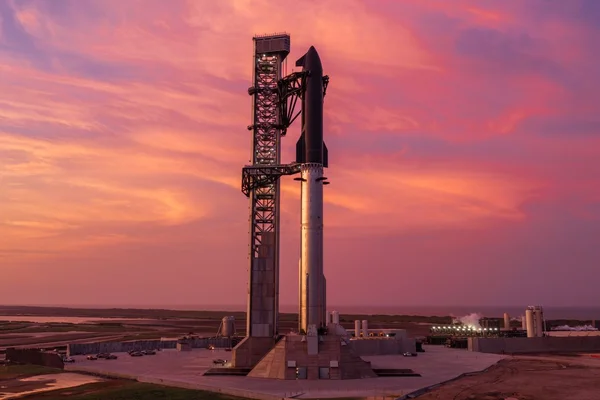
SpaceX Starship reaches orbit for first time on Flight 14, deploys 26 Starlink V3 satellites
The uncrewed megarocket survived an early engine shutdown, delivered its first operational payload and splashed down in the Pacific, opening the door to routine flights and NASA lunar work.
Astronomers Confirm Milky Way's First Microblazar Firing a Jet at Earth
An international team has identified IRAS 18293-0941, a stellar-mass black hole about 12,000 light-years away, as the Milky Way's first confirmed microblazar with a jet pointed at Earth.
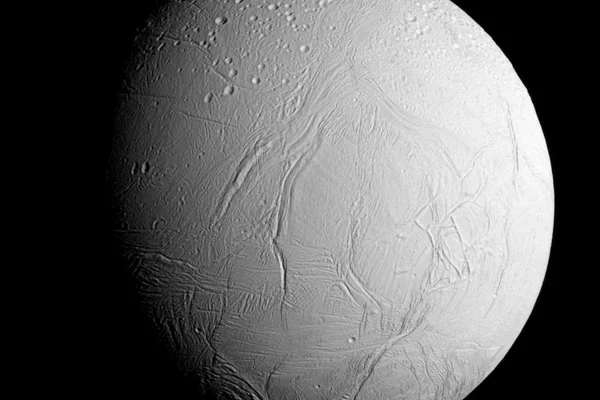
Enceladus Plumes Purify Ocean Samples as Earth Microbes Survive Simulated Conditions
Two Science Advances papers describe how Enceladus's ice plumes naturally separate ocean compounds and how Earth methanogens grew in a simulated alkaline ocean, improving prospects for life detection.
Comments (0)
Log in or sign up to leave a comment.
No comments yet. Be the first to share your thoughts.