SpaceX launched a Falcon 9 rocket from Vandenberg Space Force Base in California early Saturday, October 10, 2026, carrying 21 Northrop Grumman-built military data satellites for the U.S. Space Force's Space Development Agency (SDA). Liftoff from Space Launch Complex 4 East (SLC-4E) occurred at 12:39 a.m. PDT (0739 UTC). The mission, designated Tranche 1 Transport Layer A (T1TL-A), is the fourth SDA Tranche 1 mission and the fourth of nine Falcon 9 flights contracted for the agency.
The launch came five days after an October 5 attempt was automatically aborted at T-58 seconds. SpaceX said the hold was called due to off-nominal data on Stage Two. The vehicle was lowered horizontal at the pad for troubleshooting, and the launch was repeatedly pushed back a day at a time. Spaceflight Now reported on October 10 that the auto-abort occurred moments after the rocket's onboard computers took control.
The 21 satellites were manufactured by Northrop Grumman and delivered to Vandenberg on September 28, 2026. They will join the Proliferated Warfighter Space Architecture (PWSA), a mesh network of optically connected satellites in low Earth orbit. The PWSA is designed to provide global military tactical communications, missile warning, and missile tracking for the U.S. military and its allies. Tranche 1 is expected to begin providing operational capabilities to the Department of Defense in 2027.
Before this launch, 63 Tranche 1 satellites were already in orbit. When complete, Tranche 1 will consist of 126 Transport Layer satellites, 28 Tracking Layer satellites, and four missile-defense demonstration spacecraft. The Transport Layer will ultimately comprise 300 to 500 satellites at altitudes from 750 kilometers to 1,200 kilometers. The SDA has said that once complete, 95 percent of the globe will be in view of at least two Tranche 1 Transport Layer satellites at any given time, interconnected with optical inter-satellite links.
Key Facts
Spaceflight Now reported on October 10 that the Falcon 9 took a southerly trajectory from SLC-4E, currently SpaceX's only launch facility on the West Coast. The launch used Falcon 9 first stage booster B1103, flying for the sixth time. The booster previously supported the SDA's T1TL-E mission, NROL-179, and three Starlink batches. About 7.5 minutes after liftoff, SpaceX landed B1103 at Landing Zone 4 (LZ-4). That was the 37th landing at LZ-4 and the 668th Falcon booster landing to date. The News reported on October 10 that the first-stage booster landed at LZ-4 approximately six minutes after liftoff, marking another reusability milestone.
The mission is the fourth of nine Tranche 1 missions that Falcon 9 will launch for the SDA. Previous launches include T1TL-B on September 10, 2025, by York Space Systems; T1TL-C on October 15, 2025, by Lockheed Martin; and T1TL-E on July 16, 2026, by York. Via Satellite reported on September 29 that Northrop Grumman delivered the 21 satellites to Vandenberg on September 28. The Tranche 1 Transport Layer is to have 126 satellites, split evenly at 42 each among Northrop Grumman, York Space Systems, and Lockheed Martin.
Northrop Grumman said it is using some of its 7 million square feet of manufacturing space dedicated to space programs, equipped with advanced manufacturing systems and artificial intelligence. Keith Matthews, Northrop Grumman's T1TL program manager, spoke about the company's manufacturing capacity. SpaceX stated on October 10 that the space vehicles launched during this mission provide data transport as part of the SDA's Proliferated Warfighter Space Architecture, which SpaceX described as a mesh network of optically connected satellites in orbit.
The Tranche 1 effort is more than a year behind the original plan, primarily due to supply-chain hold-ups for Optical Communication Terminals. Via Satellite reported on September 29 that all Tranche 1 Transport and Tracking Layer satellites are to be in orbit within the next six to eight months. Northrop Grumman said that over the next six months, several dozen additional Northrop Grumman-built satellites for the PWSA will be launched into low Earth orbit, contributing to both missile defense and data transport missions.
Analysis
What this really means is that the U.S. military's space architecture is shifting from a small number of exquisite, expensive satellites to a proliferated mesh of many smaller spacecraft. The launch of 21 Northrop Grumman-built satellites on a reusable Falcon 9 booster is not just another routine mission. It is a concrete step toward a resilient network that can survive the loss of individual nodes and still deliver tactical communications and missile tracking to warfighters around the world. The fact that 63 Tranche 1 satellites were already on orbit before this launch shows that the production line is now moving, even if the schedule has slipped.
The bigger picture here is that SpaceX's reusable Falcon 9 has become the workhorse for this new architecture. Booster B1103's sixth flight, and the 668th Falcon booster landing overall, underscore how routine reuse has become. That matters because the SDA needs to launch dozens of satellites quickly and affordably. The nine Tranche 1 missions contracted to SpaceX are part of a broader plan to populate low Earth orbit with hundreds of Transport Layer satellites. Without reuse, the economics of a proliferated constellation would be far less favorable.
However, the delays tell an important story. The October 5 auto-abort at T-58 seconds, triggered by off-nominal data on Stage Two, shows that even mature rockets can face last-minute problems. The Tranche 1 program itself is more than a year behind schedule because of supply-chain issues with Optical Communication Terminals. Those terminals are essential for the mesh network, allowing satellites to talk to each other without ground stations. Until they are available in sufficient numbers, the full capability of the PWSA will remain limited. The fact that Northrop Grumman is using artificial intelligence and advanced manufacturing to build these satellites suggests the company is trying to accelerate production, but the bottleneck remains the optical terminals.
The strategic judgement is clear: the United States is betting that a proliferated, optically linked constellation will provide better missile warning and secure communications than a handful of large satellites. The SDA's goal of 95 percent global coverage with at least two satellites in view at any time is ambitious. If achieved, it would make it much harder for an adversary to disable the network by attacking a few key nodes. But the schedule risk is real. The gap between the planned Tranche 1 timeline and the actual delivery of optical terminals could delay operational capability beyond 2027.
Why It Matters
The Proliferated Warfighter Space Architecture is not just about technology. It is about deterrence. A mesh network of hundreds of satellites in low Earth orbit can track missiles, relay targeting data, and provide secure communications even in contested environments. For the U.S. military and its allies, that means faster decisions and better situational awareness. The 21 satellites launched on October 10 are a small but essential piece of that network. They will join the 63 Tranche 1 satellites already in orbit, bringing the total closer to the 126 Transport Layer satellites planned for Tranche 1.
The launch also highlights the growing role of commercial launch providers in national security space. SpaceX's Falcon 9 has launched all four SDA Tranche 1 Transport Layer missions to date. Northrop Grumman, York Space Systems, and Lockheed Martin are each building 42 satellites for the Transport Layer. This division of labor is designed to foster competition and redundancy. If one contractor falls behind, the others can help maintain the schedule. The use of a reusable booster that has flown six times further reduces the cost of each launch, which is critical when the goal is to deploy hundreds of satellites.
Finally, the October 5 auto-abort and the subsequent five-day delay show that space launch is still a risky business. Even with advanced automation, a single sensor reading can halt a countdown. The ability to troubleshoot, lower the rocket, and try again is a testament to the maturity of the Falcon 9 system and the range operations at Vandenberg Space Force Base. For the SDA, every successful launch builds momentum toward the 2027 operational milestone. For the warfighter, each satellite in orbit means more coverage and more resilience.
Next Up
Northrop Grumman has said that over the next six months, several dozen additional Northrop Grumman-built satellites for the PWSA will be launched into low Earth orbit. All Tranche 1 Transport and Tracking Layer satellites are expected to be in orbit within the next six to eight months. SpaceX will continue to launch Tranche 1 missions under its nine-mission contract with the SDA. The next Tranche 1 launch has not yet been announced, but the cadence is expected to remain steady as the agency works toward operational capability in 2027.
Beyond Tranche 1, the SDA is already planning later tranches that will add more satellites and new capabilities. The Transport Layer is ultimately expected to reach 300 to 500 satellites, providing global coverage and optical inter-satellite links. As more satellites reach orbit, the PWSA will move from a demonstration phase to a fully operational constellation. The October 10 launch is another step on that path, and the lessons learned from the October 5 auto-abort will inform future countdowns.
Related Articles
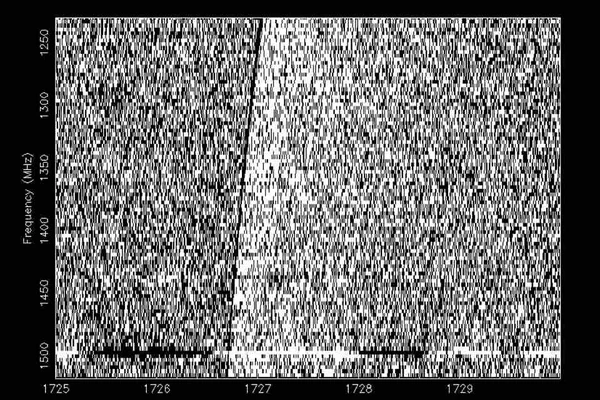
Webb and MeerKAT trace most distant fast radio burst to tiny dwarf galaxy 11 billion light years away
The MeerTRAP team spotted FRB 20240304B with MeerKAT in March 2024, and Webb later found its host, a metal poor dwarf galaxy at redshift 2.148, setting a new distance record.
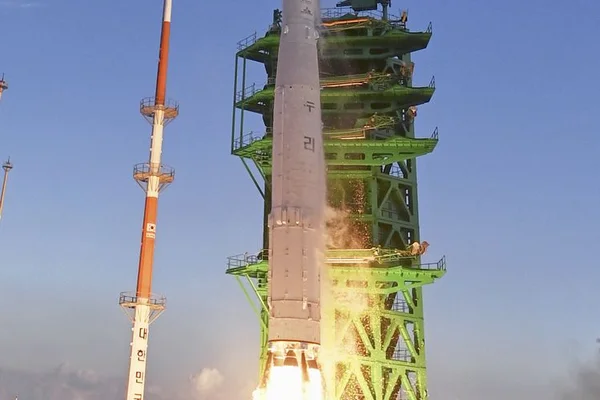
South Korea's Nuri rocket completes fifth flight, deploys 15 satellites
South Korea's homegrown Nuri rocket placed five NEONSAT microsatellites and nine CubeSats into orbit, but one Quaternion CubeSat failed to separate.
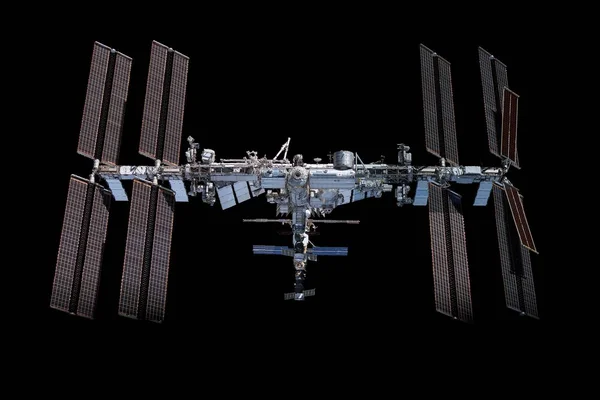
NASA and SpaceX Set October 7 Undocking for Crew 12 After Nearly Eight Months at ISS
Four astronauts will leave the International Space Station aboard a SpaceX Dragon on October 7, with a Pacific splashdown planned the following day off California.
Comments (0)
Log in or sign up to leave a comment.
No comments yet. Be the first to share your thoughts.