SpaceX deposited 53 Starlink satellites into low Earth orbit across a single calendar day this week, completing a same-day bicoastal launch that added broadband capacity from two coasts in under 13 hours. A Falcon 9 carrying 29 satellites lifted off from Cape Canaveral, Florida at 11:58 a.m. ET, and a second Falcon 9 carrying 24 satellites launched from Vandenberg Space Force Base, California at 9:46 p.m. PDT, closing a pairing that Spaceflight Now covered live on both coasts.
Industrialized Launch
The California mission, Starlink 17-49, was SpaceX's 94th Falcon 9 flight of 2026 and its 51st from the West Coast — more than half of the Air Force's 100-launch annual authorization for Vandenberg consumed in under eight months, at a cadence of roughly one liftoff every 4.5 days. First-stage booster B1103 flew its fifth mission, having previously carried the SDA-T1TL-E national security payload and the classified NROL-179 reconnaissance satellite. Per-kilogram cost to low Earth orbit now runs about $2,700, driven by booster reuse economics.
Constellation Milestones
Following the two launches, the Starlink constellation stood at approximately 10,947 operational satellites out of 10,963 in orbit and 12,721 launched since 2019 — roughly 69 percent of all active satellites circling the Earth, by orbital radar estimates. No other satellite operator in history has maintained a five-figure active fleet.
The dual-coast day came as SpaceX works through its orbital descent campaign, moving 4,400 satellites from 550 km to 480 km altitude while deploying new satellites to maintain coverage density. With 94 flights by August 12, SpaceX is on track to beat last year's record of 165 Falcon 9 launches, and Starship Flight 13 in July demonstrated the next step: deploying 20 functional V3 satellites from the Starship platform.
Related Articles
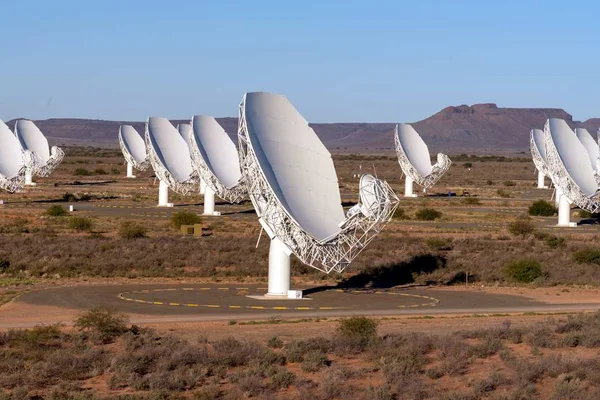
Astronomers trace first exoplanet radio emission to Beta Pictoris b with MeerKAT
MeerKAT's 64 dishes in South Africa recorded circularly polarized bursts from Beta Pictoris b, implying a magnetic field at least 200 times stronger than Jupiter's.

Google Puts Four TPUs in Orbit on SpaceX Mission to Test Project Suncatcher
Google confirmed its first Project Suncatcher prototype satellite, built with Planet and carrying four TPUs, reached orbit on SpaceX's Transporter-18 and is operating as expected.
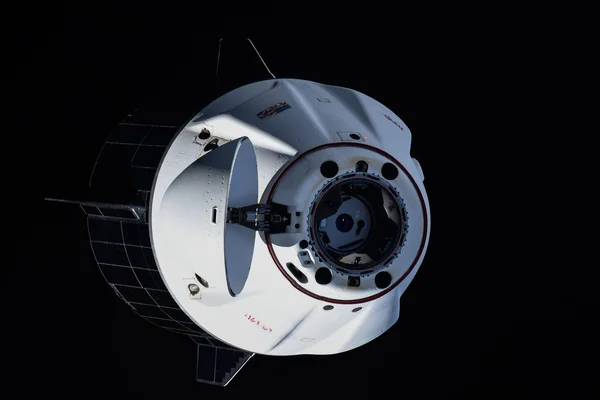
NASA and SpaceX Send Four Astronauts to Space Station in Record 7 Hour 50 Minute Trip
The Crew 13 mission lifted off from Cape Canaveral on October 1, 2026, carrying four astronauts to the International Space Station on a planned 7 hour 50 minute transit that NASA says is the fastest by a U.S. spacecraft.
Comments (0)
Log in or sign up to leave a comment.
No comments yet. Be the first to share your thoughts.