SpaceX launched its 35th cargo mission for NASA on October 13, 2026, sending a Falcon 9 rocket and a Dragon capsule toward the International Space Station with more than 6,300 pounds of supplies and science experiments. The CRS-35 mission lifted off from Space Launch Complex 40 at Cape Canaveral Space Force Station in Florida, carrying the final pair of International Space Station Roll-Out Solar Arrays (iROSAs) in the Dragon's unpressurized trunk. The launch continues a long-running partnership between NASA and SpaceX under the Commercial Resupply Services contract, which has now flown 35 resupply flights to the orbiting laboratory.
The iROSA hardware represents the last piece of a multi-year effort to upgrade the space station's electrical power system. These roll-out arrays are designed to augment the station's original solar panels, which have degraded over time. Once installed, the final pair will complete the power upgrade needed to support station operations through the remainder of its life and its eventual controlled deorbit. That deorbit is part of NASA's long-term plan as the station approaches the end of its operational era.
Dragon is the only currently operational cargo freighter that can return cargo to Earth, a capability that sets it apart from Russia's Progress, Japan's HTV-X and Northrop Grumman's Cygnus XL, all of which are expendable and burn up in the atmosphere after leaving the station. For CRS-35, that return capability will bring back scientific samples and hardware, including a failed Canadarm2 robotic arm joint that was removed during a June 30 spacewalk. The joint will be returned for analysis and refurbishment.
The mission also carries a suite of investigations that range from manufacturing artificial retinas in microgravity to studying 3D heart tissue models and brain organoids. These experiments reflect the station's role as a unique laboratory for biology, materials science and human health research. The predawn launch even produced a "space jellyfish" phenomenon over Melbourne, Florida, a glowing plume effect caused by the rocket climbing into sunlight while observers on the ground remained in darkness.
Key Facts
Liftoff was scheduled for 6:33 a.m. EDT (1033 UTC) on October 13, 2026. Spaceflight Now reported on October 13, 2026, that the Falcon 9 flew from Space Launch Complex 40 on a northeasterly trajectory. The booster, B1096, made its eighth flight. It previously flew NASA's IMAP, CRS-34, NROL-77, NROL-95, GPS-III 9, Kuiper Falcon 01 and Starlink 6-87. FOX 35 Orlando reported on October 13, 2026, that the first stage returned to Cape Canaveral and landed at Landing Zone 40, producing possible sonic booms along Florida's Space Coast.
The Dragon capsule, tail number C211, was on its fourth flight after previous cargo runs on CRS-26, CRS-29 and CRS-33. NASA reported on October 7, 2026, that the spacecraft would dock autonomously around 11 a.m. EDT on Thursday, October 15, to the space-facing port of the station's Harmony module. The port had recently been vacated by Crew Dragon Freedom, which returned the four members of NASA's SpaceX Crew-12 mission to Earth with an October 8 splashdown, according to Spaceflight Now's October 13, 2026, report. The flight to the station was expected to take about 52 hours, and Dragon will remain docked for about a month.
Space.com reported on October 13, 2026, that CRS-35 delivered 6,300 pounds (2,860 kilograms) of supplies, including the final set of iROSAs. NASA's October 7, 2026, advisory noted that the mission is the 35th SpaceX commercial resupply services flight to the orbital complex. NASA astronauts Anil Menon and Canadian Space Agency astronaut Joshua Kutryk will monitor Dragon's arrival, according to FOX 35 Orlando.
Bill Spetch, deputy manager of Commercial for NASA's Low Earth Orbit Program, said additional equipment included a dose pump for the toilet, pre-treat quality sensors, a robot microconical tool for station maintenance, and the final pair of iROSAs. The unpressurized trunk also holds a clamshell apparatus to house the failed Canadarm2 joint removed during the June 30 spacewalk. Other cargo includes a collapsible urinal demonstration unit supporting NASA's Artemis III mission and hardware to return the failed Canadarm2 joint to Earth.
The science experiments aboard include LambdaVision-1, which will test manufacturing artificial retinas in space in microgravity for more uniform layers that could improve implants for retinal diseases; Stellar Spheroids, to study microgravity's effect on 3D human heart tissue including blood vessel networks; ELF-Unconventional Glass 2, to examine how unusual types of glass form; and MINDS, using brain organoids to study inflammation associated with Alzheimer's, Parkinson's and multiple sclerosis. NASA's launch preview on October 7 said Dragon would carry hardware to manufacture artificial retinas in microgravity to help restore vision on Earth and 3D heart tissue models to advance large-scale drug testing on future missions.
Analysis
The bigger picture here is that CRS-35 marks the end of an era for the space station's power system. The final pair of iROSAs completes a solar array upgrade that has been years in the making. Without this upgrade, the station's aging original arrays would have continued to degrade, potentially limiting the research and operations that can be conducted aboard. By finishing this work, NASA and SpaceX are ensuring that the orbiting laboratory can operate at full capacity until its planned retirement and controlled deorbit.
What this really means is that the commercial resupply program has matured into a reliable logistics backbone for the station. With 35 missions flown by SpaceX alone, the CRS contract has become a routine but essential part of station life. The fact that Dragon can return cargo, including a failed Canadarm2 joint, highlights a unique capability that no other current freighter offers. This return capability allows NASA to bring back time-critical samples and hardware for analysis, which is crucial for scientific progress and for maintaining station systems.
The mission also underscores the station's role as a testbed for applied research. Experiments like LambdaVision-1 and Stellar Spheroids are not purely academic; they aim to develop technologies that could improve human health on Earth. Manufacturing artificial retinas in microgravity could lead to better implants for retinal diseases, while 3D heart tissue models could advance drug testing. These investigations show how space-based research can translate into tangible benefits for people on the ground.
However, the reliance on a single vehicle for return capability is a potential vulnerability. Space.com reported on October 13, 2026, that Dragon is the only currently operational freighter that can carry cargo in the downward direction. If Dragon were unavailable, NASA would lose the ability to return samples and hardware from the station. This concentration risk is worth noting as the station's lifetime winds down and as NASA looks toward commercial destinations in low Earth orbit.
Why It Matters
The completion of the iROSA installation matters because power is the limiting factor for space station operations. The new arrays will augment the station's energy budget, allowing more experiments and systems to run simultaneously. As the station ages, upgrades like this are necessary to keep it productive. The final pair also supports the station's eventual controlled deorbit, which requires sufficient power for maneuvering and systems until the end.
The science on CRS-35 has direct implications for human health. Artificial retinas, heart tissue models, unconventional glass and brain organoid studies all address areas where microgravity offers unique insights. For example, brain organoids could reveal treatment targets for Alzheimer's, Parkinson's and multiple sclerosis, diseases that affect millions worldwide. The ability to return samples and hardware, including the failed Canadarm2 joint, means researchers can analyze results on Earth and improve future equipment.
The mission also demonstrates the continued strength of the NASA-SpaceX partnership. With 35 CRS flights, SpaceX has become a cornerstone of station logistics. The Falcon 9 booster B1096's eighth flight and Dragon C211's fourth flight show reuse as a routine reality. This reliability helps NASA plan long-term operations and focus on deeper space exploration, including Artemis III, which will benefit from the collapsible urinal demonstration unit carried on this mission.
Next Up
Dragon is scheduled to dock autonomously at around 11 a.m. EDT on Thursday, October 15, 2026, at the space-facing port of the Harmony module. NASA astronauts Anil Menon and Joshua Kutryk will monitor the arrival. After about a month at the station, Dragon will depart and splash down in the Pacific Ocean off the California coast in mid-November. The return will bring back scientific samples, a spacesuit, equipment from the station's water and waste-processing systems, and the failed Canadarm2 joint for analysis and refurbishment.
The iROSA hardware will be installed during a future spacewalk, though the exact date was not specified in the sources. Once installed, the final pair will complete the station's solar power upgrade. Meanwhile, NASA continues to plan for the station's eventual controlled deorbit and the transition to commercial low Earth orbit destinations. CRS-35 is the 35th SpaceX cargo mission, and more resupply flights are expected as the station continues its operations through the remainder of its life.
Related Articles
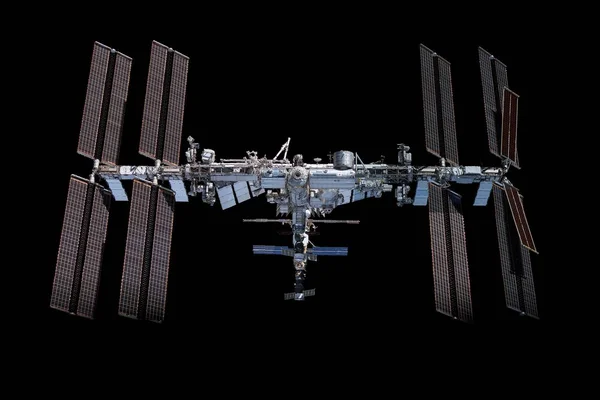
NASA opens final bidding for private space stations to replace the ISS
NASA's October 9 request for proposals asks companies to design, certify and operate private low Earth orbit destinations, with bids due December 8 and awards expected in spring 2027.

Webb Watches Water Clouds Thicken and Thin on Brown Dwarf WISE 0855
New JWST spectra of WISE 0855, the coldest known brown dwarf, show high water clouds thickening and thinning as it rotates, the first such weather seen beyond the solar system.
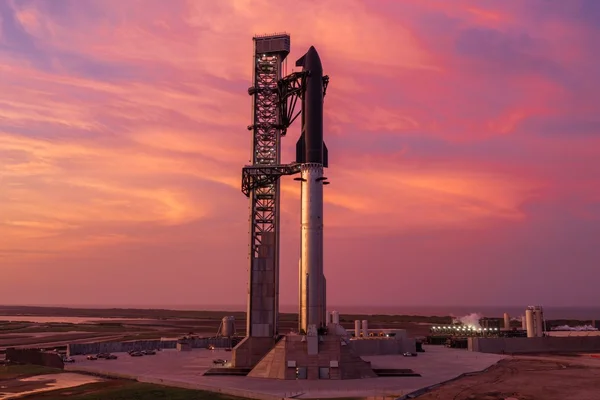
SpaceX launches 21 military data satellites for Space Development Agency
The fourth Tranche 1 Transport Layer mission placed 21 Northrop Grumman satellites into low Earth orbit after a five-day delay caused by an auto-abort at T-58 seconds.
Comments (0)
Log in or sign up to leave a comment.
No comments yet. Be the first to share your thoughts.