Eggs sit at the centre of some of the most closely watched food safety work in Britain, because Salmonella Enteritidis can contaminate both the inside and the outside of a shell egg and regulators treat any positive sample in the commercial supply as a serious event. In 2026 the United Kingdom was already dealing with a large and unresolved Salmonella Enteritidis investigation when routine sampling of imported product produced a finding that investigators had not expected.
The sampling involved raw shell eggs brought into Britain from Ukraine and was carried out as part of the wider outbreak investigation. It led the UK Health Security Agency to detect Salmonella Enteritidis in the imported eggs, a result that set an alert process in motion reaching caterers, manufacturers, wholesalers, small shops and consumers within days. The organism involved, however, was not the strain at the heart of the larger domestic investigation.
On October 10, 2026, the Food Standards Agency issued a Food Alert for Action, FSA-FAFA-03-2026, instructing businesses and consumers to withdraw and recall raw shell eggs imported from the Ukrainian food business Yasensvit Ltd in Kyiv and stamped with the code 3UA1012066. Food Standards Scotland joined the FSA in warning consumers and businesses not to eat, sell or distribute the affected product, and the alert was last updated on October 11, 2026.
The product is raw shell eggs in all pack sizes and with all best-before dates, carrying a producer and packing centre approval code of a-UA-10-12-06-X-PC, PP. Most of the affected volume is believed to have moved through the catering supply chain, and while some reached small independent shops and convenience stores, the eggs were not sold by the major supermarket chains, whose retail egg supply is produced in the United Kingdom.
Key Facts
The microbiology at the centre of the recall is specific. Whole genome sequencing of the sampled eggs identified Salmonella Enteritidis strain t5.8998. That strain does not match the strains of the main outbreak under investigation, so the supplier alert cannot be presented as the confirmed source of the other, larger Salmonella clusters being tracked in Britain. It is nevertheless associated with 36 Salmonella cases reported in England in 2026, a figure that must not be added indiscriminately to the separate cluster totals.
The product identification is the part food businesses have to get right. Because imported eggs may be repacked after they enter Britain, an outer carton may carry a different business name or packing centre detail from the original producer. The stamp printed directly onto each shell, 3UA1012066, is therefore the most reliable way to identify affected product, and without it staff could wrongly classify a repacked carton as unaffected.
Food Standards Scotland reported on October 10 that consumers who bought eggs stamped 3UA1012066 should not eat them and should dispose of them safely at home. Anyone with symptoms such as fever, diarrhoea and abdominal cramps should avoid attending work, school or nursery until symptom free for at least 48 hours. Businesses that received affected eggs must immediately stop selling or using them, withdraw affected stock and, where products were sold directly to consumers, carry out a recall.
Salmonella symptoms include diarrhoea, stomach cramps, vomiting and fever, and the illness can occasionally be serious, including sepsis requiring hospital admission. Young children, older adults, pregnant women and people with weakened immune systems are at particular risk. Jacquelyn McCormick, Head of Incidents at the FSA, said eggs bought in major supermarkets are produced in the UK and are therefore not affected by this outbreak, and urged consumers not to eat the recalled eggs and businesses to withdraw them and recall them where retail sales have occurred.
Hannah Charles, Lead Epidemiologist at UKHSA, said the strain found in the imported eggs is genetically different from the strains linked to the ongoing outbreak but is associated with the 36 Salmonella cases reported in England during 2026.
Analysis
Two things are happening at once, and keeping them apart is the central analytical task. The first is a distinct, genetically characterised contamination event in imported Ukrainian shell eggs, identified as strain t5.8998 and linked to 36 cases in England. The second is the much larger Salmonella Enteritidis investigation that UK authorities were already running. What this really means is that one positive sample in the imported supply has generated a nationwide alert with its own case count, while the principal outbreak remains unexplained and, on the evidence available, unconnected to the Ukrainian product.
Food Safety News reported on October 12 that the main United Kingdom outbreak now involves three Salmonella clusters with more than 650 people sick and two deaths. The first cluster has 428 confirmed patients and one death, with sample dates from August 11, 2025 to September 22, 2026, and 102 infections reported in England in the past month; patients ranged in age from under 1 to 90, with a median age of 30, and 72 of 271 were hospitalised. The second cluster has 194 patients in England, with 25 of 55 hospitalised, and a third cluster has 44 cases and one death. Food Safety News reported on October 12 that investigations linked 47 patients to 11 businesses, with at least 24 infected people eating dishes containing eggs, and that two large importers are under investigation.
The European Centre for Disease Prevention and Control is monitoring the Salmonella Enteritidis sequence type 11 cluster, with illnesses reported in the Netherlands, Belgium, Austria, Denmark, France and Germany. IN Food reported on October 13 that the t5.8998 strain found in the sampled eggs does not match the principal outbreak strains, so the new supplier alert cannot be presented as the confirmed source of those other outbreaks.
The bigger picture here is that the weakest point in the chain is often not the egg but the label attached to it. Manufacturing adds a tracing problem once eggs are cracked, pooled or mixed into a recipe, because the shell stamp disappears from the finished product and batch intake records and supplier documentation become the only route back to the ingredient source. Withdrawals stop product moving through commercial distribution, while a recall is required where affected eggs were sold to consumers. The FSA and Food Standards Scotland are working with local authority enforcement teams, and businesses must retain records to trace onward supplies.
Why It Matters
Pharmacy Business reported on October 12 that UKHSA confirmed the contamination came from a Ukrainian food producer and that the FSA initiated an urgent recall and withdrawal across the catering and wholesale supply chains, directing commercial kitchens, food manufacturers, wholesale distributors and independent corner shops to purge affected batches from their inventories immediately.
The practical consequence is that a large share of the risk sits in food service rather than in supermarket aisles. Caterers, manufacturers and wholesalers handle eggs in volume, often breaking and pooling them, and the affected product may have been repacked and sold under different names. Tracing it therefore depends on records held by businesses, on the shell stamp and on local authority enforcement work, not on a single retail chain removing one branded line from a shelf.
For the public, the message is deliberately narrow and testable: eggs in major supermarkets are produced in the UK and are not affected, while eggs stamped 3UA1012066 should not be eaten and should be disposed of safely at home. The 48-hour symptom-free rule for people with fever, diarrhoea and abdominal cramps is the part of the advice that limits onward spread in workplaces, schools and nurseries. The 36 cases linked to strain t5.8998 show that the contamination has already produced human illness, even though it is not the strain driving the wider outbreak.
Next Up
The immediate operational focus is the alert itself. It was issued on October 10, 2026, carries the identifier FSA-FAFA-03-2026 and was last updated on October 11, 2026, and it directs businesses to withdraw affected stock and to recall product sold to consumers. Because the eggs may have been repacked in the UK, businesses must keep and use records that trace onward supplies, and enforcement teams in local authorities will be checking that the withdrawal has been carried through. Consumers who still hold eggs stamped 3UA1012066 should dispose of them safely.
Beyond the recall, two investigations continue to run in parallel. UKHSA continues to characterise the strains involved, having established that t5.8998 is genetically distinct from the principal outbreak strains but linked to 36 cases in England in 2026, and the European Centre for Disease Prevention and Control continues to monitor the Salmonella Enteritidis sequence type 11 cluster reported in the Netherlands, Belgium, Austria, Denmark, France and Germany. The two large importers under investigation and the 47 patients linked to 11 businesses remain part of the wider picture that the Ukrainian egg alert has not resolved.
Related Articles
Lancet Commission names 17 catastrophic health threats, with AI and nuclear conflict carrying extinction risk
A 35-member Lancet commission launched in Berlin has identified 17 interconnected threats to health, judging malicious AI use and nuclear conflict as the only two with extinction potential.
Florida dengue outbreak hits 296 cases, largest in any US state in decades
Florida health officials have confirmed 296 locally acquired dengue cases in 2026, the worst outbreak in any U.S. state since at least the 1940s, with Hillsborough County reporting 259 cases and one death.
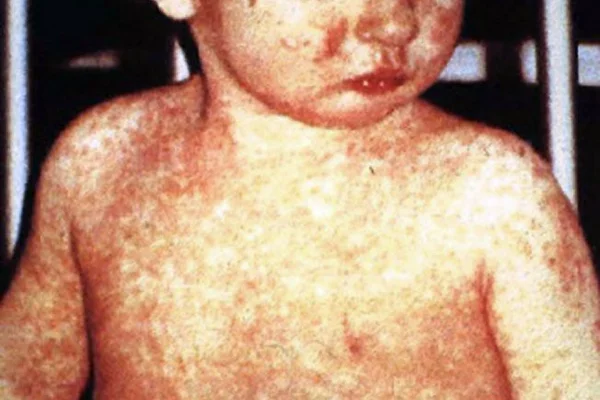
US measles cases reach 4,080 in 2026, highest annual total since 1991 as Pennsylvania surges
CDC data show 4,080 confirmed measles cases as of October 8, 2026, nearly double last year's total, with Pennsylvania reporting 1,136 cases and five deaths.
Comments (0)
Log in or sign up to leave a comment.
No comments yet. Be the first to share your thoughts.