SpaceX launched its 100th orbital mission of the year shortly after midnight on Saturday morning. Its Falcon 9 rocket took off from Vandenberg Space Force Base on a Starlink delivery. The Starlink 15-20 mission added another 27 broadband internet satellites to the company's megaconstellation in low Earth orbit. SpaceX founder Elon Musk confirmed on Friday that it now has more than 11,000 Starlink satellites in orbit. Liftoff from Space Launch Complex 4 East happened at 12:25 a.m. PDT (3:25 a.m. EDT / 0725 UTC).
The Reusability Math
SpaceX launched this mission using the Falcon 9 first-stage booster with tail number B1100. This was its ninth flight after previously launching the NROL-105 mission for the National Reconnaissance Office as well as seven batches of Starlink satellites. Nearly 8.5 minutes after liftoff, B1100 landed on the droneship "Of Course I Still Love You" positioned in the Pacific Ocean. This was the 220th landing on this vessel and the 653rd Falcon booster landing to date. SpaceX flew its Falcon rockets 165 times in 2025 alone; with roughly four months still left in 2026, the company is expected to keep pace with that number.
The Starlink Buildout
Of the 99 Falcon 9 launches so far this year, 76 have gone toward growing the Starlink network, which now counts more than 11,000 active satellites — the largest satellite constellation ever built. Next up, SpaceX aims to launch its next-generation Starlink V3 satellites, with a goal of eventually reaching 100,000 in orbit. That plan depends heavily on Starship, the company's next-generation rocket, which is still being tested. SpaceX is currently preparing for Flight 14, which will send Starship on a full orbital mission for the first time. The flight is expected no earlier than August 28, 2026.
Roman Space Telescope Readies for Falcon Heavy
The team preparing to launch NASA's Nancy Grace Roman Space Telescope completed a mission dress rehearsal on August 20 from Florida's space coast. During the exercise, Roman teams ran through a full end-to-end simulation of launch-day operations leading up to liftoff. They practiced powering up the spacecraft, simulated fueling operations for the SpaceX Falcon Heavy rocket, conducted mock weather briefings and practiced troubleshooting a variety of scenarios. NASA and SpaceX are targeting launch no earlier than 7:26 a.m. EDT on Sunday, August 30, from Launch Complex 39A at Kennedy aboard a SpaceX Falcon Heavy.
What Roman Will Do
This flagship mission's vast, deep surveys will help astronomers explore dark matter, dark energy, exoplanets and almost anything from our own solar system to galaxies at the edge of the observable universe. By conducting wide-field surveys, the telescope will explore the universe's structure, evolution and composition. Roman has already completed final assembly and integration, and once launched, will offer a field of view more than 100 times larger than Hubble's. Astronomers hope the next-generation space telescope will help pin down the nature of dark energy and open a new window on exoplanets.
What to Watch Through Year-End
Three checkpoints follow. The August 30 Falcon Heavy launch window — currently on track following the August 20 dress rehearsal — will be the first time Roman reaches space after more than a decade of development. SpaceX's Starship Flight 14, currently NET August 28, will determine whether the next-generation launch system can carry the Starlink V3 satellite class and unlock the path to the 100,000-satellite constellation. And the EU's IRIS² constellation contract awards — long delayed by launcher selection disputes — will indicate whether Europe's autonomous secure-communications program can catch up to Starlink's pace of deployment through the rest of the decade.
Related Articles
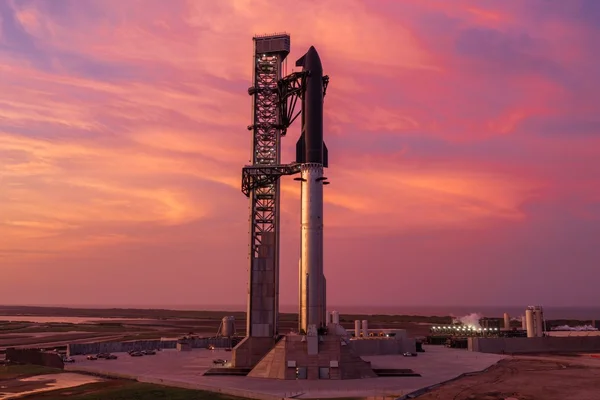
SpaceX launches 21 military data satellites for Space Development Agency
The fourth Tranche 1 Transport Layer mission placed 21 Northrop Grumman satellites into low Earth orbit after a five-day delay caused by an auto-abort at T-58 seconds.
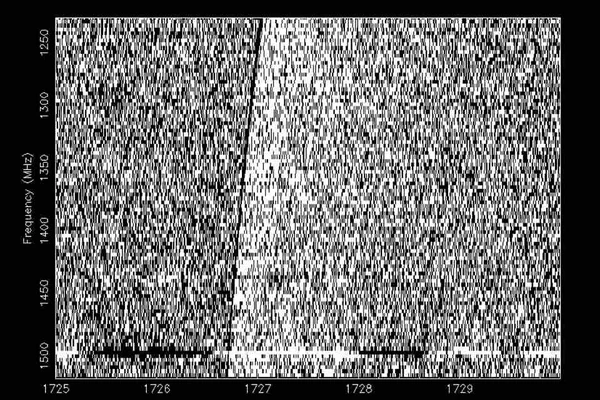
Webb and MeerKAT trace most distant fast radio burst to tiny dwarf galaxy 11 billion light years away
The MeerTRAP team spotted FRB 20240304B with MeerKAT in March 2024, and Webb later found its host, a metal poor dwarf galaxy at redshift 2.148, setting a new distance record.
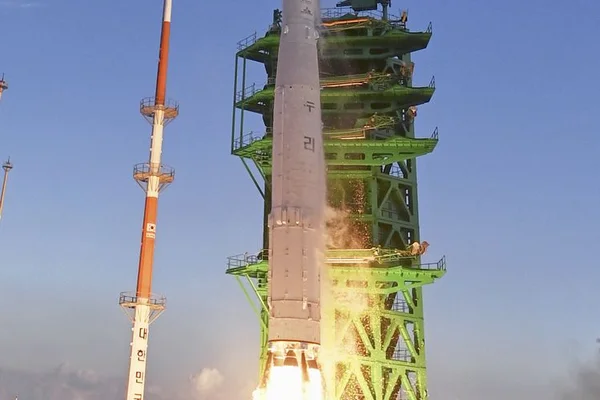
South Korea's Nuri rocket completes fifth flight, deploys 15 satellites
South Korea's homegrown Nuri rocket placed five NEONSAT microsatellites and nine CubeSats into orbit, but one Quaternion CubeSat failed to separate.
Comments (0)
Log in or sign up to leave a comment.
No comments yet. Be the first to share your thoughts.