NASA used an October 23, 2026 briefing at Kennedy Space Center to answer the question that has hung over its Moon program since the architecture was rewritten in February: Artemis III is still aiming for a summer 2027 launch, and it will carry four astronauts on a 14-day mission in low Earth orbit rather than to the lunar surface. The crew will dock with and test lunar landers built by Blue Origin and SpaceX, the agency confirmed after the briefing.
The flight is an unusual detour for a program once billed as the return to the Moon. Artemis III was rescoped into an Earth orbit rendezvous and docking rehearsal using test articles of SpaceX's Starship and Blue Origin's Blue Moon Mark 2, with the first crewed landing moved to Artemis IV, now targeted for 2028. NASA's mission page describes Artemis III as a "Crewed Demonstration" whose objective is to "Demonstrate Critical Systems for Lunar Landing."
The crew was named on June 9, 2026: commander Randy Bresnik and mission specialists Andre Douglas and Frank Rubio of NASA, plus Luca Parmitano of the European Space Agency. They follow the Artemis II crew, which flew four astronauts around the far side of the Moon and back in April on a nine-day trip that reached 252,756 miles from Earth.
The profile is a relay of three of the world's most powerful rockets. Blue Origin launches a Blue Moon Mark 2 test lander from Launch Complex 36A at Cape Canaveral Space Force Station on a New Glenn, and the vehicle waits in orbit for weeks. NASA then launches the crew on the Space Launch System and Orion from pad 39B at Kennedy Space Center, and Orion docks with Blue Moon while astronauts enter the lander's crew cabin to test life support systems and controls. SpaceX then launches a Starship test lander from pad 39A at Kennedy, Orion undocks from Blue Moon and docks with Starship for about two hours, and Orion reenters and splashes down.
Key Facts
Florida Today reported on October 23, 2026 that NASA confirmed the summer 2027 target after its Kennedy Space Center briefing, with the crew spending about two days docked to the Blue Origin vehicle and about two hours at the SpaceX vehicle. Beyond the dockings, the agency says the crew will conduct Orion systems and crew survival suit evaluations, human research, science experiments and technology demonstrations, validating the coordination of multiple launch systems ahead of future lunar landings.
Space.com reported on October 21, 2026 that the two landers are deliberately different in capability. Blue Origin's Blue Moon Mark 2 is a 52-foot-tall (16-meter) spacecraft powered by three BE-7 engines that will fly with a crew cabin, partial life support and flight software so astronauts can enter it from Orion in zero gravity. SpaceX's contribution is an existing Starship V3 upper stage modified with a docking system and a nosecone cover but no crew cabin, so the crew stays aboard Orion for that docking. NASA documents suggest mechanical fit checks are complete.
Artemis program manager Jeremy Parsons told reporters that SpaceX is targeting its 15th Starship test flight for a November launch from Starbase in Texas and is developing hardware for an in-space propellant transfer demonstration in early 2027. He also said Axiom Space is developing a lighter spacesuit called the Sortie Suit, roughly half as heavy at about 250 pounds, reducing the mass each lander must carry to the Moon. Space.com reported on October 21, 2026 that Steve Creech, acting manager of NASA's Human Landing System program, laid out lander timelines on October 5 at the International Astronautical Congress in Antalya, Turkey: a first Blue Moon Mark 1 cargo flight in the first quarter of 2027, an uncrewed SpaceX lunar landing before the end of 2027, a debut for the larger New Glenn 9x4 variant in the fourth quarter of 2027, and an uncrewed Blue Moon Mark 2 demonstration landing in the first quarter of 2028.
SpacePolicyOnline reported on October 22, 2026 that the Aerospace Safety Advisory Panel will soon open a formal recommendation that NASA re-examine plans for Artemis IV, currently the first crewed lunar landing at the Moon's South Pole and the first time Americans set foot on the Moon since 1972. Panel member and former astronaut Charlie Precourt said the mission has "a large number of firsts," including in-space cryogenic refueling, and noted that no orbiting fuel depot exists and cryogenic propellant transfer has never been demonstrated.
Ars Technica reported on October 22, 2026 that Precourt told the panel's quarterly meeting the last estimate was around 22 flights to deliver enough propellant for a lander to reach lunar orbit, a figure Elon Musk disputed on X, saying the actual number would be "more like 6 to 8." Precourt did not name Starship, but it is the only NASA human lander using orbital refueling; Blue Origin's Blue Moon does not use orbital refueling in its initial design. Even at a twice weekly launch cadence by the end of 2027, SpaceX would need about three months to fill a depot for one Starship landing.
Analysis
The two messages from the same week are not really in conflict. They describe different stages of the same gamble, and they are aimed at different audiences. Artemis III has been engineered to be survivable as a test: it uses existing hardware, it keeps the crew inside Orion for the SpaceX docking, and it can succeed while proving comparatively little about the hardest part of a lunar landing.
What this really means is that NASA has converted a landing program into a sequence of separately verifiable demonstrations, and the date announced on October 23 measures the first of those demonstrations, not the arrival of a crew on the Moon. The 14-day flight can be declared a success without resolving the refueling question the safety panel raised, without a demonstrated cryogenic propellant transfer, and without an uncrewed landing on the lunar surface, because NASA requires only one uncrewed Human Landing System landing test plus an engine restart, and no demonstration of liftoff and return to lunar orbit.
That asymmetry explains the tone of both announcements. Precourt praised Administrator Jared Isaacman for pressing the schedule and finding barriers, and the panel praised the rescoping of Artemis III. But praise for a rehearsal is not confidence in a landing. The panel's concern is structural: the South Pole has steep slopes, low Sun angles and temperature extremes unlike the near equatorial Apollo sites, and Artemis IV would be the first use of cryogenic propellants on the lunar surface, since Apollo used hypergolics, with more limited abort options. Precourt said those firsts reduce the likelihood of mission success, and the panel will recommend that NASA re-examine the mission objectives and potentially the system architecture for Artemis IV and the missions after it, to balance risk and maintain flight cadence.
The refueling arithmetic is where the disagreement becomes public and countable. NASA declined for years to state how many Starship launches a lunar landing requires; in 2023 the then director of the Human Landing System program, Lisa Watson-Morgan, put the number in the high single digits to the low double digits, about a dozen launches with a depot Starship plus roughly 11 tankers, while other officials said high teens. The panel's 22 and Musk's 6 to 8 bracket a very wide uncertainty that turns on cryogenic methane and liquid oxygen boil off and on transfer efficiency, and based on current Starship lift capacity NASA's working answer appears to be on the order of two dozen launches. A program whose risk register includes a two dozen launch tanker campaign is not constrained by rocket performance alone. It is constrained by an industrial cadence nobody has yet flown.
Why It Matters
For NASA, the difference between a rehearsal and a landing is political as much as technical. Isaacman wants a crewed landing before January 2029, which puts the remaining margin inside a single presidential term. The current plan is Artemis III in 2027 and Artemis IV in 2028, with a possible second landing that year. If the Artemis IV architecture has to change, that margin narrows fast, and the flight cadence the panel wants to protect becomes the first casualty.
For the two lander companies, October 23 delivered a firm date with a firm customer. Blue Origin gets to fly a fully outfitted Blue Moon Mark 2 with a crew cabin and partial life support before its uncrewed demonstration landing in the first quarter of 2028, an inversion of the usual test order that makes sense only because the vehicle is built to wait in orbit for weeks. SpaceX gets to validate a docking system and nosecone cover on a Starship V3 upper stage without a crew inside, while its tanker fleet carries the schedule risk.
For the credibility of the return to the Moon, the safety panel's recommendation is the more consequential document of the two. A re-examination that changes the architecture would ripple through contracts, landing site work and suits, including the lighter Axiom Sortie Suit at about 250 pounds. A re-examination that leaves the architecture intact will have to explain how 22 tanker flights, or six, become routine before the end of the decade.
Next Up
The near term calendar is crowded. SpaceX's 15th Starship test flight is targeted for November from Starbase, the in-space propellant transfer demonstration is planned for early 2027, Blue Origin's first Blue Moon Mark 1 cargo flight is slated for the first quarter of 2027, and Artemis III itself is targeted for the third quarter of 2027 with four astronauts on a 14-day mission. NASA's Kelvin Manning said the uncrewed SpaceX landing test is planned for late 2027.
The formal safety panel recommendation will reach the agency in the coming months, and how NASA answers it will decide whether the summer 2027 rehearsal stays a waypoint on the road to the South Pole or becomes a substitute for it. Artemis III is on track. Artemis IV is the question.
Related Articles

Russian Satellite Kosmos 2612 Stalks ICEYE-X36 to Within 500 Metres in Low Earth Orbit
LeoLabs tracking data shows a Russian military spacecraft held station within roughly 500 metres of a US-registered radar satellite for several days before withdrawing.
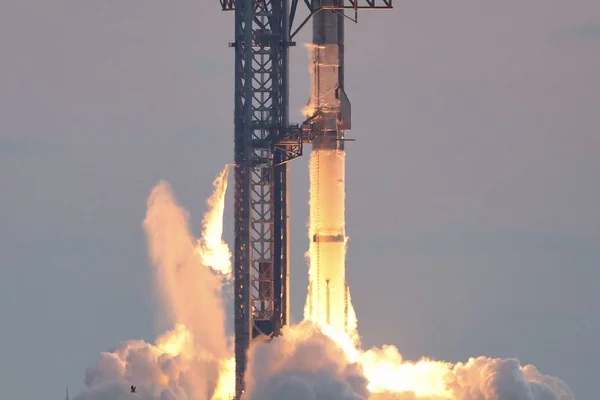
SpaceX to Attempt First Double Starship Tower Catch on Flight 15
Elon Musk says Flight 15 in November will try to recover both Super Heavy and the Ship upper stage, a first for an orbital rocket and a test of SpaceX's reusability strategy.
SpaceX flies second Starfall capsule on Bandwagon 5 with 32 payloads
The Falcon 9 mission carried 32 payloads, including Varda's W-7 pharmaceutical capsule and SpaceX's reusable cargo demonstrator, as orbital return services move closer to routine use.
Comments (0)
Log in or sign up to leave a comment.
No comments yet. Be the first to share your thoughts.