South Korea's Nuri rocket launched on October 7, 2026, from the Naro Space Center in Goheung, placing 15 satellites into orbit. The 200-ton rocket lifted off at 12:25 p.m. local time and completed its flight about 20 minutes later. It was the fifth flight of Nuri, also known as KSLV-II, and its fourth consecutive success after a failed debut in 2021. The mission marked the first time a domestic launch vehicle sequentially deployed multiple primary satellites designed for the same mission. The rocket carried five NEONSAT microsatellites and 10 CubeSats.
Nuri is South Korea's first space rocket developed largely with domestic technology. The 47.2-meter rocket weighs about 200 tons at launch and can place roughly 1.5 tons into low Earth orbit. Its first launch in October 2021 failed when the third-stage engine shut down early. It succeeded in June 2022 and has now achieved four straight successes, raising its overall success rate from 75 percent to 80 percent. Hanwha Aerospace, which received Nuri-related technology from the Korea Aerospace Research Institute (KARI), manufactured the rocket for the fifth launch and participated in launch operations.
The five NEONSAT satellites, short for New-space Earth Observation Satellite Constellation for National Safety, each weigh less than 100 kilograms and carry an electro-optical camera that can distinguish objects as small as 1 meter in black-and-white images and 4 meters in color. They are designed to observe the Korean Peninsula for national security and disaster response, including wildfires and floods. The constellation will eventually total 10 satellites. Two earlier NEONSAT units launched on Rocket Lab Electron vehicles, the first in April 2024 and the second in January of this year.
Key Facts
Yonhap News Agency reported on October 7 that the 200-ton Nuri blasted off from the Naro Space Center in Goheung, about 400 kilometers south of Seoul, at 12:25 p.m. and completed its flight about 20 minutes later. The rocket successfully deployed its primary payload of five NEONSAT microsatellites, while nine of its 10 CubeSat secondary payloads were released as planned, according to the Korea AeroSpace Administration (KASA). The five NEONSATs, Nos. 2 through 6, were deployed 35 to 40 seconds apart, with Nuri's upper stage rotating about 45 degrees between each separation.
Aju Press reported on October 7 that the three-stage rocket reached an altitude of about 575 kilometers before releasing five primary Earth-observation satellites and 10 smaller CubeSats. The launch was Nuri's most complicated satellite deployment yet. Unlike earlier missions, in which the rocket carried only one primary satellite, Nuri had to release five main satellites one after another while changing the orientation of its upper stage to prevent collisions. Ten CubeSats were then deployed in pairs at 10-second intervals.
Chosun Biz reported on October 7 that KASA Administrator Oh Tae-seok announced at a briefing at Naro Space Center in Goheung, South Jeolla, at 2 p.m. that the fifth launch of Nuri was successful. Oh said it entered the target sun-synchronous orbit normally and all five main payloads, Microsatellite Constellation Units 2 through 6, separated normally. He added that the success further enhanced the reliability of the Nuri rocket and demonstrated more advanced space transportation capability. However, among the 10 CubeSats, nine separated and one was not ejected: PERSAT-02, developed by South Korean startup Quaternion. Park Jong-chan, head of KARI's Korean Launch Vehicle Advancement Program, said Nuri sent the signal to eject the CubeSat, but the deployment tube cover did not open. Science Minister Bae Kyung-hoon called it another milestone for South Korea's space industry.
Space.com reported on October 7 that all but one of the payloads was successfully delivered to low Earth orbit as planned, according to KARI. The 155-foot-tall (47 meters) Nuri is jointly operated by KARI and Hanwha Aerospace. KARI wrote that through this 5th launch, the agency had further elevated the Nuri rocket's capability to perform space transportation missions by precisely deploying multiple satellites into orbit in a single launch. NEONSAT No. 6 made initial contact with South Korea's King Sejong Station in Antarctica at about 1:08 p.m., and contacts with the other four were expected by around 4:30 p.m. Hanwha Aerospace manufactured the rocket for the fifth launch and participated in launch operations.
Analysis
The bigger picture here is that South Korea has crossed a threshold from proving it can reach orbit to proving it can operate a repeatable, complex deployment service. The fifth Nuri flight was not merely another successful launch. It was the first time a domestic launcher released multiple primary satellites sequentially into a sun-synchronous orbit, a maneuver that requires precise timing, attitude control and collision avoidance. That capability is what turns a launch vehicle into a strategic and commercial asset.
What this really means is that South Korea's space ambitions are no longer limited to symbolic firsts. The NEONSAT constellation is designed to photograph the Korean Peninsula at least three times a day and to revisit the same location within 24 hours during emergencies once all 10 satellites are operational. That kind of persistent coverage is valuable for national security, disaster response and environmental monitoring. It also reduces reliance on foreign launch providers and foreign imagery, a point emphasized by Science Minister Bae Kyung-hoon, who called the mission another milestone.
The failure of PERSAT-02 to separate is a reminder that even a successful rocket launch involves many separate systems, some built by satellite developers rather than the launch provider. KASA distinguished the CubeSat failure from the launcher's success, noting the deployment tube is built by the satellite developer. That distinction matters for how the mission is judged. The rocket performed its job by delivering the primary payloads and nine of the 10 secondary payloads. The anomaly occurred in a customer-provided deployment mechanism, not in Nuri's engines or guidance.
Hanwha Aerospace's expanding role is another sign of institutional maturity. The company manufactured the rocket for the fifth launch and participated extensively in launch-control operations. Kim Sean, executive vice president and head of space business at Hanwha Aerospace, said the fifth launch and the upcoming sixth and seventh launches are not the final goal but steps toward private space transportation services. That statement points to a future in which Nuri is not just a government program but a commercially operated vehicle, with KARI providing oversight and initial technology.
Why It Matters
South Korea is now one of a small group of countries that can design, build and launch a rocket capable of placing multiple satellites into orbit in a single mission. That capability has direct economic and security implications. The NEONSAT constellation will provide independent Earth observation data for the Korean Peninsula, which is useful for detecting disasters, monitoring agriculture and supporting defense needs. The ability to launch those satellites domestically means South Korea can control the timing and configuration of its own constellations.
The fifth flight also strengthens the case for Nuri as a commercial launch option. With four consecutive successes and an 80 percent overall success rate, the rocket is building a track record that potential customers will watch. The upcoming sixth flight, planned for the second half of 2027, will carry five more NEONSAT satellites and complete the 10-satellite constellation. If that mission succeeds, South Korea will have a fully operational domestic satellite constellation launched entirely by its own vehicle.
Next Up
The next major milestone is Nuri's sixth flight, scheduled for the second half of 2027. That mission will carry five more NEONSAT microsatellites, completing the 10-satellite constellation. Once fully operational, the constellation should photograph the Korean Peninsula at least three times a day and revisit the same location within 24 hours during emergencies. KASA and KARI will also continue investigating why PERSAT-02 failed to separate, a technical issue that could affect future CubeSat missions.
Beyond that, Hanwha Aerospace has signaled that the sixth and seventh launches are steps toward private space transportation services. If Nuri continues its successful streak, South Korea could begin offering regular commercial launch slots, potentially attracting small satellite operators from Asia and beyond. The fifth flight, with its record 15 satellites and first sequential multi-satellite deployment, has already shown that the vehicle can handle complex missions. The question now is whether that capability can be scaled into a sustainable business and a reliable pillar of South Korea's space strategy.
Related Articles
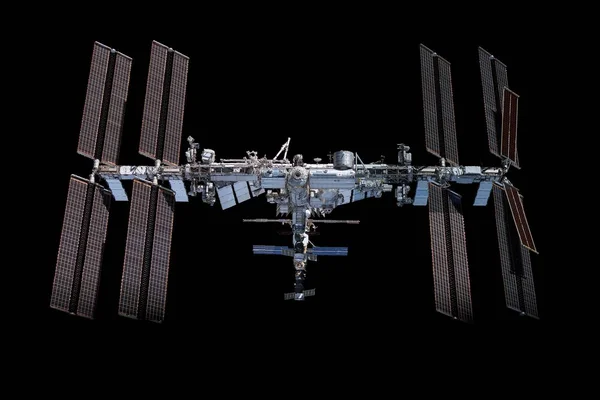
NASA and SpaceX Set October 7 Undocking for Crew 12 After Nearly Eight Months at ISS
Four astronauts will leave the International Space Station aboard a SpaceX Dragon on October 7, with a Pacific splashdown planned the following day off California.
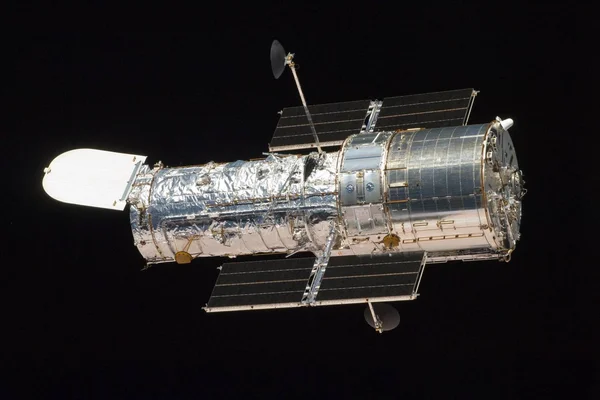
Hubble archival data points to first suspected second-generation planet around a white dwarf
The Nature Astronomy study links an unusually strong niobium signal in a quarter-century-old Hubble spectrum to a Jupiter-sized world that may have formed from a dying star's own ejected material.
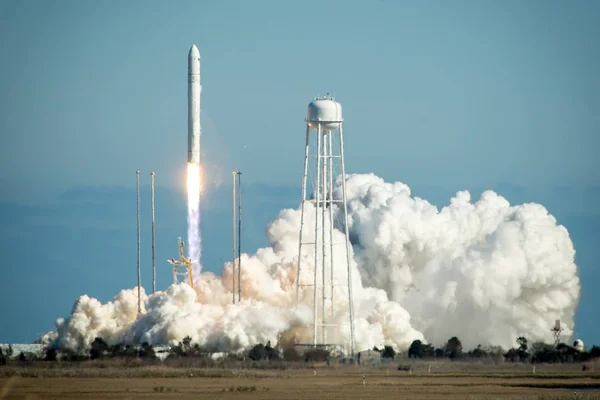
Pentagon picks Northrop Grumman and True Anomaly to build GEO reconnaissance satellites
The Defense Innovation Unit and Space Systems Command have selected Northrop Grumman and True Anomaly to prototype satellites that will photograph objects in geosynchronous orbit by 2028.
Comments (0)
Log in or sign up to leave a comment.
No comments yet. Be the first to share your thoughts.