Singapore has spent years trying to reconcile two priorities that pull in opposite directions: keeping its manufacturing and data centre sectors competitive while cutting the emissions those sectors produce. The country has limited land for renewable energy, no domestic fossil fuel reserves and a power system that depends heavily on imported natural gas. That combination makes every low-carbon policy choice a test of industrial strategy as much as climate policy.
The pressure is structural. Natural gas supplies around 95 per cent of Singapore's electricity, according to The Straits Times, and industry accounts for about 65 per cent of national emissions, CNA reported. Manufacturing contributes around 20 per cent of GDP and employs one in eight workers. Those figures explain why Singapore cannot treat decarbonisation as a narrow environmental exercise. It has to find fuels and technologies that fit existing plants, existing grids and existing customers.
On October 23, 2026, the government moved on two fronts at the inaugural Singapore Industry Decarbonisation Forum. Deputy Prime Minister and Minister for Trade and Industry Gan Kim Yong announced a S$143 million (US$112 million) initiative to develop technologies that help industries cut carbon emissions while staying competitive. Separately, the Economic Development Board appointed Keppel Energy, Sembcorp Utilities and Tuas Power Generation to import and supply biomethane under a 300 MW regulatory sandbox.
The two announcements are separate in design but connected in purpose. The fund is aimed at research, pilot projects and shared testing infrastructure. The sandbox is aimed at commercial supply chains and real demand from data centres and industrial manufacturers. Together they show a government trying to build both the technology pipeline and the fuel market that could serve it.
Key Facts
CNA reported on October 23, 2026, that the S$143 million initiative is meant to help industries cut emissions while remaining competitive, and that Gan announced it at the inaugural Singapore Industry Decarbonisation Forum. CNA also reported that industry accounts for about 65 per cent of Singapore's emissions, while manufacturing contributes around 20 per cent of GDP and employs one in eight workers.
The funding is split across several programmes. Up to S$100 million is set aside for the new Decarbonisation Research for Industry, Ventures and Enterprise programme, or DRIVE, which lets companies propose decarbonisation challenges for researchers to solve, such as capturing carbon more efficiently or converting captured carbon into useful products. Applications opened on the same day. Separately, five existing projects will share follow-on funding under a S$65 million grant call to test technologies in real industrial settings.
Those projects include a carbon capture technology co-developed by the National University of Singapore that will be piloted at PowerSeraya, and a carbon mineralisation technology from A*STAR and Cora Environment that will be tested at Cora's energy-from-waste plant. Singapore is also building a S$62 million shared Low-Carbon Technology Translational Testbed on Jurong Island so companies can trial low-carbon technologies without building their own pilot plants. Its first three industry users are IHI Corporation, Amogy and Metha8, working with A*STAR on sustainable aviation fuel, hydrogen production and methanol-based power generation.
The S$143 million initiative is part of Singapore's larger S$800 million Decarbonisation Grand Challenge. The Singapore Economic Development Board said in a media release on October 23, 2026, that the biomethane sandbox is the first of its kind in Southeast Asia and will run for 15 years, with first supplies expected by end-2028. The Straits Times reported on October 23, 2026, that the appointments follow a closed call for proposals launched in September 2025 and that the sandbox was first announced in October 2025 during Singapore International Energy Week.
The Business Times reported on October 23, 2026, that Keppel Energy and Sembcorp Utilities are each expected to handle up to 120 MW, while Tuas Power Generation supplies the remaining 60 MW. The companies will import biomethane from regional and international sources and supply it to data centres and industrial manufacturers, either as gas or as biomethane-derived electricity. EDB says the 300 MW capacity can meet the annual energy needs of around 600,000 HDB households.
Analysis
The most important technical fact is that biomethane is a drop-in replacement for fossil natural gas. It is made by upgrading biogas from food waste, agricultural residue, animal manure and sewage sludge, and it is chemically identical to fossil-derived methane. That means it can use existing gas infrastructure without modifications to equipment or industrial processes, a practical advantage that many emerging low-carbon fuels do not have.
What this really means is that Singapore is treating biomethane as a bridge fuel for the industrial and digital economy it already has, not as a bet on a completely rebuilt energy system. Data centres and manufacturers can keep their equipment and processes while changing the source of the gas they consume. Keppel said the fuel will be handled alongside natural gas as an aggregated portfolio for its combined cycle gas turbine plants on Jurong Island and supplied to customers, including its newly awarded 50 MW of data centre capacity.
The commercial design also reflects the need for scale. Janice Bong, managing director of Keppel's integrated power business, said consolidating demand brings economies of scale. Tuas Power's Ida Handojo noted that more than 90 per cent of Singapore's power comes from gas-fired combined cycle plants. That existing fleet gives the sandbox a ready set of customers and a ready set of technical standards, but it also means the project will be judged on whether imported biomethane can be delivered at a workable price and in credible volumes. The materials do not disclose the expected cost of biomethane or the emissions accounting rules that will apply.
The fund and the sandbox also serve different parts of the risk curve. DRIVE and the S$65 million grant call support early research and real-world pilots, including carbon capture and mineralisation. The S$62 million testbed lowers the cost of trying technologies on Jurong Island. The biomethane sandbox, by contrast, is about procurement, regulation and operations. That division of labour is sensible, but it leaves one question open: whether the industrial demand created by the sandbox will connect with the technologies funded by the S$143 million initiative.
Why It Matters
For Singapore, the stakes are highest in the sectors that are hardest to electrify. Industry accounts for about 65 per cent of emissions, and natural gas supplies around 95 per cent of electricity. If biomethane can replace even part of that gas without equipment changes, it offers a near-term route to lower emissions for factories and data centres that cannot simply switch to solar or wind.
The energy security dimension is just as important. EDB says the sandbox will strengthen energy security by diversifying gaseous fuel sources beyond conventional fossil natural gas. Importing biomethane from regional and international sources adds suppliers and routes, though it also creates dependence on external feedstock and shipping. The 600,000 HDB household equivalence gives the public a tangible sense of scale: 300 MW is not a laboratory experiment, but it is also not the whole power system.
The initiative also positions Singapore as a first mover in Southeast Asia. EDB calls it the first of its kind in the region. If the sandbox produces clear rules for imports, blending, supply and emissions accounting, Singapore could become a reference market for other Asian economies that rely on gas. If it does not, the project risks remaining a small, expensive pilot. The fund is not a substitute for a carbon price or a mandate, but it can lower the cost of finding out which technologies work.
Next Up
The first milestone is end-2028, when the appointed aggregators are expected to bring first biomethane supplies. Before that, the 15-year sandbox will test the commercial, regulatory and operational arrangements needed for imports. Keppel, Sembcorp and Tuas Power will have to line up feedstock, shipping, receiving and supply contracts, while EDB works out how the fuel will be treated in the gas and electricity systems.
In parallel, DRIVE applications are already open, five existing projects are due to share the S$65 million follow-on grant call, and the S$62 million Jurong Island testbed is preparing to work with IHI Corporation, Amogy and Metha8. The next test is whether these separate tracks produce bankable projects and measurable emissions cuts, not just announcements.
Related Articles
UK approves Jackdaw gas field and pairs consent with a £2bn Energy Wealth Fund
The North Sea Transition Authority has cleared production at Jackdaw after ministerial agreement, while ministers unveiled a £2 billion fund to reinvest oil and gas tax revenue in renewable and low carbon projects.
UNEP Emissions Gap Report 2026 says 1.5C overshoot is unavoidable and 18% cuts by 2030 are the only way back
UNEP's latest assessment finds that breaching the Paris temperature goal can no longer be avoided, and that steep near term cuts plus large scale carbon removal offer the only route back.
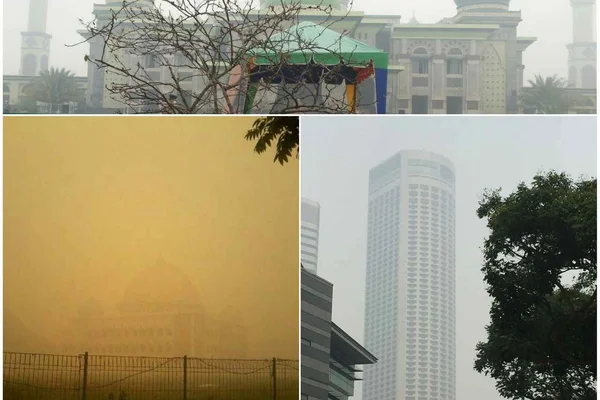
Indonesia haze crisis: 1.9 million hectares burned as Jakarta protests demand disaster status
Satellite data shows 1,916,588 hectares burned across Indonesia this year while the Health Ministry counts 283,270 respiratory infections and protesters in five cities demand national disaster status.
Comments (0)
Log in or sign up to leave a comment.
No comments yet. Be the first to share your thoughts.