For nearly a decade the annual Emissions Gap Report from the UN Environment Programme has served as the accounting ledger of the Paris Agreement, measuring the distance between what governments have promised and what the science says is required. On 21 October 2026 that ledger was redrawn. The 2026 edition, subtitled The Point of Return, states plainly that limiting global warming to 1.5C without any overshoot is no longer achievable, and it replaces the benchmark figures that have framed climate diplomacy since the IPCC Sixth Assessment Report with a new set of targets measured against 2025 rather than 2019.
The report's central proposal is a lowest possible overshoot pathway. Under that pathway, global average temperatures peak at 1.7C to 1.8C above pre-industrial levels around the middle of the century and then decline, returning to or below 1.5C by 2100 with roughly a 50 per cent chance of success. Reaching it would require global greenhouse gas emissions to fall 18 per cent by 2030, 45 per cent by 2035 and 69 per cent by 2040, all measured against 2025 levels, with net zero carbon dioxide reached around 2050.
The starting point is a world already at about 1.4C of warming. Global greenhouse gas emissions in 2025 totalled 58.4 billion tonnes of CO2 equivalent, around 0.16 GtCO2e below 2024 levels, a gap small enough that UNEP says the overall direction of emissions in 2025 cannot be established with confidence. Fossil fuel emissions rose 0.4 to 1.1 per cent year on year and methane was steady, while lower land-use change and wildfire emissions offset the increase.
The timing is pointed. The report was released ahead of COP31 in Antalya, Turkey, which runs from 9 to 20 November 2026, at a moment when national climate plans have stopped moving the needle. UNEP says climate plans submitted since last year have made virtually no difference to future warming projections.
Key Facts
UNEP said in its press release on 21 October 2026 that the distance between the pathway and current policy remains the defining number of the decade. Full implementation of Nationally Determined Contributions would reduce emissions by only 5 to 8 per cent by 2030 and 11 to 15 per cent by 2035 relative to 2025 levels, against the 18 per cent and 45 per cent the report says are needed. The implied average annual reduction rate for 2025 to 2035 is 5.7 per cent, steeper than the roughly 5 per cent a year required by the IPCC Sixth Assessment Report pathways.
Reuters reported on 21 October 2026 that even the most optimistic scenario now sees average temperatures rising to 1.7C to 1.8C above pre-industrial levels by mid-century, and that the UN projects warming of 2.8C by 2100 under current policies, or 2.6C if countries fully implement existing pledges. Both figures are higher than last year's projections, a shift the report attributes to the formal withdrawal of the United States from the Paris Agreement and to revised assessments of historical emissions.
Carbon Brief reported on 21 October 2026 that UNEP describes a temporary breach of the 1.5C limit as imminent and unavoidable, and that the opportunity to limit warming to 1.5C with limited or no overshoot has now been lost after decades of insufficient emission reductions. Among the six largest emitters, only the United States posted a notable increase in 2025, growing 133 million tonnes of CO2 equivalent, driven by higher electricity demand, a rebound in coal power generation, colder winter heating demand and higher gas prices, while emissions in China, the EU, India, Russia and Indonesia were relatively flat.
AP News reported on 21 October 2026 that the 124 countries which raised emissions in 2025 added 189 million tonnes of CO2, and that 70 per cent of that increase came from the United States. The report itself states that in terms of magnitude the increase in the United States far exceeded that of all other countries. AP also noted that if all countries deliver what they promise, Earth still warms another 1.2C above current temperatures, about 0.1C more than last year's UNEP projection.
The scale of the removal requirement is the report's most uncomfortable finding. Climate Home News reported on 21 October 2026 that the world must remove and permanently store about 320 billion tonnes of CO2 this century, equivalent to roughly eight years of global CO2 emissions at 2024 levels, on top of cutting emissions by nearly 6 per cent a year. UNEP cautions that carbon dioxide removal at that scale remains uncertain because of technological and socio-economic challenges, and insists it should never substitute for emissions cuts. The report also finds that every five years of delay in starting to cut emissions locks in about another 0.1C of warming.
Analysis
The bigger picture here is that the 1.5C target has changed from an achievement to be defended into a recovery operation. The report does not abandon the goal; it redefines what meeting it means, allowing temperatures to overshoot to 1.7C to 1.8C and then engineering a descent back below 1.5C by 2100. That is a materially different policy problem from the one the Paris Agreement was designed around, because it turns a mitigation challenge into a mitigation plus removal challenge, and the removal half depends on technologies deployed at 320 gigatonnes, for which there is no precedent.
The judgement embedded in the numbers is that national plans are no longer the binding constraint on ambition; implementation speed is. A 5.7 per cent annual reduction through 2035 is not an abstract target. It is steeper than the IPCC pathways that governments spent years describing as barely feasible, and it must be delivered while electricity demand from data centres is projected to double by 2030, even though those centres currently account for less than 1 per cent of total emissions.
The distributional politics are equally stark. Report lead author Anne Olhoff, director of the UNEP Copenhagen Climate Centre, said the US policy change will likely add one tenth of a degree Celsius by the end of the century. Bill Hare of Climate Analytics said that extra tenth pushes 140 million more people into dangerously hot conditions, and Michael Mann of the University of Pennsylvania estimated it would shave about 1.2 trillion dollars from the global economy. By 1 September 2026, 124 countries had submitted third NDCs covering 75 per cent of global emissions, yet projected 2035 emissions are about 3 GtCO2e higher than in last year's report.
Why It Matters
UN Secretary-General Antonio Guterres framed the choice in a video message accompanying the report, saying the world could no longer avoid overshooting 1.5C and that the consequences were already devastating, but that returning temperatures to 1.5C above pre-industrial times by the end of the century remained possible. 'Overshoot is not surrender. We can still keep it as small and as short as possible and bring temperatures back below 1.5 degrees by the end of the century,' he said. Inger Andersen, UNEP's executive director, described cutting emissions 18 per cent by 2030 and 69 per cent by 2040 as the only way to get back to a semblance of a reality that is still largely manageable.
The report also resets the reference points that governments, investors and courts will use. Moving the baseline from 2019 to 2025 makes the required near term cuts look smaller in percentage terms than the old IPCC benchmarks, but it does so only because the starting point is higher and the overshoot is now baked in. Every subsequent NDC revision, every national adaptation plan and every corporate transition target will be measured against the 18, 45 and 69 per cent sequence.
For the most exposed countries, the practical consequence is that adaptation spending and loss and damage financing are being planned against a hotter trajectory than last year's edition assumed. A world that peaks at 1.7C to 1.8C and then cools still passes through decades of intensified floods, fires and heat, and the report's arithmetic offers no mechanism that shortens that passage other than faster cuts now.
Next Up
COP31 in Antalya is the first test. Delegates arrive with 124 third NDCs covering 75 per cent of global emissions already on the table, and with a UN assessment that those plans deliver 5 to 8 per cent by 2030 rather than the 18 per cent required. Expect pressure to focus on the largest emitters, above all the United States, whose withdrawal is now quantified by UNEP in tenths of a degree, in millions of people exposed to dangerous heat and in trillions of dollars of economic output.
The next edition of the Emissions Gap Report will be judged on whether the 2035 targets in those plans begin to close the roughly 3 GtCO2e gap that opened this year, and on whether the promise of large scale carbon removal starts to look like a policy rather than an assumption. Until then, the report's title carries its own warning: the point of return is a destination that has to be reached, not a place where the world already stands.
Related Articles
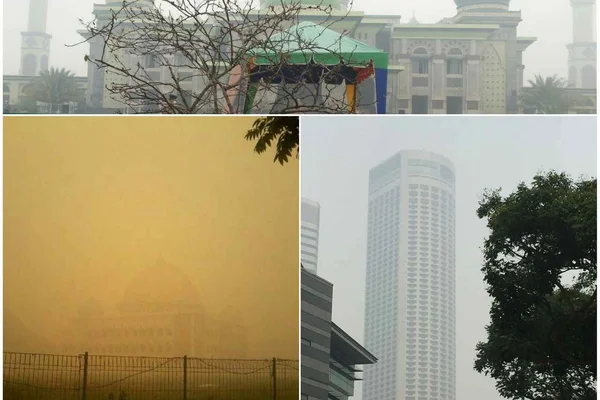
Indonesia haze crisis: 1.9 million hectares burned as Jakarta protests demand disaster status
Satellite data shows 1,916,588 hectares burned across Indonesia this year while the Health Ministry counts 283,270 respiratory infections and protesters in five cities demand national disaster status.
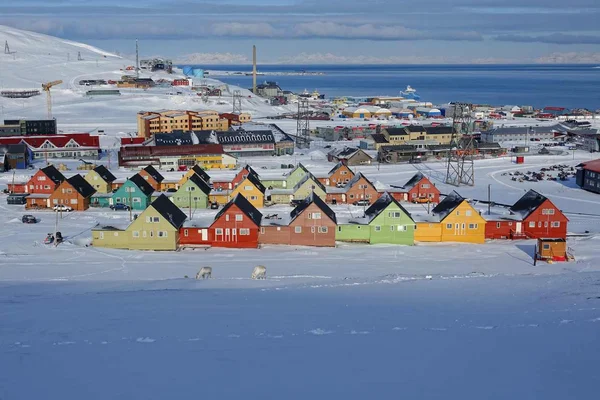
Longyearbyen tap water banned as thawing permafrost leaches heavy metals into reservoir
Norway's Arctic town of Longyearbyen has kept a full-population advisory against drinking tap water since September 2025, and a SINTEF study on permafrost thaw is not due until 2027.
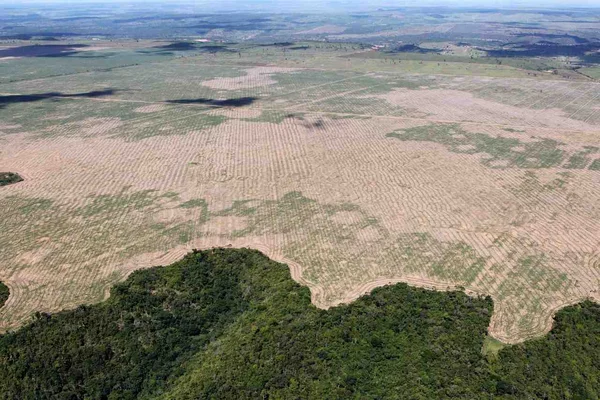
Brazil Amazon deforestation hits record low of 3,335 km2 days before pivotal runoff vote
Brazil's space agency INPE says Amazon clearance fell to 3,335 square kilometers in the year to July, the smallest tally since 1988, with a presidential runoff set to decide whether the policy survives.
Comments (0)
Log in or sign up to leave a comment.
No comments yet. Be the first to share your thoughts.