On October 21, 2026, the UK government approved production at the Jackdaw gas field in the North Sea. The North Sea Transition Authority granted development and production consent after Energy Secretary Miatta Fahnbulleh agreed that the regulator could grant approval. Ministers paired the decision with a new £2 billion Energy Wealth Fund, intended to use tax revenue from North Sea oil and gas to invest in renewable and low carbon projects. The government said first gas could be produced by the end of October.
Jackdaw lies 150 miles (241km) east of Aberdeen and is operated by Adura, a joint venture owned equally by Shell and Equinor. Gas will be pumped to the existing Shearwater platform for processing, a tie-back arrangement, before being piped to the St Fergus gas terminal in Aberdeenshire. Adura says Jackdaw will provide about 6% of UK gas production, enough to power 1.4 million homes, although once imports are included that is about 2% of total UK demand. The government says the project will add an estimated £2.9 billion to the UK economy over an expected 11-year lifespan.
The approval followed a difficult legal and political path. In January 2025 the Court of Session in Edinburgh ruled that consent for Jackdaw and Rosebank had been granted unlawfully because downstream emissions were not assessed, and Lord Ericht allowed preparatory work to continue. The renewed process included further environmental information and public consultation between July 8 and August 10, 2026. The Secretary of State agreed on October 14, 2026, under the offshore environmental assessment regime. The government says the decision is consistent with its manifesto commitment not to issue new licences to explore new fields while managing existing fields, because Jackdaw is already licensed. Labour's 2024 manifesto committed to a ban on new drilling licences, but the companies behind Jackdaw and Rosebank sought environmental approval for licences they already held. The Guardian reported on October 21 that the decision had been expected the previous month but was delayed, seemingly to take it beyond the Holborn and St Pancras byelection on October 8. BBC News reported on October 21 that Prime Minister Andy Burnham defended the decision as Badenoch urged the prime minister to overturn the ban on new oil and gas licences. Burnham said drilling would protect hundreds of jobs and help keep millions of homes warm this winter, adding that even on an ambitious climate path the UK would require oil and gas for decades.
Key Facts
BBC News reported on October 21 that ministers said first gas could be produced by the end of that month and that Jackdaw would help heat millions of homes. The government's estimates put the economic benefit at £2.9 billion over an expected 11-year lifespan, with 27 new direct jobs and 273 existing jobs safeguarded. Adura and the government also describe the field as supporting hundreds of jobs. BBC Verify reported on October 21 that the owner estimates around 500 jobs supported including nearby production hubs, but only 27 direct roles on the Jackdaw platform.
The gas arithmetic is contested. Adura says Jackdaw will provide about 6% of UK gas production, enough to power 1.4 million homes, but once imports are included that is about 2% of total UK demand. BBC Verify reported on October 21 that Jackdaw holds an estimated 10 million cubic metres of recoverable gas and could meet around 1.6% of total projected national gas demand between 2026 and 2036, based on official forecasts. The government says the field is expected to increase domestic gas production by around 6% at its peak. Uplift executive director Tessa Khan said Jackdaw would provide around just 2% of gas demand for roughly 10 years and had been oversold.
On climate, Garden Court Chambers' Climate Justice Blog reported on October 22 that the published reasons assess approximately 36.6 million tonnes of carbon dioxide equivalent in gross lifetime emissions, covering direct and downstream emissions in a high-production scenario. The blog said that lifetime total almost equals the 37.4 million tonnes emitted by the UK's entire electricity supply sector in 2025. It said climate effects received moderate adverse weight while security of supply received substantial weight, and that the reasons accept Jackdaw will not materially reduce consumer bills and record no project-specific mitigation of downstream emissions. The security case concerns resilience during peak demand if the largest item of gas infrastructure fails.
The Department for Energy Security and Net Zero reported on October 21 that the Energy Secretary assessed that Jackdaw will not prevent the UK from meeting its legally binding limits on carbon emissions and achieving net zero by 2050. The release cited the Supreme Court's 2024 Finch ruling, which requires operators to consider the impact of burning extracted oil and gas in environmental impact assessments. It also flagged Transitional Energy Certificates to allow some production near licensed fields via tieback. Chancellor John Healey announced the Energy Wealth Fund with an initial £2 billion injection, using tax revenues from North Sea oil and gas to invest in renewable and low carbon projects.
Analysis
The Jackdaw decision is best understood as a narrowly framed approval rather than a broad endorsement of new North Sea drilling. The government is not issuing a new exploration licence, because Jackdaw already holds one. It is allowing production from an existing licensed field after a renewed environmental process, and it is pairing that consent with a £2 billion fund and repeated assurances about legally binding climate limits. That framing gives ministers a defensible legal and political story. The bigger picture here is that the UK is trying to reconcile energy resilience, climate credibility and the political cost of appearing to shut down domestic gas.
The numbers make that balancing act look less comfortable. Jackdaw is expected to add about 6% to domestic gas production at peak, but only about 2% of total UK demand once imports are counted, or around 1.6% of projected national gas demand between 2026 and 2036 according to BBC Verify. It will create 27 new direct jobs and safeguard 273, while the owner estimates around 500 jobs supported including nearby hubs. Those are real but modest gains against a project assessed at 36.6 million tonnes of carbon dioxide equivalent in gross lifetime emissions. The government's claim that the field will not prevent net zero by 2050 is therefore a legal and accounting judgement as much as an energy policy one.
On bills, the evidence is unusually clear. BBC Verify reported on October 21 that most energy analysts do not expect a significant direct impact because Great Britain is integrated with wider European gas markets and prices are effectively set at a pan European level. Karl Matikonis, professor of taxation at University College Dublin, said producing more British energy does not necessarily mean cheaper British energy and that North Sea oil and gas are sold at market prices rather than reserved for British consumers at a discount. Energy Secretary Miatta Fahnbulleh has said the gas will not lower energy bills this winter. What this really means is that Jackdaw is not a cost of living intervention, even if it is presented alongside a fund meant to show long term benefits from oil and gas revenue.
The political judgement is equally narrow. The Guardian reported on October 21 that a Savanta poll for E3G showed nearly a third of voters would be less likely to vote Labour if it approved more North Sea drilling. Adura commissioned a report saying rejecting both Jackdaw and Rosebank would cost the UK economy nearly £10.8 billion over the next decade. Those two findings point in opposite directions, and they explain why the government delayed the announcement and wrapped the consent in a fund. The approval may satisfy industry and some local interests, but it does not resolve the underlying argument about new fossil fuel supply.
Why It Matters
Why it matters extends beyond one field. Jackdaw is a test case for how the UK handles existing licences after the 2025 Court of Session ruling and the Supreme Court's 2024 Finch ruling. The government says the renewed process assessed downstream emissions and still concluded that the project is compatible with legally binding carbon limits. Campaigners disagree. Greenpeace's Areeba Hamid called it the wrong decision on bills, energy security and climate. Greenpeace UK's Ami McCarthy said approving Jackdaw would generate record profits for Shell and Equinor while supercharging climate chaos, and warned that Rosebank would release as much carbon as 56 coal plants running for a year. Oxfam said the government had drilled straight through the UK's climate commitments. Scottish Greens co-leader Ross Greer called the approval climate vandalism.
The emissions comparison is the sharpest reason the decision matters. The assessed 36.6 million tonnes of carbon dioxide equivalent over Jackdaw's lifetime is almost the same as the 37.4 million tonnes emitted by the UK's entire electricity supply sector in 2025. That does not mean Jackdaw replaces electricity emissions, but it does show the scale of the climate accounting at stake. BBC Verify reported on October 21 that the NSTA estimates US LNG production, delivery and processing emissions are around three times higher than North Sea natural gas, but Norwegian North Sea gas has a considerably lower average emissions impact than existing UK North Sea production, which relies on smaller fields and older infrastructure. Jonathan Stern of the Oxford Institute for Energy Studies told BBC Verify that if global rather than UK related emissions matter, any new fossil fuel development will increase emissions because Norwegian and US gas would probably be developed anyway.
Next Up
The next immediate test is whether gas actually flows by the end of October, as ministers and Adura expect. BBC Verify reported on October 21 that operators say Jackdaw could be connected to the Great British gas network within weeks and produce for 11 years. The larger next step is Rosebank, which holds an estimated 300 million to 500 million barrels of oil and awaits a decision. Campaigners and some Labour MPs remain opposed. If legal challengers find an error of law, the Jackdaw approval could return to court even as gas begins to flow.
Related Articles
UNEP Emissions Gap Report 2026 says 1.5C overshoot is unavoidable and 18% cuts by 2030 are the only way back
UNEP's latest assessment finds that breaching the Paris temperature goal can no longer be avoided, and that steep near term cuts plus large scale carbon removal offer the only route back.

Indonesia haze crisis: 1.9 million hectares burned as Jakarta protests demand disaster status
Satellite data shows 1,916,588 hectares burned across Indonesia this year while the Health Ministry counts 283,270 respiratory infections and protesters in five cities demand national disaster status.
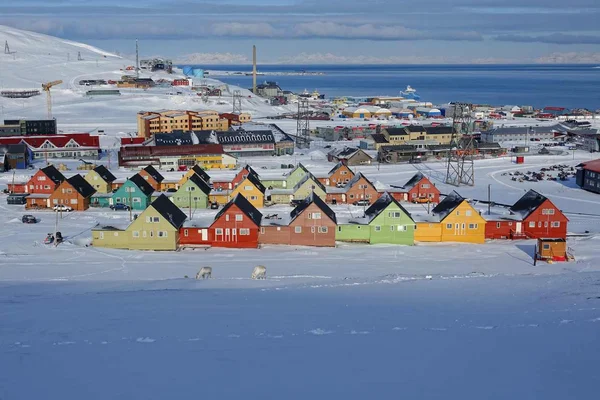
Longyearbyen tap water banned as thawing permafrost leaches heavy metals into reservoir
Norway's Arctic town of Longyearbyen has kept a full-population advisory against drinking tap water since September 2025, and a SINTEF study on permafrost thaw is not due until 2027.
Comments (0)
Log in or sign up to leave a comment.
No comments yet. Be the first to share your thoughts.