Schaeffler AG has reported that new orders in its humanoid robotics business rose to approximately 400 million euros in the third quarter of 2026, after the German motion technology supplier successfully acquired two new customers in the Greater China region. The figure was published on October 13, 2026 as part of preliminary revenue and earnings numbers for the first nine months and third quarter of 2026, and it extends a run of upgrades for a business that accounted for less than 1 percent of group sales in 2025.
Schaeffler, headquartered in Herzogenaurach, Germany, and listed under ISIN DE000SHA0100, sells motion technology to automotive and industrial customers, from bearings and chassis systems to electric mobility components and vehicle lifetime solutions. In humanoid robotics it supplies parts such as rotary actuators and strain wave gears, the joint level hardware that lets a bipedal machine move smoothly and repeatably. The company has also said it intends to deploy humanoids inside its own plants, with a plan to integrate a mid-four-digit number of them into its production network by 2035.
The robotics order book has become a rare growth story for a group whose core automotive markets remain under pressure. "Orders on hand in the humanoid robotics business have performed well and increased to 400 million euros," chief executive Klaus Rosenfeld said in the same October 13, 2026 statement, adding that Schaeffler was confirming its guidance for 2026 and its mid-term targets for 2028 on the basis of solid nine-month and third-quarter results.
At group level the picture is more mixed. Nine-month revenue came in at 17.5 billion euros, slightly below the 17.7 billion euros reported a year earlier, while the EBIT margin before special items improved to 4.5 percent from 4.2 percent. Schaeffler also booked one-off impairments and provisions of around 240 million euros, including roughly 220 million euros in the third quarter alone, in its E-Mobility division.
Key Facts
Schaeffler AG stated on October 13, 2026 that two new customers in the Greater China region were successfully acquired in the third quarter of 2026 and that this increased new orders in the humanoid robotics business to approximately 400 million euros. The company described the development as a further order book improvement in what it calls a fast-growing humanoid robotics business, and it released the preliminary statement at 09:17 CET/CEST from Herzogenaurach.
Reuters reported on May 5, 2026 that Rosenfeld expected the humanoid robotics order book to reach the hundreds of millions of euros by 2030, without giving a more specific estimate. At that time Schaeffler said it was collaborating with around 45 humanoid robotics players globally, held five customer contracts in the segment, and had secured its first meaningful contracts for actuators and strain wave gears. Rosenfeld declined to name customers but said the largest ones were with leading players in China and the United States.
Schaeffler reported on August 5, 2026 in its Q2 2026 earnings presentation that its humanoid order book had reached 350 million euros by the end of the first half of the year, built with three major global humanoid OEMs, and it noted that the figure did not reflect any launches with announced partnerships. The same deck said the company had received more than 50 new sample orders year to date in 2026, already significantly above full-year 2025 levels.
ad-hoc-news.de reported on October 13, 2026 that the second distribution of the Schaeffler statement confirmed the same robotics numbers and provided the divisional split for the first nine months. E-Mobility generated 3.9 billion euros of revenue with an EBIT margin before special items of minus 14.8 percent, Powertrain and Chassis produced 6.3 billion euros at 10.8 percent, Vehicle Lifetime Solutions 2.4 billion euros at 15.1 percent, and Bearings and Industrial Solutions 4.8 billion euros at 8.9 percent.
Cash and guidance fill out the picture. Nine-month free cash flow before cash in- and outflows for M&A was minus 40 million euros, against plus 47 million euros a year earlier, but the third quarter alone delivered plus 260 million euros compared with plus 175 million euros in the prior-year quarter. Schaeffler said final validated figures will be published on November 3, 2026.
Analysis
The move from 350 million euros at the end of June 2026 to about 400 million euros at the end of September is a gain of roughly 50 million euros in a single quarter, in a business that accounts for less than 1 percent of group sales. That is small against 17.5 billion euros of nine-month revenue, but the direction matters: the order book grew while group sales shrank slightly year on year and while the E-Mobility division absorbed about 240 million euros of impairments and provisions.
What this really means is that Schaeffler is converting a speculative robotics narrative into a contracted backlog, and doing it in the geography that matters most for volume. Two new Greater China customers matter because China is where humanoid production is scaling fastest and where cost pressure is steepest. Schaeffler's own ambition, laid out to Reuters on May 5, 2026, assumes humanoid demand of at least 1 million units a year by the end of the decade, a materials bill of which around 50 percent is addressable for the company, and a target of capturing roughly 10 percent of that opportunity by 2030.
The bigger picture here is that the robotics order book is now a hedge against the automotive cycle. Rosenfeld's 2030 ambition of a three-digit million euro order book has effectively been met four years early, at least at the 400 million euro level, although the company has not restated the target itself. The risk is composition. Order intake is not revenue, launch dates can slip, and Schaeffler cautioned in August 2026 that its 350 million euro figure reflected no launches with announced partnerships. The nomination as a component supplier to XPENG for the IRON humanoid, with start of production planned for the fourth quarter of 2026, is the first real test of whether those orders convert on schedule.
Scale economics also cut both ways. Schaeffler is increasing strategic investments across the humanoid ecosystem, including NEURA Robotics and Humanoid (UK), and it works with around 45 humanoid OEMs globally. That breadth raises the chance of winning sockets but spreads engineering resources across many small programs. A 400 million euro order book across a widening customer base is impressive for a components supplier three years into a new market, yet it remains far from the volumes that would move a 17.5 billion euro revenue base.
Why It Matters
For Schaeffler, the humanoid business is the clearest evidence that its diversification beyond classic automotive parts is producing commercial traction rather than press releases. The company confirmed its full-year 2026 guidance and its 2028 mid-term targets in the same statement, which suggests management treats the robotics order intake as additive to, not a substitute for, the industrial and aftermarket businesses that carried margins in the first nine months, namely Bearings and Industrial Solutions at 8.9 percent and Vehicle Lifetime Solutions at 15.1 percent.
For the wider robotics supply chain, a Tier 1 automotive supplier with global manufacturing reach entering actuators and strain wave gears at this scale changes the competitive landscape for smaller component makers. It also signals that Greater China humanoid programs are mature enough to place meaningful orders with a European supplier.
For investors, the read across is that the humanoid theme is beginning to appear in quarterly disclosure rather than in conference presentations alone. Free cash flow of plus 260 million euros in the third quarter gives Schaeffler room to keep funding the robotics build-out while absorbing the E-Mobility charges.
Next Up
Schaeffler will publish final validated figures for the first nine months of 2026 on November 3, 2026, when investors will look for confirmation of the 400 million euro humanoid order book and for any detail on the two new Greater China customers. Also on the near-term calendar is the planned start of production in the fourth quarter of 2026 for Schaeffler components on the XPENG IRON humanoid.
The broader question for 2027 and beyond is conversion. Schaeffler works with around 45 humanoid OEMs, has booked more than 50 new sample orders year to date in 2026, and aims to capture roughly 10 percent of the addressable share of the humanoid materials bill by 2030. Whether the 400 million euro order book becomes revenue, or stays an order book, is the number to watch.
Related Articles
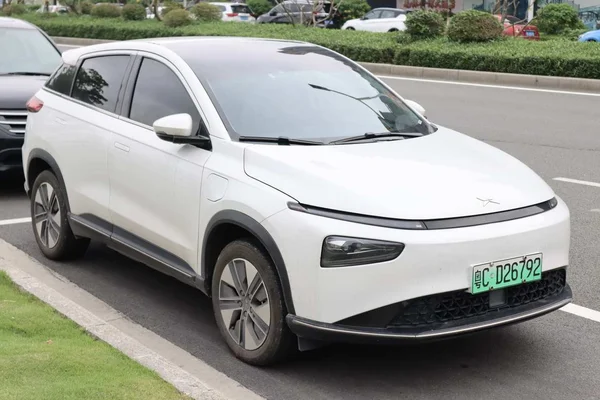
XPENG sets IRON humanoid timeline with Europe rollout planned for 2027
The Chinese automaker used its Paris Motor Show programme to outline a staged commercial path for IRON, with internal testing before external sales.
BYD Humanoid Robot Design Emerges in CNIPA Patent as Formal Debut Remains Pending
A design patent published by China's intellectual property office shows a bipedal BYD robot with articulated fingers, but the automaker has not confirmed production plans or a formal launch date.
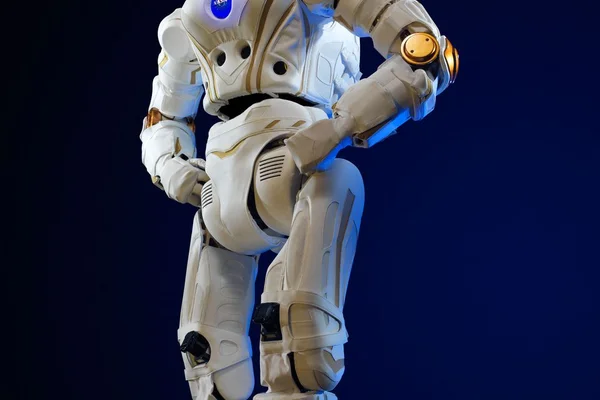
California Regulator Orders REK to Halt Unsanctioned Human Versus Humanoid Cage Fights
California's regulator says REK's September 18 human versus humanoid bout was unsanctioned, prompting a cease-and-desist and questions about old rules for new machines.
Comments (0)
Log in or sign up to leave a comment.
No comments yet. Be the first to share your thoughts.