XPENG has used its Paris Motor Show programme to place humanoid robotics at the centre of its public story, with founder and CEO He Xiaopeng setting out a three-stage commercial timeline for the company's IRON humanoid robot. Speaking at the company's XPENG Paris Night event on October 11, 2026, He said IRON will enter mass production in late 2026, begin deliveries in the first half of 2027, and roll out in Europe in the second half of 2027. The plan puts a Chinese electric vehicle maker's robotics unit on a schedule that reaches European customers roughly a year after the first commercial units are expected to leave the line.
The announcement was not a standalone robotics presentation. XPENG announced on October 1, 2026, that it would appear at the 2026 Paris Motor Show from October 12 to 18 and host XPENG Paris Night on Sunday, October 11, 2026, in downtown Paris. The company said its press conference is set for Monday, October 12, 11:10 to 11:25 a.m. in Hall 6, Booth A51, at Paris Expo Porte de Versailles. At a stand exceeding 1,000 square metres in Hall 6, XPENG plans a Physical AI Museum in four areas: brand technology stack, AI-defined vehicles, humanoid robots and flying cars. It will also globally launch its next-generation AI flagship SUV, the G9L.
That framing matters because XPENG now describes itself as a physical AI company spanning smart EVs, robotaxis and humanoid robots. The Paris programme showcases all three. In its October 1 release, XPENG said it is advancing the mass production of IRON, developing flying cars and Robotaxi, and pursuing a Car-as-a-Robot concept that brings vehicle and robotics technologies onto a common platform. The company is asking investors and customers to see its robotics work as an extension of its automotive engineering, not as a side project.
The commercial momentum around IRON has been building since the summer. XPENG Robotics raised over US$900 million in August 2026 at a post-money valuation above US$6.3 billion. In September, IRON rolled off a newly commissioned production line in Guangzhou, and the company said more than 80 per cent of the facility's core processes were automated. By early October, XPENG was ready to attach specific delivery windows to the robot, first in China and later in Europe.
Key Facts
Humanoids Daily reported on October 12, 2026, that XPENG is targeting the second half of 2027 for a European rollout of IRON. The report said He Xiaopeng used XPENG Paris Night on October 11, 2026, to set out three milestones: mass production in late 2026, deliveries beginning in the first half of 2027, and a European rollout in the second half of 2027. Initial commercial uses are planned for XPENG sales centres and company sites, including guided tours, shopping assistance and patrol support. The company gave no dates for industrial or household use, so the European target should not be read as a home-use commitment.
Forbes reported on October 12, 2026, that XPENG vice chairman and president Brian Gu, a listed 2026 Forbes Global CEO Conference speaker, said robots would begin assisting sales staff and greeting visitors at XPENG's Guangzhou headquarters by early 2027. The conference was held in Singapore on October 7 and 8. According to the Forbes report, relayed by Humanoids Daily, XPENG plans to begin selling IRON in the second half of 2027 after testing it in its own stores and offices. Gu pointed to shared manufacturing, supply chains and AI as advantages of developing humanoids alongside intelligent vehicles, and described XPENG's in-house chips as a way to control costs, software compatibility and supply-chain stability.
CNA reported on October 9, 2026, that Gu told interviewer Julie Yoo, on the sidelines of the Milken Institute Asia Summit in Singapore, that XPENG is preparing to produce Iron in larger quantities from early next year. Gu described the 1.73 metre tall robot as designed to resemble humans in size, posture and movement. XPENG plans to deploy the robots in its own stores and offices, where they would work as receptionists and sales assistants, welcoming customers, introducing products, answering questions and perhaps handing over bottled water. Gu added that XPENG intends to begin offering Iron to external customers in the second half of 2027.
Humanoids Daily reported on September 7, 2026, that XPENG had initiated mass production of its flagship bipedal IRON humanoid, which it calls the world's first high-level general-purpose humanoid robot to be manufactured on a commercial assembly line and to walk off under its own power without human assistance or teleoperation. The production line exceeds 80 per cent automation across key assembly stages, including dedicated automation equipment for dexterous-hand assembly. XPENG says more than 85 per cent of IRON's physical supply chain overlaps directly with its EV business, giving it economies of scale in motors, structural alloys, wiring harnesses and battery integration.
The same report described IRON as running on three in-house Turing AI chips delivering up to 2,250 TOPS, with support for multi-modal bilingual dialogue, dynamic obstacle avoidance and autonomous charging-dock navigation. Across its body, IRON has 76 degrees of freedom and 21 degrees of freedom in each hand. Initial units are being deployed across XPENG showrooms and campuses for customer interaction and facility patrols, ahead of broader enterprise customer deliveries slated for 2027. The milestone followed XPENG Robotics' US$900 million private funding round at a US$6.3 billion valuation and the commissioning of a 110,000 square metre full-chain humanoid manufacturing hub in Guangzhou.
Analysis
What this really means is that XPENG is trying to turn humanoid robotics from a research spectacle into a staged commercial product with a visible path to revenue. The three-step sequence is deliberately conservative in one sense: the robot goes to work inside XPENG's own sales centres, offices and headquarters before outside customers are asked to buy it. That gives the company controlled environments for testing, data collection and service design. It also lets XPENG show European regulators, partners and consumers that IRON is not only a trade-show exhibit.
At the same time, the European rollout in the second half of 2027 is a target, not a detailed market-entry plan. Humanoids Daily reported on October 12, 2026, that XPENG did not specify which European countries would receive IRON first, its price, or how it would be sold. The absence of those details matters because Europe is not a single market for robotics. Safety rules, data protection expectations, labour practices and customer acceptance vary widely. A rollout could mean a small pilot in a handful of XPENG locations, a partnership with a distributor, or a broader commercial launch. The public timetable does not yet distinguish among those possibilities.
The bigger picture here is convergence between electric vehicles, autonomous driving and humanoid robots. Gu's remarks to CNA connect the robot strategy to XPENG's broader AI ambitions. CNA reported on October 9, 2026, that XPENG is testing its Yoyo robotaxi in Guangzhou with close to 100 vehicles, plans overseas robotaxi trials next year, and sees larger-scale commercial deployment possible in two to three years. Gu also said XPENG's driver-assistance systems were used for nearly 60 per cent of the distance travelled by its vehicles. The same AI stack, manufacturing base and supply chain are meant to support cars, robotaxis and humanoids, which is why XPENG argues that you cannot just be an automotive company.
That argument has financial logic. XPENG says more than 85 per cent of IRON's physical supply chain overlaps with its EV business, and its Guangzhou line already exceeds 80 per cent automation. Reusing motors, structural alloys, wiring harnesses and battery integration could lower unit costs if volumes rise. The US$900 million raised by XPENG Robotics in August 2026 at a valuation above US$6.3 billion gives the unit capital to scale, but it also raises expectations. A slip in the 2027 delivery schedule would be more than a technical delay; it would test the claim that XPENG can convert automotive scale into robotics scale.
Why It Matters
Europe is becoming a key proving ground for Chinese humanoid robotics. If XPENG reaches the second half of 2027 with a commercially offered IRON, it would arrive in the region before many Western humanoid programmes have moved beyond pilots. The company's decision to start with sales centres, guided tours, shopping assistance and patrol support is less glamorous than household robotics, but it is a practical way to put units into daily contact with customers while limiting risk. For European retailers, museums, airports and corporate campuses, IRON could become an early test of whether humanoid labour is useful, affordable and socially acceptable.
The plan also matters for XPENG's identity. The company is asking the market to value it not only as an EV maker but as a physical AI company. Its Paris Motor Show stand, exceeding 1,000 square metres, mixes AI-defined vehicles, humanoid robots and flying cars under one roof, while the G9L SUV gets a global launch. In Q2 2026, XPENG's overseas deliveries surpassed 20,000 units for the first time, up 81 per cent year on year. A European humanoid rollout would extend that international push from vehicles into robotics, even if the first deployments are limited.
For the wider industry, the timeline sets a benchmark. XPENG has tied mass production, deliveries and European expansion to specific half-year windows. Competitors now face a public schedule against which progress can be measured. The company has not promised home use by 2027, and it has not given industrial deployment dates, so the immediate contest is about enterprise and retail settings. That narrower focus may be exactly what makes the plan credible.
Next Up
The immediate next step is the 2026 Paris Motor Show itself, running from October 12 to 18. XPENG's press conference is scheduled for Monday, October 12, 11:10 to 11:25 a.m. in Hall 6, Booth A51, at Paris Expo Porte de Versailles. The company will use the stand to present its Physical AI Museum, the G9L SUV, IRON and its flying car and Robotaxi work. After Paris, attention shifts to the promised late 2026 mass production milestone and the first half of 2027 delivery window.
Several questions remain open. XPENG has not named the first European countries, the price of IRON, or the sales model. It has also not set dates for industrial or household use. The next meaningful signals will be whether IRON units appear in XPENG's Guangzhou headquarters and stores by early 2027, as Gu has said, and whether the company begins external sales in the second half of 2027 as planned. Until then, the European rollout is a committed target on a public timeline, not a finished commercial reality.
Related Articles
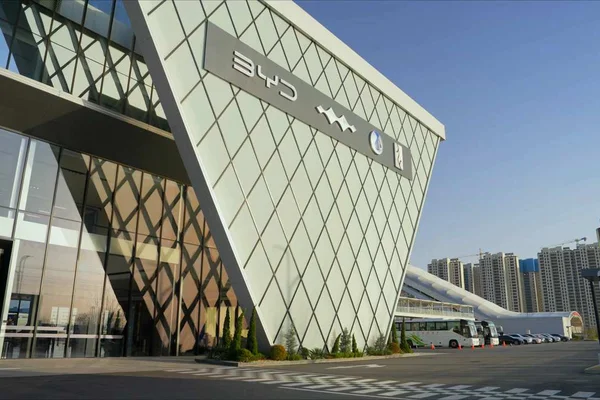
BYD Humanoid Robot Design Emerges in CNIPA Patent as Formal Debut Remains Pending
A design patent published by China's intellectual property office shows a bipedal BYD robot with articulated fingers, but the automaker has not confirmed production plans or a formal launch date.
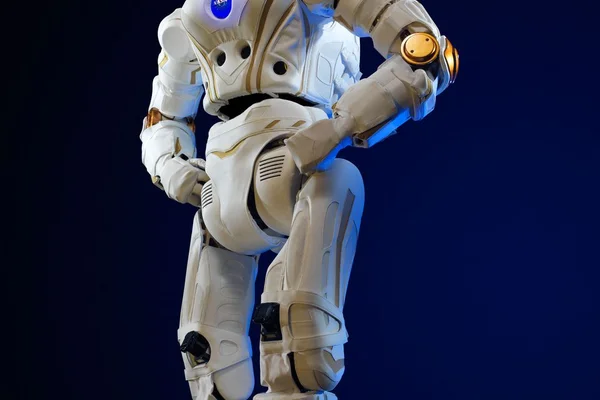
California Regulator Orders REK to Halt Unsanctioned Human Versus Humanoid Cage Fights
California's regulator says REK's September 18 human versus humanoid bout was unsanctioned, prompting a cease-and-desist and questions about old rules for new machines.
Ultra raises $62M to scale warehouse robots and deepen Physical Intelligence partnership
Brooklyn robotics startup Ultra closed a $50 million Series A led by Framework Ventures plus a $12 million seed round, and will run Pi's robot-brain model on its warehouse machines.
Comments (0)
Log in or sign up to leave a comment.
No comments yet. Be the first to share your thoughts.