Demand for artificial intelligence computing has turned cooling into one of the most contested corners of the data center supply chain. The hardware inside AI facilities now produces far more heat than the air cooling designs of the previous decade were built to handle, and operators are being forced to redesign power and thermal systems around it.
Samsung Electronics has been building toward that market for more than a year. It completed the purchase of Germany's FlaktGroup, an air handling and HVAC specialist, in November 2025 for about 1.5 billion euros, gaining coolant distribution units, computer room air handlers and fan wall units for data centers. A production line at its Gwangju plant, begun this year at a cost of 240 billion won, is targeted to start operating in early 2028. Buying established Western cooling assets is faster than building the business from scratch, and it comes with customer relationships that take years to develop.
Modine Manufacturing, based in Racine, Wisconsin, is one such asset. The thermal management company has moved aggressively into data center cooling through its Airedale brand, which it acquired in 2005 and which now ranks among the larger end to end cooling suppliers in the industry, including liquid cooling products. Modine also makes large chillers, precision air conditioning units and coolant distribution units, plus free cooling technology that relies on cold outside air.
The result is a company whose data center segment is growing far faster than the rest of its portfolio, at exactly the moment Samsung is looking for a second engine beyond memory chips. That collision of interests is what turned a routine acquisition rumor into one of the largest hardware stories of the year.
Key Facts
Bloomberg reported on November 12 that Samsung Electronics is in talks to acquire Modine Manufacturing, citing people familiar with the matter. The companies are discussing a transaction that could come together as soon as the coming weeks, the people said. No final decision has been made, the talks could still fall apart, and another suitor could emerge. Representatives for both Samsung and Modine declined to comment. No merger agreement had been filed with the U.S. Securities and Exchange Commission as of November 14.
Investors repriced the target. Wall Street Observer reported on November 13 that Modine shares closed at $135.66, up 27.9% from $106.10 the previous session, on volume of about 8.43 million shares, roughly 3.4 times the stock's 30 day average of 2.50 million. The close valued the company at about $7.2 billion. Bloomberg described the session as Modine's biggest single day gain since 2020. The stock had fallen 21.4% to $98.56 on November 4, the day after quarterly results, so the rally left it 8.1% above its November 3 close.
Korean coverage put a price on the speculation. Seoul Economic Daily reported on November 13 that a full takeover would cost an estimated $7.5 billion to $8 billion, a control premium of roughly 33% to 42% over the $5.64 billion market capitalization Modine carried before the Bloomberg story. That range would exceed the roughly $8 billion Samsung paid for Harman in 2017 and would make Modine its largest acquisition ever. The paper framed the logic as pairing European air conditioning technology with North American production facilities and customer networks.
Modine's own numbers explain the interest. The company reported net sales of $994.4 million for its fiscal second quarter, up 35% year over year, according to Wall Street Observer. Data center segment sales rose 95% to $439.7 million from $225.0 million and accounted for about 44% of total sales, while commercial HVAC sales rose 23% to $285.5 million. GAAP earnings fell to $0.56 per share from $0.83, though adjusted earnings rose to $1.35 from $1.06. Management guided fiscal 2027 sales of $3.1 billion to $3.2 billion and adjusted EBITDA of $470 million to $500 million.
Order momentum is the strongest argument for a deal. Seoul Economic Daily reported on November 13 that new data center orders in the quarter topped $1 billion and that Modine signed a long term contract in May to supply more than $4 billion of cooling equipment from 2027 to 2029, with a $165 million advance payment. DataCenterDynamics reported on November 13 that chief executive Neil Brinker announced a program award with a strategic hyperscaler covering more than $400 million of custom air handling units through calendar year 2027.
Analysis
The strategic logic is straightforward. Samsung sells memory, foundry capacity and packaging into AI servers, but those markets are cyclical and increasingly price driven. Cooling is recurring content that scales with every megawatt of new capacity, and Modine brings factories, engineering staff and hyperscale qualifications that Samsung cannot replicate quickly in Korea. What this really means is that Samsung is trying to convert a parts business into a systems business, selling the thermal layer of the data center alongside the silicon inside it.
The price is where the argument gets harder. Seoul Economic Daily reported on November 13 that a full takeover at $7.5 billion to $8 billion implies a 33% to 42% premium to the $5.64 billion valuation before the report. DataCenterDynamics reported on November 13 that Modine was valued at $7.28 billion after the news, which already removes part of the discount a buyer would normally expect. Samsung would not be paying for current earnings so much as for growth: data center sales nearly doubled, but Brinker has warned that higher material costs, inflation, tariffs and supply chain challenges are pressuring margins.
Integration is the second test. Modine's cooling business spans Airedale's British engineering base, plants in Wisconsin and Texas, and the new facility in Calgary. Modine began mass production of 2 to 3 megawatt data center chillers on November 11 at a new plant of about 63,400 square meters in Grand Prairie, Texas, and plans to raise chiller production lines from 13 to 20 by March 2027, according to Seoul Economic Daily. Samsung is simultaneously standing up a Korean line for coolant distribution units, fan wall units, computer room air handlers and air handling units at Gwangju, with operations targeted for early 2028. Overlapping product lines and two engineering cultures will need a clear owner, and hyperscalers qualify suppliers over years, not quarters.
There is also the possibility that Samsung is not alone. Bloomberg reported that another suitor could emerge, and the 27.9% jump in the share price makes a rival bid more expensive for everyone. Modine has not filed any document about the talks with the SEC, and both companies have declined to comment, so the reported range remains an estimate from Korean press rather than a negotiated figure. The bigger picture here is that the scarcity value of data center thermal capacity has risen faster than almost anyone modeled two years ago, and that scarcity is now being priced into industrial assets long treated as mature, low growth businesses.
Why It Matters
Cooling has become a gating factor for AI buildouts. JLL data cited by Seoul Economic Daily puts the Americas at about 50% of global data center capacity, with roughly 90% of that in the United States, which explains why a Wisconsin manufacturer matters to a Korean conglomerate. Every new accelerator cluster needs chillers, coolant distribution and air handling before it can run, and lead times for that equipment can delay projects that have already been financed.
For Samsung, the deal would be a test of whether it can diversify beyond memory, where revenue swings with the commodity cycle. For Modine, it would mark the final step in a portfolio reshaping that already included the October 1 spin-off of its Performance Technologies segment through a Reverse Morris Trust transaction with Gentherm. A takeover at the top of the range would also be Samsung's largest ever, larger than the roughly $8 billion Harman deal in 2017.
For customers, consolidation cuts both ways. Fewer independent cooling vendors can simplify procurement for hyperscalers that want global service coverage, but it also concentrates engineering capacity in the hands of companies with their own silicon and systems ambitions. Designers of AI facilities will be watching whether Samsung keeps Modine's brands and sales channels independent or folds them into its own data center organization.
Next Up
The next checkpoint is Modine's Analyst and Investor Day on November 18, where management may be asked about the report, followed by any filing with the SEC that would confirm a definitive agreement. Watch also for a rival bid, given Bloomberg's report that another suitor could still appear, and for Samsung's own commentary on how FlaktGroup, Gwangju and a possible Modine business would fit together.
On the industrial side, Modine plans to raise chiller production lines at Grand Prairie from 13 to 20 by March 2027 and is launching production at its third dedicated data center facility in Calgary while increasing throughput in Franklin, Wisconsin. Samsung's Gwangju line is targeted for early 2028. Those timelines, more than the headline price, will determine whether the combined business can actually deliver equipment when AI demand peaks.
Related Articles
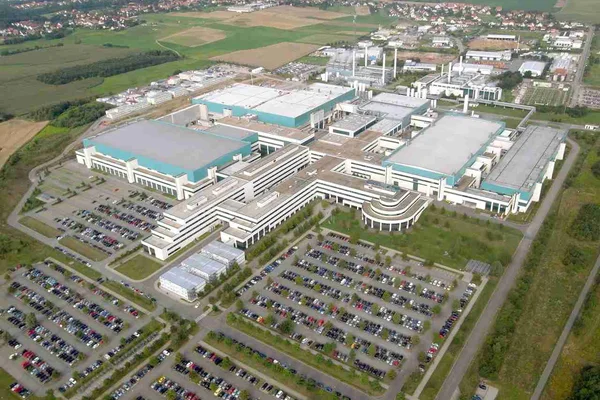
GlobalFoundries Breaks Ground on $10 Billion New York Fab Backed by Japan
Japan is financing up to $21 billion of new 300mm capacity at GlobalFoundries' Malta site, where the first of two fabs is now under construction and due online in 2029.
Nvidia board accepts Jensen Huang resignation, names Colette Kress interim CEO
The chipmaker's board moved within hours of new disclosures, installing its finance chief and a first-ever independent chair while a sixth week of losses erased about $1.6 trillion in value.
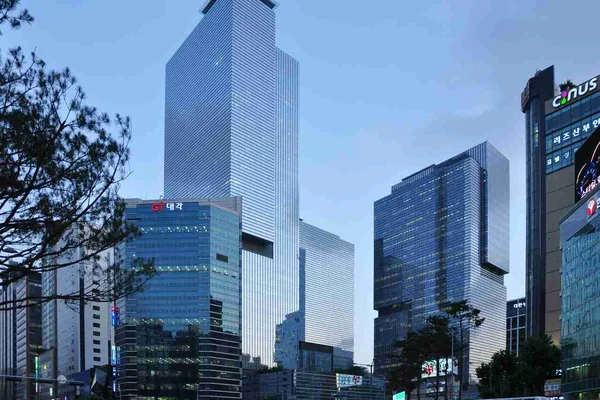
Samsung breaks ground on 46 trillion won Onyang HBM hub, pulls June 2028 start forward
Samsung Electronics has started building the first of five HBM packaging lines at its Asan campus, a 46 trillion won bet that moves the plant's opening to June 2028, a year early.
Comments (0)
Log in or sign up to leave a comment.
No comments yet. Be the first to share your thoughts.