Rocket Lab launched a Japanese radar-imaging satellite on August 6, more than a month after the previous launch attempt was aborted, SpaceNews reported. The Electron rocket lifted off from Launch Complex 1 in New Zealand at 5:18 a.m. Eastern, and its payload — the QPS-SAR-13 satellite, built by the Institute for Q-shu Pioneers of Space (iQPS) — separated from the upper stage nearly 50 minutes later into a planned circular orbit at an altitude of 575 kilometers and an inclination of 42 degrees.
Mission 'The Grain Goddess Provides'
The mission, nicknamed 'The Grain Goddess Provides' by Rocket Lab, was originally scheduled for June 30 but was aborted just as Electron's first-stage engines ignited. iQPS confirmed August 7 that QPS-SAR-13, nicknamed MIKURA-I, established communication about 30 minutes after separation and successfully deployed its parabolic antenna, preparing for first Earth observation data after calibration.
A Growing SAR Constellation
iQPS is developing a constellation of synthetic aperture radar imaging satellites that can image the Earth's surface day and night, through clouds. This was the eighth Electron launch of an iQPS satellite, with 10 more launches under contract — three of which were added in a contract announced July 30.
Rocket Lab's 2026 Cadence
This was the 13th Electron launch so far this year, including three launches of HASTE, the suborbital version of the vehicle. Rocket Lab's last mission before this one flew June 26, carrying a radar-imaging satellite for Synspective. The company says its next Electron launch, again for iQPS, is planned for no earlier than late August from Launch Complex 1.
Related Articles
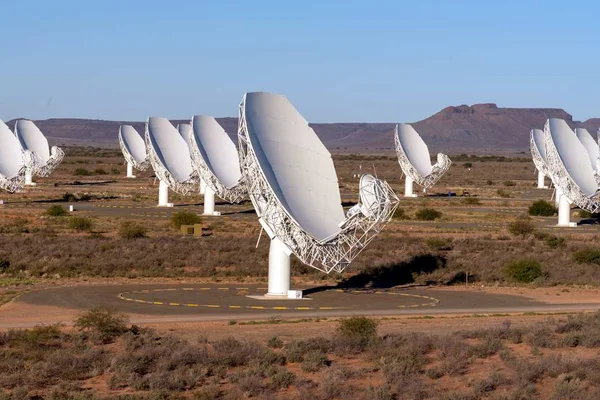
Astronomers trace first exoplanet radio emission to Beta Pictoris b with MeerKAT
MeerKAT's 64 dishes in South Africa recorded circularly polarized bursts from Beta Pictoris b, implying a magnetic field at least 200 times stronger than Jupiter's.

Google Puts Four TPUs in Orbit on SpaceX Mission to Test Project Suncatcher
Google confirmed its first Project Suncatcher prototype satellite, built with Planet and carrying four TPUs, reached orbit on SpaceX's Transporter-18 and is operating as expected.
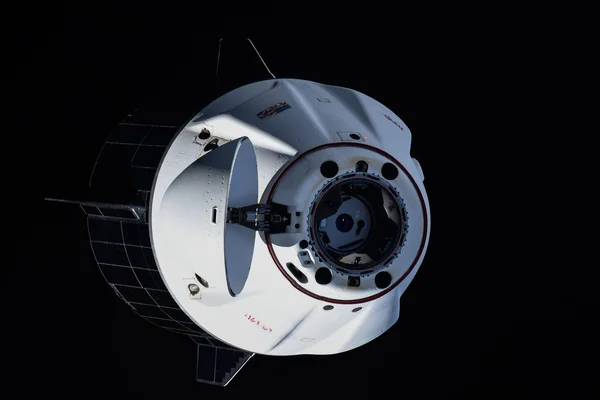
NASA and SpaceX Send Four Astronauts to Space Station in Record 7 Hour 50 Minute Trip
The Crew 13 mission lifted off from Cape Canaveral on October 1, 2026, carrying four astronauts to the International Space Station on a planned 7 hour 50 minute transit that NASA says is the fastest by a U.S. spacecraft.
Comments (0)
Log in or sign up to leave a comment.
No comments yet. Be the first to share your thoughts.