The Pentagon has chosen two companies to build a new kind of reconnaissance satellite, one designed not to look down at Earth but sideways at other spacecraft. The Defense Innovation Unit and the US Space Force's Space Systems Command awarded prototype contracts under the Geosynchronous High-Resolution Optical Space-Based Tactical Reconnaissance program, known as GHOST-R, to Northrop Grumman and True Anomaly on September 18, 2026. The satellites are intended to capture high-resolution space-to-space imagery of objects more than 22,000 miles above Earth.
That altitude is geosynchronous orbit, or GEO, a narrow ring where spacecraft take exactly one day to circle the planet and therefore appear to hang motionless over a fixed point on the ground. GEO hosts some of the most valuable hardware that any government operates: missile warning sensors, nuclear command and control relays, secure communications constellations and weather satellites. Because the ring is finite and the objects in it move slowly, GEO is also a place where satellites can quietly park near one another for long periods.
For years the United States relied on the Geosynchronous Space Situational Awareness Program, or GSSAP, a set of satellites often described as a neighborhood watch for the GEO belt. Those spacecraft are now aging, and the Space Force has been assembling a replacement architecture. In April 2026 the service stood up RG-XX, its next-generation orbital tracking initiative, and in February 2026 the Defense Innovation Unit announced GHOST-R as a faster, commercial-flavored path toward the same goal.
The award pairs a veteran American defense prime with a four-year-old space technology company. Both Northrop Grumman and True Anomaly are already under contract with the Space Force to develop space-based interceptors for the Pentagon's Golden Dome missile defense initiative, so the GHOST-R work adds a second, more observational mission to an existing relationship.
Key Facts
Under the awards announced on September 18, 2026, Northrop Grumman will deliver a prototype the size of a small suitcase, built on its ESPASat-L spacecraft and using a commercial optical sensor. The company says it is producing the satellite on an accelerated 24-month timeline. The spacecraft integrates with the ESPAStar payload rideshare platform, and DefenseScoop reported on September 21 that Northrop intends to incorporate optical payloads from TRL11, a maker of video solutions for space. Northrop's agreement falls under DIU's kill web portfolio.
True Anomaly will supply its Jackal autonomous orbital vehicle together with its Mosaic command and control system and a rendezvous and proximity operations sensor suite. According to the company, a single Jackal vehicle is designed to surveil dozens of satellites, investigate anomalies on friendly assets and maintain custody of high-value targets across multi-year missions. Jackal is already being tested in the ongoing Victus Haze demonstration, where it plays hide and seek with Rocket Lab's Puma spacecraft.
The contracts came from Space Systems Command and DIU jointly. Defense News reported on October 1 that Space Systems Command awarded the GHOST-R prototype contracts to Northrop Grumman and True Anomaly on September 18 to build satellites that image objects more than 22,000 miles above Earth. The same outlet reported that neither the Pentagon nor the companies disclosed the contract value or its funding source, and that the money did not come from Andromeda, the Space Force's contract pool for RG-XX.
The financial scale of the surrounding program is large. Breaking Defense reported on September 29 that SSC set up a pool of 14 vendors to compete for $1.84 billion over the next decade under Andromeda, and that the service added $4.4 billion to the indefinite delivery, indefinite quantity vehicle in May, raising its ceiling to $6.2 billion from $1.8 billion. A Space Systems Command spokesperson told Breaking Defense that the GHOST-R funds did not come through that Andromeda vehicle.
Gen. Stephen Whiting, head of US Space Command, described the requirement at the AMOS Conference in Maui, Hawaii, on September 16, saying: "To be able to negate threats in space, we must be able to find, fix, track, and target those threats. Targeting in the space domain is maturing, but it still has a long way to go." DefenseScoop reported on September 21 that Northrop Grumman declined to disclose the value of its award, deferring to DIU, and that the Pentagon, SSC and True Anomaly did not immediately respond to queries.
Analysis
The bigger picture here is that the United States is no longer buying a small number of extremely expensive satellites to watch GEO and is instead trying to buy many cheaper ones. True Anomaly chief executive and co-founder Even Rogers made the case directly: "As agile, maneuverable adversary platforms become more capable, the reconnaissance architecture can no longer rely on a handful of exquisite assets. The advantage will go to the platforms with the endurance, flexibility, and agility to respond to the modern operational environment at a price that allows them to be fielded in numbers."
Col. Bryon McClain, acting portfolio acquisition executive for Space Combat Power at SSC, described the model as a way to reduce risk rather than a one-off purchase. "Collaborating with DIU on GHOST-R is a true force multiplier," he said. "We are leveraging rapid prototyping to push the envelope of what commercial tech can deliver to the RG-XX program." He added that the approach burns down technical risk, drives down lifecycle costs and gets vital capability to the warfighter faster, and that successful prototypes will have a direct path into the program of record.
Ryan Tintner, Northrop's vice president and general manager for space superiority, tied the work to the operational environment: "Space is becoming more congested and contested every day, and our joint forces depend on clear, timely insight into what's happening on orbit." He also said the prototype push strengthens the nation's ability to detect, understand and anticipate activity in geosynchronous orbit.
What this really means is that GHOST-R is a test of whether the Pentagon can move at commercial speed on a mission that has traditionally been handled by bespoke, classified hardware. The government's own program language is telling: GHOST-R is built on commercially developed space vehicles, buses and electro-optical payloads to deliver high-resolution space-to-space imagery for characterizing resident space objects in geosynchronous orbit. If that formula works, the Space Force gains a path to field reconnaissance satellites with better resolution, greater mobility and longer on-orbit staying power than the aging GSSAPs, at a lower price point than RG-XX. If it does not, the service still learns quickly, because the prototypes are scheduled to fly rather than sit on a drawing board.
Why It Matters
The most immediate consequence is architectural. GEO is where the United States keeps missile warning and strategic communications satellites, and knowing what else is in the ring, and what it is doing, is a precondition for defending them. Whiting's formulation is blunt: finding, fixing, tracking and targeting threats in space begins with seeing them clearly.
There is also an industrial dimension. Northrop Grumman represents the traditional defense base and has parallel experience in servicing and proximity operations through DARPA's Robotic Servicing of Geosynchronous Satellites project, whose Mission Robotic Vehicle launched on July 21 aboard a Falcon 9 carrying the vehicle and three Mission Extension Pods. True Anomaly represents a newer, smaller entrant. Pairing them under one program gives the Space Force a comparison between two very different ways of building a satellite.
Cost discipline runs through all of it. DIU's stated goal for GHOST-R's price point was to be even lower than RG-XX's, and the fact that the prototype money was kept outside the Andromeda contract vehicle suggests the Pentagon wants a separate, faster lane for experimentation. The absence of a published contract value also means the public yardstick will be performance in orbit rather than dollars on a press release.
Next Up
Both prototypes are set to launch directly to geosynchronous orbit by 2028, and to fly government-owned and government-operated missions by 2029. DefenseScoop reported on September 21 that the vendors' platforms are expected to be launched in 2028 and transition to the Space Force for government-led operations by 2029. Between now and then the milestones to watch are the integration of TRL11's optical payloads onto Northrop's ESPASat-L, the maturation of True Anomaly's Jackal and Mosaic combination beyond the Victus Haze demonstration, and any decision by SSC on whether the prototypes transition into the RG-XX program of record.
The larger question is how GHOST-R, RG-XX and the Andromeda vendor pool ultimately fit together as the replacement for GSSAP. With 14 vendors already competing under Andromeda and a ceiling now at $6.2 billion, the Space Force has built more than one route to the same destination. The GHOST-R flights in 2028 will show which route it actually intends to take.
Related Articles
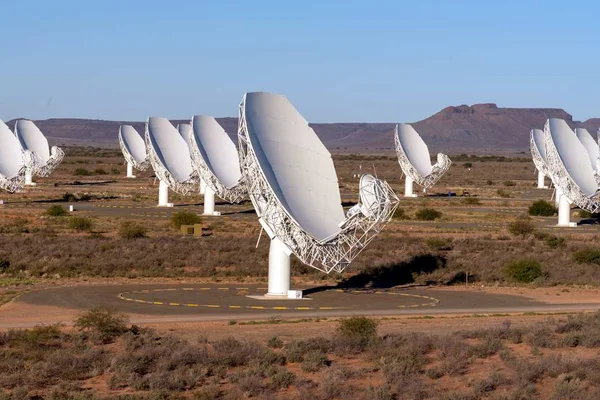
Astronomers trace first exoplanet radio emission to Beta Pictoris b with MeerKAT
MeerKAT's 64 dishes in South Africa recorded circularly polarized bursts from Beta Pictoris b, implying a magnetic field at least 200 times stronger than Jupiter's.

Google Puts Four TPUs in Orbit on SpaceX Mission to Test Project Suncatcher
Google confirmed its first Project Suncatcher prototype satellite, built with Planet and carrying four TPUs, reached orbit on SpaceX's Transporter-18 and is operating as expected.
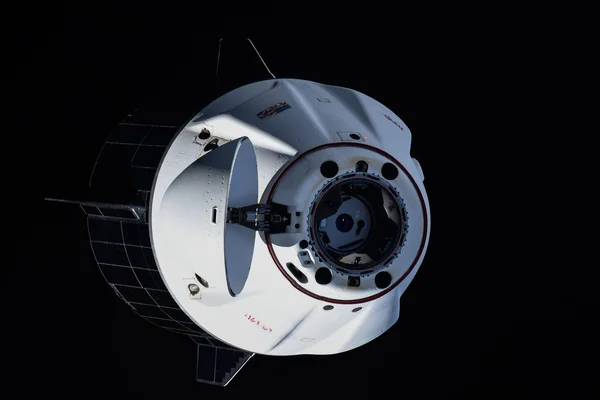
NASA and SpaceX Send Four Astronauts to Space Station in Record 7 Hour 50 Minute Trip
The Crew 13 mission lifted off from Cape Canaveral on October 1, 2026, carrying four astronauts to the International Space Station on a planned 7 hour 50 minute transit that NASA says is the fastest by a U.S. spacecraft.
Comments (0)
Log in or sign up to leave a comment.
No comments yet. Be the first to share your thoughts.