OpenAI's robotics effort has never followed a straight line. The company wound down its first robotics team in 2020, a retreat that cofounder Wojciech Zaremba later explained was driven by a lack of training data and by the judgment that large language models offered a faster route toward artificial general intelligence. It rebuilt a robotics unit in 2024 alongside a partnership with Figure AI, only to see that partnership end in February 2025, when Figure said it would develop its own robot artificial intelligence.
What replaced it was a smaller stand-alone team inside OpenAI, one that carried the company's long-running ambition to build a general purpose robot. CEO Sam Altman has said OpenAI is developing its own humanoid robot and is targeting a first public demonstration in 2027. That unit is now gone as a separate organization, though not, the company insists, as a priority.
The timing was visible in an unusually literal way. OpenAI had registered booth #208 at the Conference on Robot Learning in Austin, Texas. When Fortune visited, the booth sat empty, with no OpenAI logo on it. The conference is where robot learning researchers gather to compare notes, and OpenAI's absence from its own reserved space became the most concrete evidence that the reorganization had happened at short notice.
OpenAI confirmed the change to Fortune rather than announcing it. There was no blog post and no filing, according to MEKAWIRE, which said the account rests on Fortune's reporting and the company statement it quotes. Chinese outlet IT Home relayed the story on November 14. The structure that emerged is straightforward: robotics researchers now sit inside the main research organization, while applied robotics and hardware staff sit inside the Applied organization.
Key Facts
Fortune reported on November 13, 2026 that OpenAI has disbanded its stand-alone robotics team and reassigned the researchers to other parts of the company. Under the new arrangement, robotics researchers report into the main research organization under Chief Research Officer Mark Chen, while applied robotics and hardware teams moved into the larger Applied organization led by President Greg Brockman.
OpenAI framed the move as an acceleration rather than a retreat. A spokesperson told Fortune that robotics remains a core part of OpenAI's long-term vision and that general models such as GPT-6 Astra can now be applied directly to some robot tasks. The company said researchers began the year assuming progress would come from video and world-modelling work such as Sora, but general frontier models have since proven directly applicable to robotics.
The strongest number in the case for general models came from an Nvidia study cited by Fortune. An agent built on GPT-6 Astra achieved a 74.8% success rate on a simulated manipulation benchmark, against 51.0% for the best specialized robotics models. The Decoder reported on November 14, 2026 that the test used a simulated DROID robot rather than a physical machine.
A second benchmark pointed in the same direction. StationeryBench compared GPT-6 Astra with Ai2's MolmoAct2 across five tasks involving desk objects on dual arm YAM robotic arms. Across 200 trials, Astra fully completed 7 out of 100 tasks while MolmoAct2 completed none, and Astra's average progress score was 46 against 12. In a separate test described by The Decoder, Astra running on a humanoid robot navigated a kitchen and cleaned it up.
The financial context is not incidental. Fortune noted that OpenAI's reported operating losses were $10.9 billion in the most recent quarter, as the company seeks a new funding round and prepares for a possible IPO in early 2027. The same reporting keeps the 2027 target for a first public humanoid demonstration in place, even as the unit that would have built a robot-specific model disappears.
Analysis
What this really means is that OpenAI is betting the boundary between a general model and a robot brain is dissolving, and that maintaining a dedicated robotics model team is now a cost it does not need to carry. The reorganization is an argument about where the hard problems live. If a frontier model can interpret a scene, choose an action sequence and recover from an error, then the remaining work looks less like inventing a new kind of intelligence and more like integration, tuning and testing against physical reality.
Not everyone in the field reads it that way. Guanya Shi of Carnegie Mellon University's Robotics Institute said the move signals OpenAI sees robotics as no longer a special problem and as a downstream application of general intelligence. Russ Tedrake, an MIT professor and CEO of Walden Robotics, argued that robot companies keep an edge because their machines accumulate real work experience on factory floors, which makes that deployment data more valuable than any benchmark score produced in simulation.
RobotsBeat reported on November 13, 2026 that the change brings robotics work closer to the teams building OpenAI's frontier models while preserving robotics as part of its stated long-term ambition, and the outlet raised the engineering objection in detail. A general-purpose model can help interpret a scene, choose an action sequence or recover from an error, but a complete robot also needs perception, motion control, hardware interfaces and predictable responses to physical contact, and latency and connectivity matter as well. The outlet pointed to OpenAI's November 3 engineering update, in which a prototype device designed with Astra by two employees in under a week still required review because the model did not consistently account for manufacturing limits, tolerances and assembly details.
MEKAWIRE reported on November 14, 2026 that the new structure keeps the 2027 demonstration goal but removes the separate unit that would have built a robot-specific model. That is the trade in one sentence. OpenAI gives up organizational focus and gains the ability to pour every improvement in its frontier models directly into robotic control, while accepting that the last mile of hardware integration now belongs to a product group rather than a research lab. The bigger picture here is that the company has decided its moat is the model, not the machine.
Why It Matters
The stakes extend well beyond one company's org chart. MEKAWIRE put the capital at risk for robot brain startups at roughly $3.0 billion across recent rounds, citing Figure AI's $1.0 billion Series C at a $39 billion post-money valuation, Physical Intelligence's $600 million Series B at a $5.6 billion valuation and Skild AI's $1.4 billion Series C at a $14 billion valuation. If general models absorb the specialized layer, those valuations rest on a narrower moat than the rounds imply.
The Decoder noted that it remains unclear how much robotics data OpenAI incorporated during training, and that general models from Anthropic and Google have also advanced on robotics tasks. Google DeepMind's continued work in the area means the competitive pressure does not disappear just because OpenAI removed a team from its own chart. Specialized robot models may still hold advantages in cost, reliability, speed and energy use even when they generalize less well, which is why the simulation results have not settled the argument.
For OpenAI specifically, the reorganization also follows a renewed hardware push, including September 2026 reporting in which Altman confirmed robot development and hiring for actuator engineering, firmware and prototyping. That work now sits in Applied, next to the teams that ship products rather than the teams that publish papers. The company's operating losses of $10.9 billion in the most recent quarter make the efficiency argument easy to understand: one fewer standalone organization is one fewer set of overheads to defend to investors ahead of a possible listing.
Next Up
The next meaningful evidence will be documented capability rather than organizational charts, as RobotsBeat concluded. Astra's 74.8% result came in simulation, and the StationeryBench numbers came from 200 trials on bench hardware with desk objects. A public humanoid demonstration targeted for 2027, run in a real environment with real tolerances and real contact, is the claim that will settle the argument that OpenAI has now made with its org chart.
Two other signals are worth watching. The first is whether OpenAI publishes anything about the data it used to train Astra on robot tasks, a question The Decoder flagged as unresolved and one that determines whether the benchmark advantage is a general capability or a quiet specialization. The second is whether the Applied group, now holding the hardware and applied robotics staff under Greg Brockman, ships something a customer can actually operate, because that is the difference between folding a team into a bigger organization and building a robot business.
Related Articles
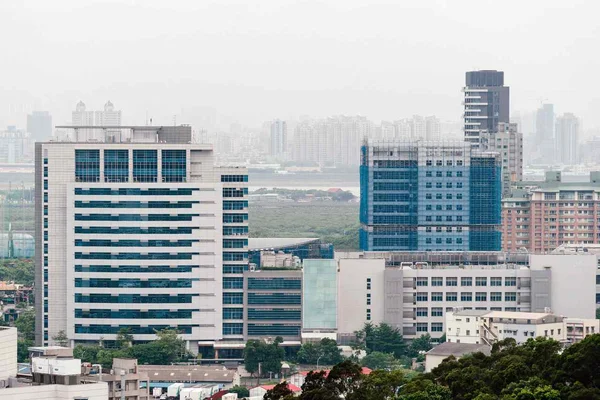
ASUS Debuts Gallop, Its First Humanoid Robot, and Puts It to Work on Its Own Factory Line
The Taiwanese PC maker showed a two armed machine packing 15 small parts per board at one of its own plants, with commercial sales targeted for the second half of 2028.
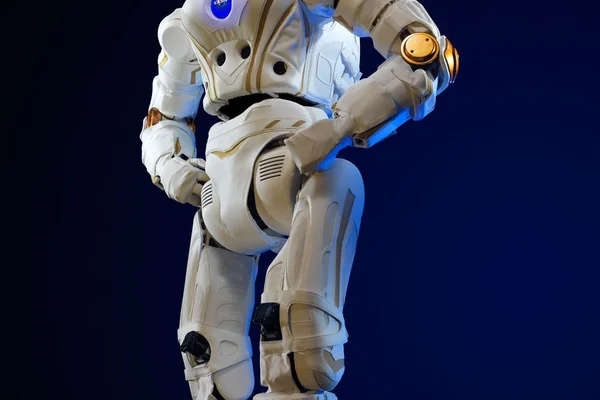
GXO Signs Letter of Intent With Apptronik for Up to 1,000 Apollo Humanoids
GXO Logistics has signed a conditional letter of intent with Apptronik that could put as many as 1,000 Apollo humanoids into its warehouses over four years, starting in North America in late 2027.

SoftBank leads $500 million round in Agile Robots at $8.5 billion valuation
Munich's Agile Robots has secured fresh backing from SoftBank, Nvidia and Hitachi to expand American sales and add German factory capacity for wheeled and legged machines.
Comments (0)
Log in or sign up to leave a comment.
No comments yet. Be the first to share your thoughts.