Samsung Electronics has estimated third quarter operating profit of 107.4 trillion won, about US$80.2 billion or EUR71.5 billion, a result that would make it the first South Korean company ever to top 100 trillion won in quarterly operating profit. The preliminary guidance, published on Thursday, October 8, 2026, is a jump of 782.5 percent from the 12.17 trillion won Samsung reported a year earlier, and an increase from the 89.49 trillion won it booked in the preceding quarter.
The figures are the clearest sign yet that the artificial intelligence buildout has turned memory chips into one of the most lucrative products in the technology industry. High bandwidth memory, the stacked chips that feed data to AI processors, is being bought up by data centre operators, while tight supply has pushed up prices for conventional DRAM and NAND flash as well. Samsung, its South Korean rival SK hynix and US manufacturer Micron Technology dominate the global market for HBM.
Samsung is not alone in cashing in. Euronews reported on October 8 that Taiwan's TSMC also posted a record quarter as AI kept chip demand strong, and that Taiwan's exports jumped 60.9 percent year on year to a record $87.2 billion in September, driven by AI hardware demand.
Investors in Seoul, however, treated the guidance as a cue to sell. Samsung shares closed 2.42 percent lower at 262,000 won on Thursday, and the company has said it will publish a full breakdown of results by business division on October 29.
Key Facts
Samsung's revenue for the July to September period is estimated at 195 trillion won, or US$145.6 billion (EUR129.9 billion), up 127 percent from a year earlier. Taken with the profit guidance, that implies an operating margin of roughly 55 percent. Reuters reported on October 8 that the operating profit figure came in slightly ahead of an LSEG SmartEstimate of 106.1 trillion won, and that the forecast marks Samsung's fourth straight quarter of record operating profit.
Euronews reported on October 8 that, if confirmed, the quarter would be the biggest quarterly operating profit ever reported by a technology company, beating the $63.7 billion in operating income Nvidia booked in its latest quarter. It would also be the fourth consecutive quarter in which Samsung broke its own records for both sales and operating profit.
Analysts had been cautious going into the release. Lee Jae-won, an analyst at Yuanta Securities, said there were uncertainties surrounding Samsung's earnings as analysts cut their estimates, but that the results turned out to be better than expected. Analysts at Shinhan Securities wrote last week that they expected even stronger earnings next year and said the transition to next generation HBM4 will open up the opportunity to renegotiate prices, helping guarantee solid margins. Douglas Kim of Douglas Research Advisory estimated that Samsung's HBM bit shipments expanded by close to 50 percent quarter over quarter in the third quarter.
AFP reported on October 8 that Samsung's contract chipmaking business, known as foundry, is expected to remain loss making on fixed costs and low utilisation even as the memory division carries the group. The same report noted that in August Samsung announced a buyback of up to $80 billion of its own stock, and that earlier this year it averted a strike by agreeing to distribute bonuses equal to 10.5 percent of operating profit to semiconductor employees. About 78,000 of Samsung's 125,000 domestic employees are eligible for a bonus of roughly $370,000 this year, based on a market estimate of profits.
TSMC's numbers add to the picture. Metapress reported on October 9 that TSMC said September revenue rose 54.6 percent year on year to NT$511.86 billion, or roughly $16 billion, lifting estimated third quarter revenue to a record NT$1.49 trillion (US$46.8 billion), up 51 percent on a year earlier and above its own guidance of $44.6 billion to $45.8 billion.
Analysis
The size of the number raises an obvious question about durability. Samsung and Micron have both said they expect the memory imbalance to persist into 2028, a longer runway than most previous memory upcycles offered. What this really means is that pricing is now being set by AI infrastructure investment rather than by the ordinary consumer electronics cycle that historically governed DRAM and NAND demand. When chipmakers say supply will lag demand for three years, they are describing capital spending plans that cannot be accelerated overnight, because new fabs take years to build and qualify. Samsung gave no breakdown by division, so the margin figure is an aggregate that could shift once the October 29 filing separates memory from the rest of the business.
The bigger picture here is that the profit pool in AI hardware is widening. For most of the past three years the returns from the AI boom were concentrated at the accelerator layer. Now the memory layer and the foundry layer are capturing record revenue at the same time, which suggests the constraint has moved from design to the physical supply of silicon.
Yet the numbers carry their own risks. Rising costs, Chinese competition and potential US semiconductor tariffs pose risks to the longer term earnings outlook, and Samsung's foundry unit remains loss making. The memory boom also cuts both ways inside Samsung itself, because higher DRAM and NAND prices force the mobile division to pay more for the components that go into its phones.
The market reaction is instructive. A 2.42 percent fall in the share price on the day of a record guidance suggests investors are treating the top of the cycle as a reason to take profits rather than add exposure. Lee of Yuanta said investors will watch for details of Samsung's shareholder return policy during its earnings call later this month. That focus makes sense with a buyback of up to $80 billion already announced and bonus payouts tied to profit. The open question is how much of the windfall goes back to shareholders and how much funds capacity that could later weigh on prices.
Why It Matters
Samsung's guidance matters first as a national statistic. The first 100 trillion won quarter by any South Korean company is a measure of how far the country's semiconductor industry has moved from cyclical components supplier to a central position in the AI supply chain. With SK hynix also a major HBM supplier, South Korea's export base is now tightly coupled to the spending plans of a small number of AI data centre operators.
Second, it matters for anyone who buys compute. An operating margin of about 55 percent at the memory layer, alongside a record quarter at TSMC, means the cost of AI infrastructure is being set at the component level before it ever reaches cloud customers. Memory, once a commodity that destroyed capital in downturns, is behaving like a scarce strategic input.
Third, it matters for the shape of the cycle. Samsung and Micron expect the imbalance to run into 2028, and Micron said on Wednesday that the chip market could be tighter in 2027 and 2028 than this year. If that holds, the familiar boom and bust pattern may be stretched rather than repeated on the old cadence.
Next Up
The immediate date is October 29, when Samsung publishes detailed results including a breakdown by business division. Analysts will look for how much of the profit came from HBM rather than conventional DRAM and NAND, how much the foundry unit lost, and what the company says about HBM4 pricing and qualification. AMD chief executive Lisa Su said on Wednesday that AMD continues to explore partnership opportunities with Samsung in the memory and foundry businesses.
Beyond that, watch the shareholder return policy, the persistence of the memory shortage into 2027 and 2028, and any signal on US tariffs or Chinese competition that could change the arithmetic before the next record quarter is booked.
Related Articles
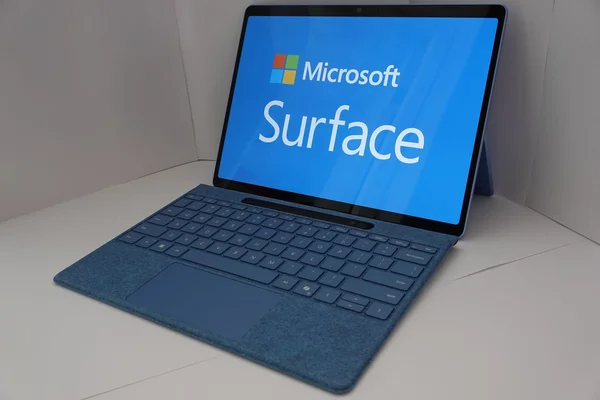
Microsoft Opens Preorders for Surface Laptop Ultra Starting at 2599
The 15 inch Surface Laptop Ultra pairs Nvidia's RTX Spark N1X superchip with up to 128 GB of unified memory and ships October 16 starting at $2,599.
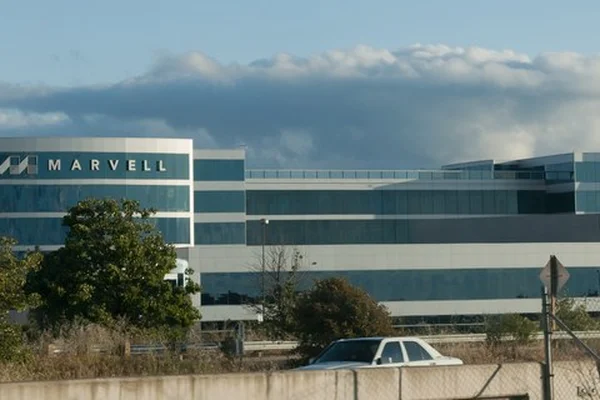
Marvell raises fiscal 2028 revenue target to $20 billion, guides to $70 billion to $90 billion by fiscal 2031
Custom AI data-center silicon is now the center of Marvell's long-range plan, with management telling investors in New York that fiscal 2031 revenue could land between $70 billion and $90 billion.
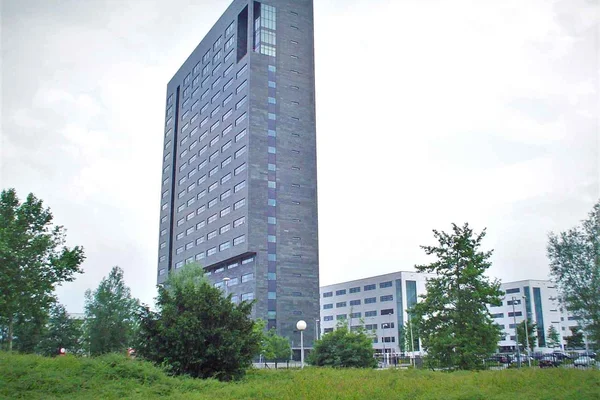
China stockpiled 343 ASML immersion DUV tools, report says, enough for 7nm AI chips without EUV
A new report from the Centre for Technology & Statecraft says Chinese fabs built a stockpile of 343 immersion DUV lithography systems, mostly ASML NXT:1980i scanners, to make 7nm-class AI chips despite EUV bans.
Comments (0)
Log in or sign up to leave a comment.
No comments yet. Be the first to share your thoughts.