Boeing's CST-100 Starliner has spent most of its decade in service as the troubled half of NASA's Commercial Crew Program. The capsule was meant to give the United States a second, independent ride to the International Space Station alongside SpaceX's Crew Dragon, a redundancy NASA has argued for since it handed out commercial crew contracts in 2014. Boeing received the larger commitment of the two, a $4.2 billion award that originally called for six operational crew missions to the orbiting laboratory.
That plan came apart in the summer of 2024. Astronauts Barry Wilmore and Sunita Williams launched aboard Starliner on June 5, 2024, for what was supposed to be a roughly ten day test flight known as the Crew Flight Test. During rendezvous with the station the capsule suffered multiple helium leaks and thruster failures. Five service-module thrusters failed, a problem later blamed on Teflon poppets extruding inside propellant valves. A crew-module thruster also failed during descent, and helium leaks appeared in the propulsion plumbing. An independent review board classified the mishaps as a close call, and NASA later assigned the flight its most severe rating, a Type A mishap, describing it as nearly catastrophic.
Starliner returned to Earth without its crew three months after launch. Wilmore and Williams remained aboard the station and hitched a ride home on a SpaceX Crew Dragon on March 18, 2025, converting a planned ten day mission into a 286 day stay in orbit. Since then, SpaceX's Crew Dragon has been the only operational American vehicle capable of carrying astronauts to and from the station.
On September 28, 2026, NASA administrator Jared Isaacman stood up at a press conference from Kennedy Space Center and laid out a new road map to get Boeing's capsule flying people again. The plan depends on an unpiloted test flight, a new rocket, a named commander and a fresh infusion of taxpayer money, and it pushes the return of Starliner crews to the middle of 2028 at the earliest.
Key Facts
CNN reported on September 28 that the next Starliner flight will be uncrewed and will launch no earlier than December, that the earliest Starliner could fly its next crew mission is mid 2028, and that NASA expects to pay an additional $359 million for Starliner upgrades and for certifying United Launch Alliance's Vulcan Centaur rocket to carry crews. Spaceflight Now reported on September 29 that NASA and Boeing aim to launch the unpiloted capsule in the December to January window, testing redesigned propulsion system valves, more robust subsystems and other modifications ordered after the 2024 failures.
The uncrewed mission is designated Starliner-1. If it succeeds, Starliner-2 becomes the first operational crewed flight, and NASA astronaut Woody Hoburg will command it. The Orlando Sentinel reported on September 28 that Hoburg, a member of the 2017 astronaut class, will command that first operational crewed Starliner flight no earlier than mid 2028. His selection gives the program a named commander and a public benchmark, after more than two years in which Starliner's next crewed launch date has slipped repeatedly.
Before anyone flies, Isaacman said, some thrusters require a design modification. The capsule also needs a new ride to orbit, because the Atlas rockets that have carried Starliner are retiring and only a limited number of Atlas V vehicles remain. NASA is working with Boeing and with Atlas provider United Launch Alliance to certify Vulcan Centaur for crewed missions as the replacement. The agency's $359 million covers both the spacecraft fixes and that certification work.
The money trail is lopsided. CNN reported on September 28 that SpaceX has been awarded $5.92 billion in NASA contracts covering a demonstration flight and 17 operational missions, while Boeing holds $4.82 billion with a mandatory order for just four flights, a figure that does not include the new $359 million. Earlier in September 2026, NASA purchased three additional SpaceX crew missions for $946 million as it neared the end of its existing Dragon contract. The Orlando Sentinel reported on September 28 that Boeing and SpaceX were both awarded commercial crew contracts in 2014, with Boeing receiving the larger commitment of $4.2 billion and each company originally expected to fly six operational missions. Boeing's tally was later dialed back from six to three crewed flights, and under the new plan it could grow back to four or five before the station's operational life ends after 2030.
Analysis
What this really means is that NASA has chosen the spacecraft that already failed over the alternatives, judging that fixing Starliner is faster and cheaper than starting a new competition or leaning harder on SpaceX. The agency is spending $359 million on repairs and certification rather than walking away from a program that has already absorbed $4.82 billion in contract value and delivered one uncrewed orbital test, one troubled crewed test and no operational missions.
The bigger picture here is that NASA is buying insurance against a single point of failure at the very moment its main provider is looking past low Earth orbit. Isaacman said SpaceX intends to sunset older platforms like Falcon and Dragon as it concentrates on Starship. Dana Weigel, who manages NASA's low Earth orbit operations, said it has always been the Commercial Crew Program's goal to have two crew transportation providers, adding that the Dragon and the Falcon will not be around forever. If Dragon winds down and Starliner is never certified, the United States would have no domestic crew vehicle flying to the station during the final years of its life.
The weakest part of the plan is the schedule. An uncrewed Starliner-1 in December 2026 or January 2027, followed by a crewed Starliner-2 no earlier than mid 2028, leaves roughly 18 months between the two flights for data review, validation of the redesigned valves and a Vulcan Centaur crew certification campaign that has not yet begun. That gap is deliberate, but it also means a single anomaly on the unpiloted flight could push crewed operations past the station's planned retirement around 2030, which would make the entire investment pointless.
There is a commercial logic underneath the choice as well. Isaacman framed Starliner as the fastest path to preserving reliable crewed access to low Earth orbit, pointing to the agency's extensive history with the vehicle and the taxpayer money already spent on it. NASA needs a crew ferry that can serve the station through about 2030 and the commercial destinations expected to follow in the 2030s, and Boeing's capsule is the only American alternative with flight hardware already built.
Why It Matters
The decision keeps alive the two provider structure that has been the foundation of NASA's commercial crew strategy. With Crew Dragon as the only operational vehicle, every astronaut rotation, every load of experiments and every contingency return depends on one company's launch cadence and one company's production line. Restoring Starliner would spread that risk across two capsules, two rockets and two supply chains.
It also matters for the money. NASA has now committed an extra $359 million on top of Boeing's existing contract, and it bought three more Crew Dragon missions for $946 million in September 2026. Both payments are hedges against the same problem: preserving American crewed access to low Earth orbit through the station's retirement around 2030 and into the era of commercial destinations. If Starliner cannot be certified, the Vulcan Centaur work and the thruster redesign will have bought NASA little more than a longer runway on Dragon.
Next Up
The first checkpoint is the unpiloted Starliner-1, targeted for December 2026 into January 2027. NASA and Boeing will be watching the redesigned propulsion valves and the capsule's other subsystems through rendezvous and docking, the exact phases where the 2024 flight broke down. If that mission clears its objectives, attention shifts to certifying Vulcan Centaur for crew and to preparing Hoburg's Starliner-2 for a launch no earlier than mid 2028.
Between now and then, NASA has left open the possibility of a fourth and fifth operational Starliner flight before the ISS ends operations after 2030, which would restore some of the missions Boeing lost when its order was cut from six to three. The agency has not set a firm date for Vulcan's crew certification, so the next real signal will come from the December launch window itself.
Related Articles
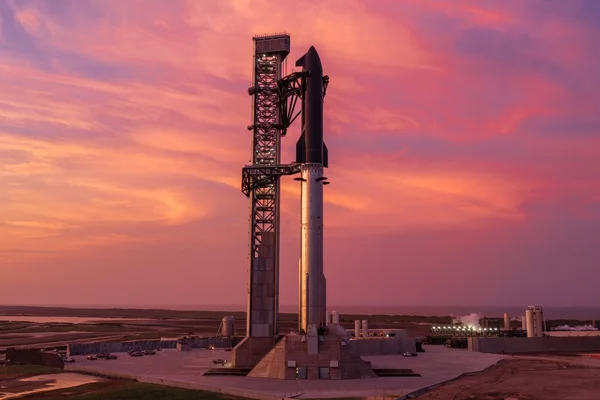
SpaceX Starship reaches Earth orbit for first time and deploys 26 Starlink V3 satellites
On September 28, 2026, SpaceX's Starship reached orbit for the first time on Flight 14, deploying 26 Starlink V3 satellites and marking a major step toward NASA's Artemis moon missions.
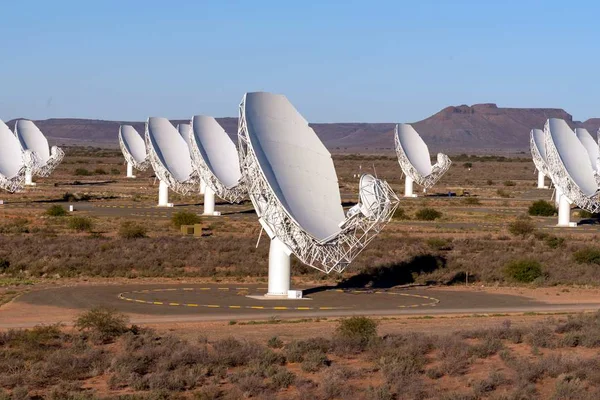
Astronomers Detect First Direct Radio Signal from Exoplanet Beta Pictoris b
A Harvard-led team using South Africa's MeerKAT array has detected auroral radio bursts from Beta Pictoris b, marking the first direct measurement of an exoplanet's magnetic field at 1,250 gauss.
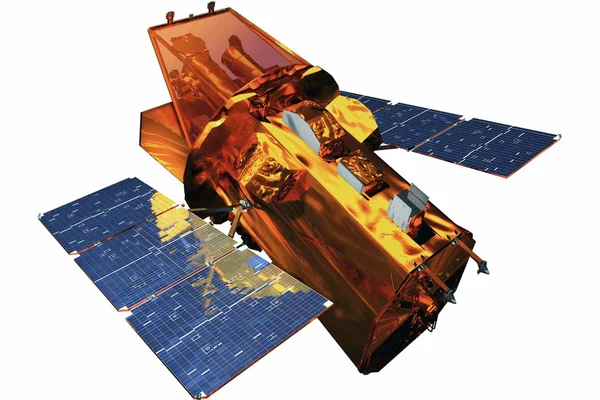
Katalyst Link Spacecraft Reenters Earth After Failed Swift Observatory Rescue Mission
The $30 million robotic mission to boost NASA's aging Neil Gehrels Swift Observatory ended with the Link spacecraft burning up in Earth's atmosphere after 85 days, leaving the telescope to reenter in November.
Comments (0)
Log in or sign up to leave a comment.
No comments yet. Be the first to share your thoughts.